Cut the drama, not safety—your aerial work platform truck choice decides profits or penalties. Pick smart specs before OSHA picks you.
Buying an aerial work platform truck in 2026 is high stakes, and cutting corners will bite your budget fast on the job.
In 2025, OSHA officials and NTEA engineering leaders continue stressing stability systems, proper chassis ratings, and documented maintenance as nonnegotiable safety baselines nationwide.
Choose the right specs now, or pay later in downtime, fines, and headaches. Here’s what actually matters before you sign that purchase.
Why Stability Is Non-Negotiable On Aerial Trucks
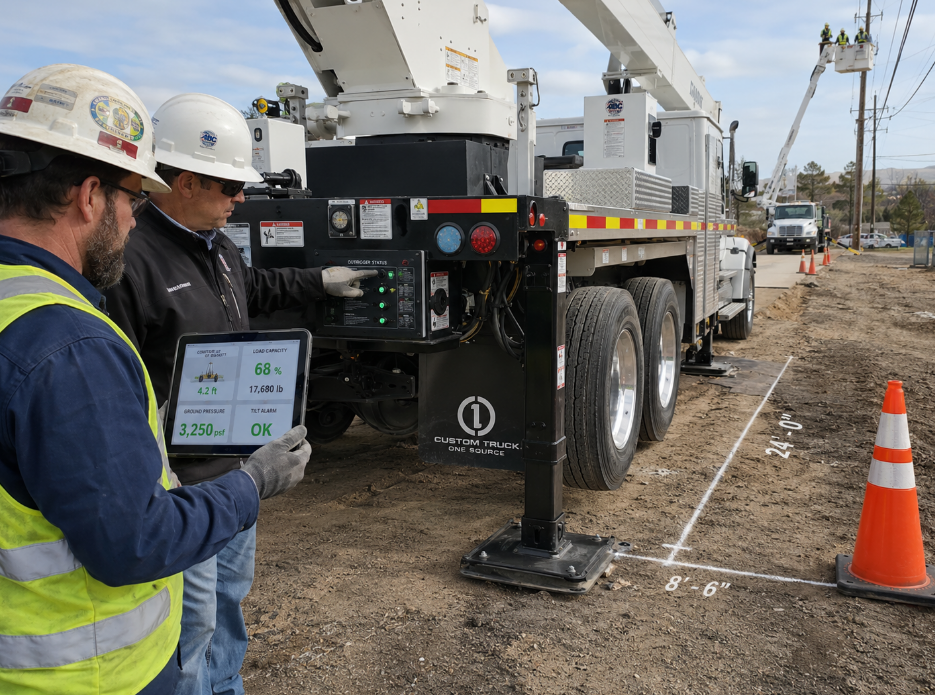
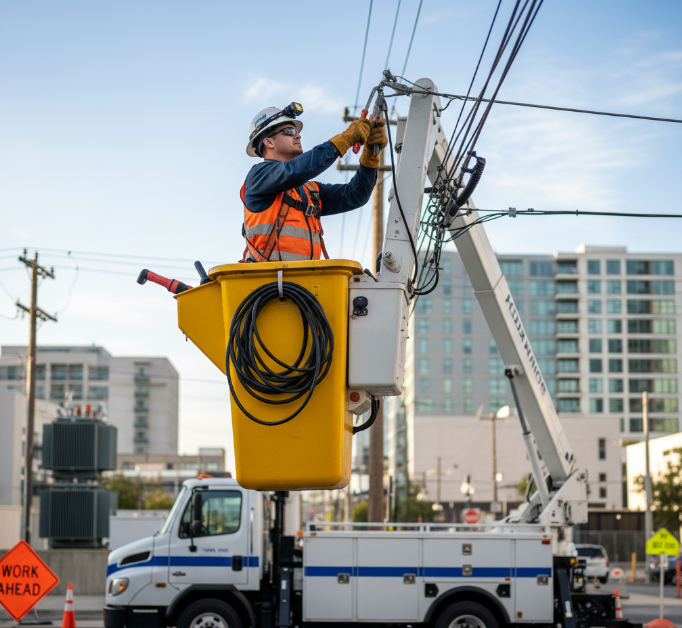
Running an aerial work platform truck isn’t just about height; it’s about balance. On busy job sites, a small stability mistake can shut everything down fast. From aerial work lifts on city streets to remote utility repairs, every platform truck must stay planted and predictable.
The Impact of Axle Configuration on Platform Security
A stable aerial work platform truck begins underneath the boom, right at the wheels and frame.
Core structural elements
Longer wheelbase reduces sway at full extension
Shorter setups increase maneuverability but shift the center of gravity
Single rear axle: lighter jobs, shorter reach
Tandem axle: heavier load capacity, better distribution
Axle types
Wheelbase
Load control factors
Weight distribution across front and rear
Reinforced chassis design
Tuned suspension system to absorb dynamic movement
When an aerial work platform truck reaches maximum height, even minor imbalance increases side loading. A well-matched axle configuration keeps the center of gravity low and centered. That’s why Aerialplatformtruck engineers every boom truck frame with job-specific load capacity targets in mind.
How Outrigger Sensors Prevent Tip-Overs
Outriggers aren’t just metal legs. On a modern aerial work platform truck, they act like guardians.
Proper outrigger spread widens the stance.
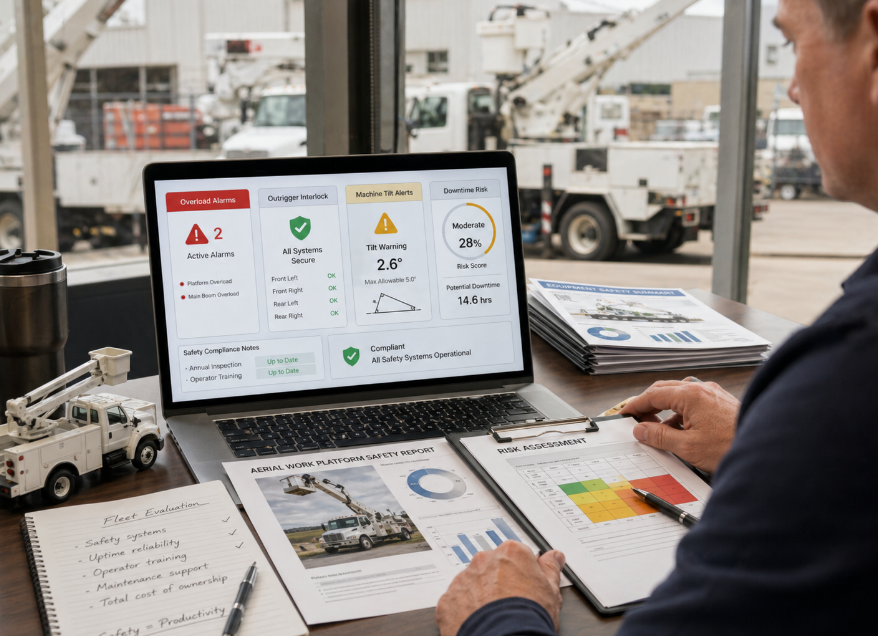
Smart sensor technology checks angle and pressure.
Integrated leveling system adjusts before lift begins.
Here’s how it plays out:
The truck-mounted lift stops boom elevation if ground pressure is uneven.
Safety interlocks freeze movement when stability limits are exceeded.
Tilt alarms alert the operator before risk turns serious.
On rough ground, that early warning is gold. Operators running an aerial work platform truck from Aerialplatformtruck get real-time feedback, not guesswork. It feels less like fighting physics and more like working with it.
Stability Monitoring Systems for Uneven Ground
Uneven terrain is common in construction and utility work. A serious aerial work platform truck uses layered protection.
Sensor network
Monitoring sensors collect real-time data
Inclinometers measure boom and chassis angle
Load cells detect shifting forces
Control response
Limit boom speed on slopes
Restrict outreach under unstable ground conditions
Adaptive control algorithms
Clear operator alerts inside the cab
According to the 2025 Global Aerial Work Platform Market Report by Allied Market Research, safety-driven innovation and smart monitoring systems are now primary purchasing drivers across fleet buyers.
That trend shows up on every new aerial work platform truck model. Aerialplatformtruck integrates electric-over-hydraulic controls that react instantly, keeping the lift steady even when the job site isn’t.
Matching Gross Vehicle Weight Rating to Job Demands
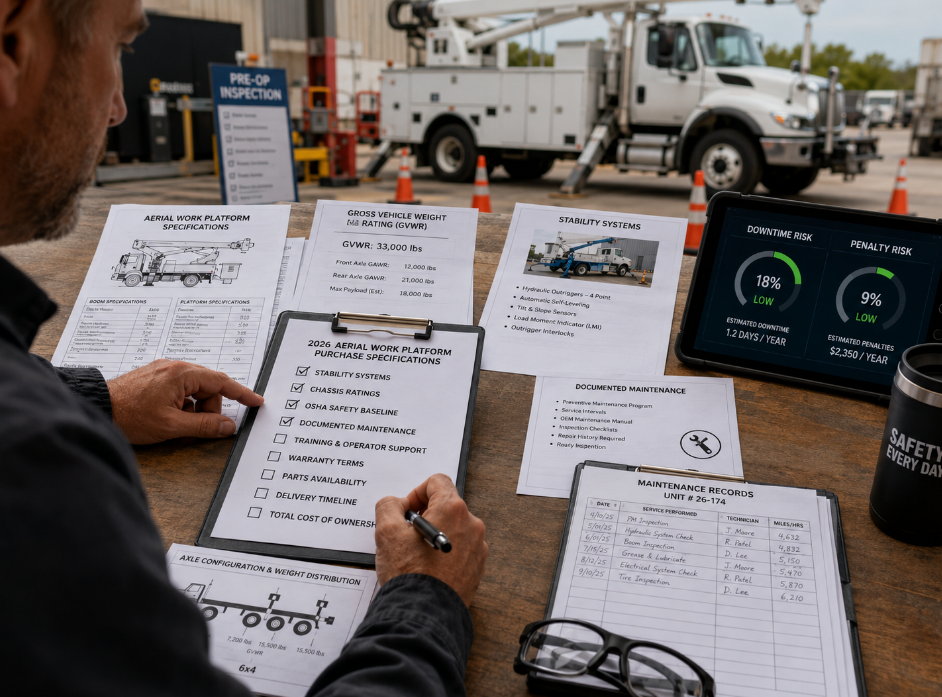
Choosing the right gross vehicle weight rating is not paperwork—it’s protection.
Load considerations
Payload capacity for tools and equipment
Rated platform capacity
Combined material weight and personnel weight
Planning process
Detailed job site assessment
Alignment with local safety regulations
Verification that axle and frame support total gross vehicle weight
If the truck is underrated, stress builds in the frame. If overrated, fuel and maneuverability suffer. A properly specified aerial work platform truck balances payload capacity and reach without pushing structural limits.
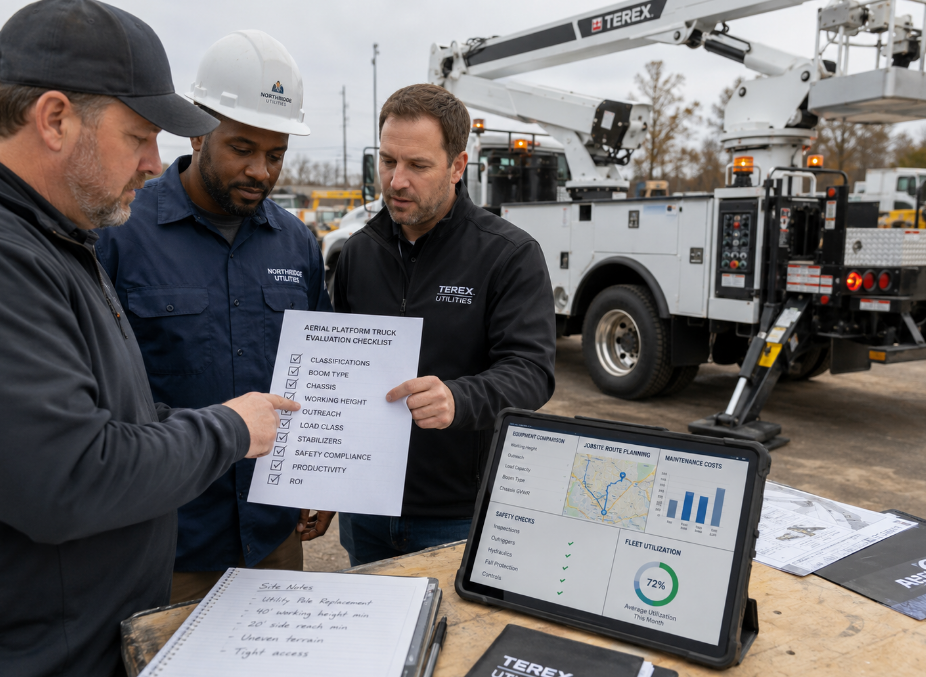
Aerialplatformtruck helps contractors size the right boom truck for real workloads, so the aerial work platform truck performs smoothly from ground level to full extension—no drama, just steady lift after steady lift.
Electric Drive Or Diesel? Pros And Cons
Choosing the right power system for an aerial work platform truck is not just about specs on paper. It affects fuel bills, jobsite noise, emissions rules, and daily uptime. For fleet managers running multiple aerial work trucks, the decision shapes long-term operating costs and crew comfort.
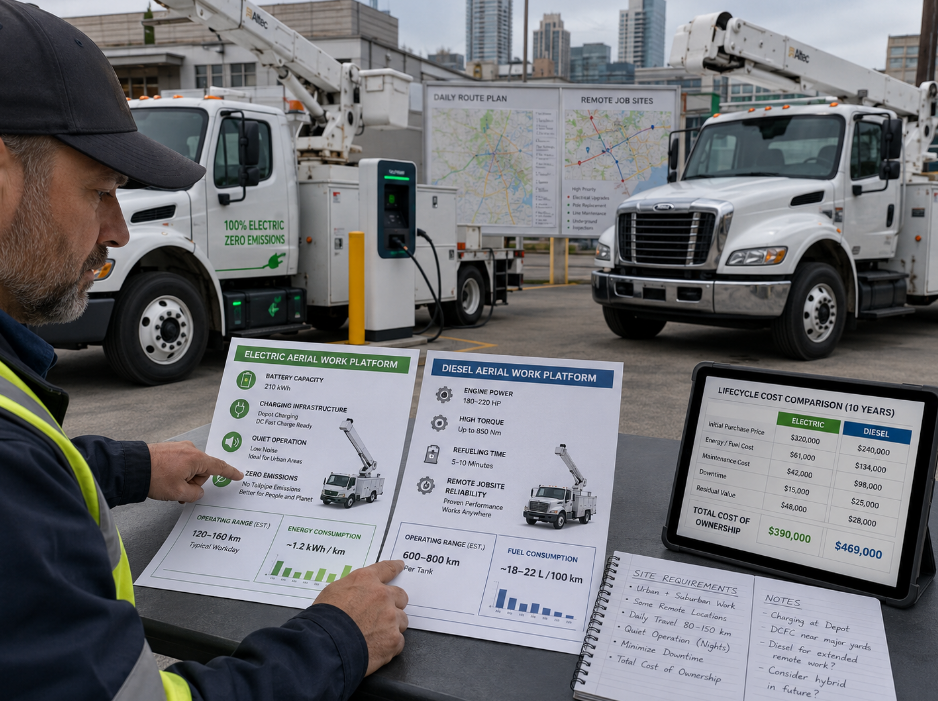
Electric Drive
When an aerial work platform truck runs on electric drive, the setup usually centers around three core layers:
Power Source
Access to charging infrastructure
Depot charging vs. mobile solutions
Determines real-world operating range for urban routes
Impacts charging cycles and downtime planning
Battery capacity
Charging system
Drive Performance
Quiet operation in residential zones
True zero emissions for indoor tasks
Smooth lift operation
Instant torque for platform elevation
Electric motor output
Site experience
Ownership Value
Aerialplatformtruck electric configurations designed specifically for aerial lift truck fleets
Fewer moving parts
Noticeably reduced maintenance
Maintenance profile
Brand integration
For city-based aerial platform truck operators, electric just feels cleaner and simpler.
Diesel Powertrain
A diesel-powered aerial work platform truck focuses on strength and endurance:
Engine Core
High engine power
Proven engine durability under heavy cycles
Strong high torque output for boom stability
Operational Range
Fast refueling time
Extended deployment without charging stops
Predictable fuel consumption planning
Jobsite Capability
Reliable PTO and generator output
Stable performance reliability in remote areas
Manageable exhaust emissions with modern systems
For long-haul utility work or remote construction, a diesel aerial work truck from Aerialplatformtruck keeps crews moving when charging access is limited.
In short, electric suits controlled urban routes; diesel powers through tough, off-grid demands.
5 Maintenance Tips For Aerial Work Platform Trucks
Keeping an aerial work platform truck in top shape isn’t just about ticking boxes. It’s about uptime, safety, and making sure your aerial lift truck handles daily jobs without drama. Smart crews treat maintenance like fuel—non-negotiable.
Establishing a Preventative Maintenance Schedule
A working aerial work platform truck needs a clear maintenance plan, not guesswork.
Core Planning
Define service intervals
Build a detailed inspection checklist
Schedule routine checks
Digital Tracking
Use scheduling software
Maintain strict record keeping
Preventative Focus
Apply early preventative measures
Review truck performance monthly
For fleets running an aerial bucket truck or elevated platform truck, consistent scheduling keeps the boom smooth and the platform steady. Aerialplatformtruck units are designed to align easily with structured fleet calendars.
Regular Hydraulic Pump and Fluid Reservoir Checks
Hydraulic systems are the heartbeat of any aerial work platform truck.
Pump Monitoring
Inspect the hydraulic pump
Check pressure gauges
Fluid Control
Verify fluid level
Conduct full reservoir inspection
Protection
Look for fluid leaks
Test for contamination
Perform timely filter replacement
A small drop in hydraulic fluid quality can sideline an aerial lift truck fast. Crews that stay ahead of wear keep their aerial work platform truck climbing safely.
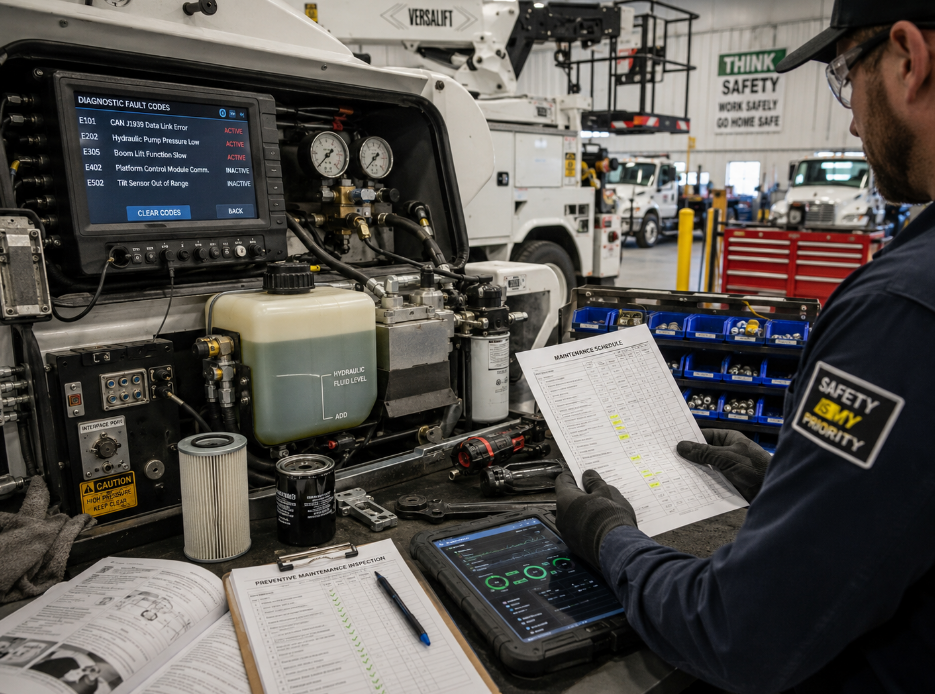
Leveraging the Diagnostic Interface for Quick Fault Detection
Modern aerial work platform truck models include smart diagnostic tools tied to the interface port and onboard computer.
Fault Management
Read fault codes
Review error messages
System Review
Run system diagnostics
Follow the troubleshooting guide
Data Insights
Enable data logging
Track recurring alerts
“Digital diagnostics are reducing heavy equipment downtime by enabling predictive maintenance workflows,” noted McKinsey & Company in a 2024 industrial equipment report.
Using built-in tech on an aerial work platform truck cuts downtime and keeps operators confident at height.
Ensuring Spare Parts Availability to Avoid Downtime
When a component failure hits, speed matters.
Maintain a solid spare parts inventory
Identify critical components
Monitor stock levels
Then go deeper:
Procurement
Streamline parts procurement
Strengthen the supply chain
Readiness
Keep essential replacement parts on hand
Prepare for emergency repairs
A ready warehouse keeps your aerial bucket truck rolling. Aerialplatformtruck supports operators with dependable parts channels that reduce wait time.
Operator Training: Mastering Service Manual Procedures
Skill beats guesswork every time on an aerial work platform truck.
Knowledge Base
Study the service manual
Follow detailed maintenance procedures
Safety Culture
Apply strict safety protocols
Improve equipment operation
Technical Growth
Practice troubleshooting steps
Join certification programs
Well-trained crews protect the boom, the basket, and themselves. With proper operator training, your aerial lift truck—and every aerial work platform truck in your fleet—stays dependable for the long haul.
FAQ
How does axle configuration improve stability on an aerial work platform truck?
When a crew rises to full working height, stability becomes personal. The right axle configuration works with wheelbase length and chassis type to distribute weight evenly across the frame.
1) Balanced load transfer reduces sway at maximum horizontal reach.
2) Gross vehicle weight rating aligns with platform capacity and material handling capability.
3) Outrigger sensors and stability monitoring confirm safe outrigger deployment before lift-off.
A well-matched setup protects both equipment and the people standing in the basket.
Why are outrigger sensors and interlock systems critical for safety?
Outrigger sensors verify ground contact and correct angle.
The interlock system blocks boom elevation if limits are exceeded.
Emergency stop button and warning light package provide instant visual and physical response.
Ground fault protection adds another layer during utility line work.
These systems act like a silent partner, watching every motion while operators focus on the task.
Which powertrain works best for demanding outdoor projects?
For remote construction site access and heavy signage installation projects, diesel power often leads.
| Feature | Diesel Engine Setup | Electric Drive Setup |
|---|---|---|
| Engine horsepower / torque | High output for heavy platform capacity | Moderate, optimized for municipal fleet requirements |
| Power take-off system | Strong support for hydraulic pump | Often replaced by electric over hydraulic controls |
| Generator output | Reliable for tools and auxiliary systems | Limited, battery backup system dependent |
| Emissions / noise | Higher, suited for open sites | Low noise, ideal for urban zones |
Choice depends on terrain, duty cycle, and how long crews need to stay elevated.
How can maintenance and operator training reduce downtime?
Follow a preventative maintenance schedule tied to service manual documentation.
Track fluid reservoir capacity and hydraulic pump performance through the diagnostic interface.
Secure spare parts availability within a nationwide service network.
Invest in an operator training curriculum that covers proportional joystick controls, platform leveling system, and basket rotation.
Skilled hands and steady upkeep turn high-reach tension into controlled, confident motion.