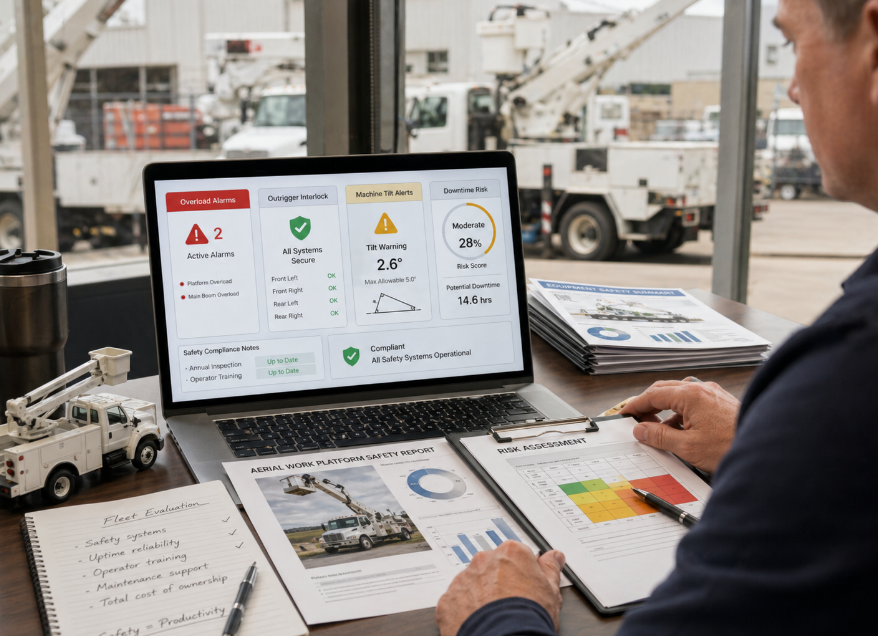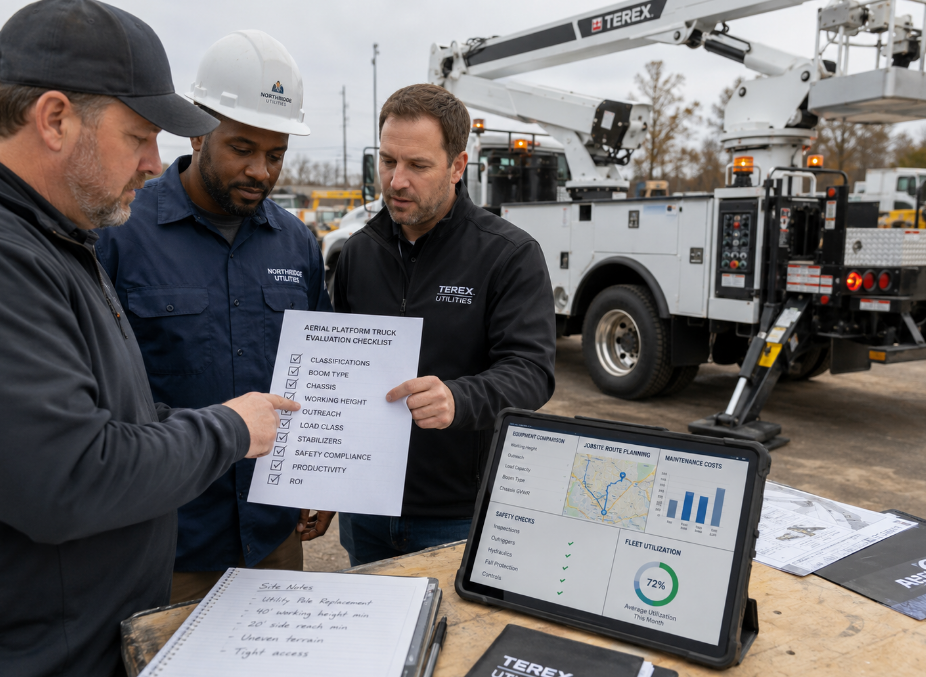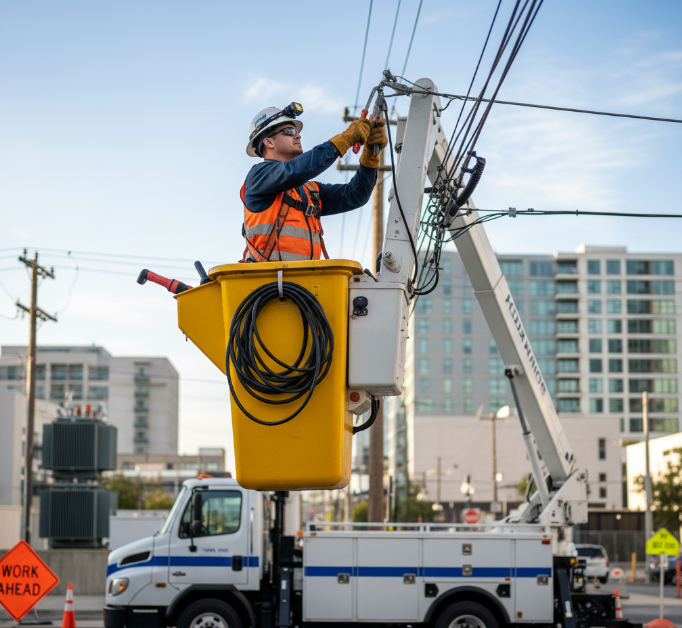
When ladders quit, heroes roll up—in a truck mounted aerial work platform built for speed, safety, and crews who hate downtime.
A truck mounted aerial work platform is what you call in when ladders start feeling like bad ideas. It’s the difference between “we’ll figure it out” and “we’ve got this.” When crews are racing daylight to fix power lines or patch a high-rise facade, downtime burns cash. Mobility plus lift in one rig? That’s a game-changer.
“Downtime is the real enemy,” says a 2025 fleet operations manager at AerialPlatformTruck. Global Market Insights (2024) notes steady growth in mobile elevated platforms, driven by utility upgrades and stricter safety codes.
If your crew’s stuck hauling lifts on trailers, you’re paying twice—once in fuel, again in frustration. This is where the story turns.
What Is a Truck Mounted Aerial Work Platform?
7 Key Benefits of Truck Mounted Aerial Work Platforms
3 Key Features of Aerial Work Platforms
What Is a Truck Mounted Aerial Work Platform?
A truck mounted aerial work platform is basically a lifting system fixed onto a truck chassis, built to raise people and tools safely above ground. From city lighting jobs to bridge inspections, this truck with aerial lift setup keeps crews moving fast and working high without dragging extra equipment around.
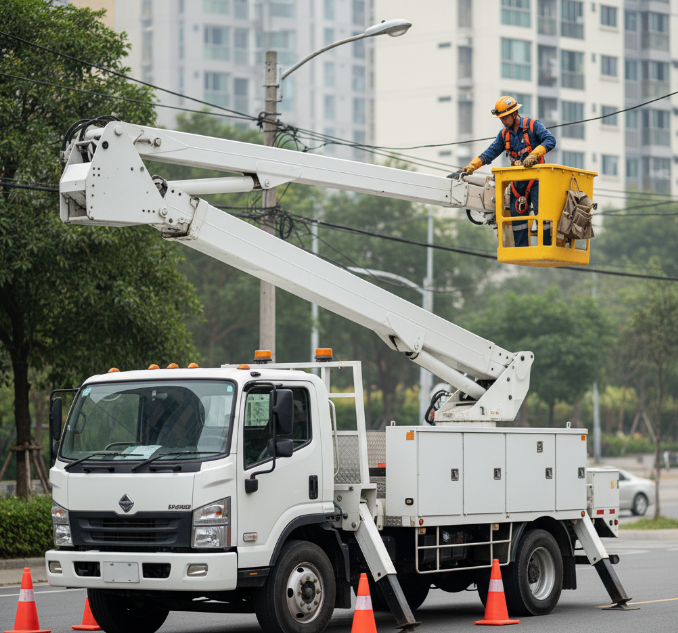
Core Components: Telescopic Boom and Articulating Arm
At the heart of every truck mounted aerial work platform sits the lifting structure. It’s not just one long arm; it’s a coordinated system.
Primary Structure
Connects lower frame to lifting arm
Transfers load through the slewing bearing for rotation
Inner sliding section powered by the extension mechanism
Outer reinforced segment maintaining structural integrity
Boom sections
Boom pivot
Articulation System
Reaches over obstacles
Adjusts working envelope mid-air
Allows multi-angle bending
Works through routed hydraulic lines
Articulation joint
Secondary knuckle arm
In a truck mounted platform, this design means operators can extend straight up or snake around steel beams. That flexibility is why many crews choose a truck mounted aerial work platform over fixed lifts. Brands like aerialplatformtruck fine-tune arm geometry so movement feels smooth, not jerky.
Work Basket Design and Stabilizer Outriggers
Up top, the basket matters just as much as the boom.
Platform Structure
Rated platform capacity for workers and gear
Reinforced guardrails for fall protection
Built-in tool tray to keep tools from sliding
Stability System
Driven by outrigger cylinders
Supported by wide outrigger pads
Extendable stabilizer legs
Load spread control to reduce ground pressure
Safety Focus
Anchor points for harness lanyards
Slip-resistant floor
Emergency descent access
A truck mounted lift only performs well if it stands firm. Outriggers on a truck mounted aerial work platform lock the chassis in place before elevation. aerialplatformtruck designs stabilizers for uneven job sites, which contractors appreciate when the ground isn’t perfect.
Hydraulic Cylinders with Pumps and Valves
The muscle behind a truck mounted aerial work platform is hydraulic power. Fluid moves, metal responds.
• A central hydraulic pump pushes hydraulic fluid through lines
• Directional control valves guide flow to each function
• A pressure relief valve protects the circuit from overload
From there:
Lift cylinder raises the main boom
Extend cylinder slides out inner boom sections
Tilt cylinder adjusts basket angle
Here’s how it plays out on site:
Operator moves joystick
Valve shifts
Fluid pressure builds
Cylinder rod extends
Boom rises smoothly
According to a 2025 Global Market Insights report, demand for hydraulic aerial equipment continues to grow alongside urban infrastructure upgrades, with mobile elevated platforms seeing steady adoption in municipal fleets.
That growth makes sense. A well-built truck mounted aerial work platform depends on tight hydraulic response—no lag, no sudden jumps.
Control Panel, Wiring Harnesses, and Sensors
Modern control feels almost effortless, but there’s a lot going on behind the panel.
Upper Control Station
Joystick controls
Emergency stop button
Integrated leveling sensors
Lower Ground Controls
Backup operation access
System override with safety logic
Electrical Network
Routes signals through the chassis
Shields circuits from vibration
Connects to load sensors
Monitors boom angle via safety interlocks
Central control module
Protected wiring loom
On a truck mounted aerial device, sensors constantly check tilt, load, and position. If limits are reached, movement slows or stops. That’s not overkill; it’s peace of mind.
In daily use, a truck mounted aerial work platform blends steel, hydraulics, and smart electronics into one reliable truck-mounted system. And when that system is engineered carefully—like the builds from aerialplatformtruck—it simply works, job after job.
7 Key Benefits of Truck Mounted Aerial Work Platforms
A truck mounted aerial work platform blends mobility, lifting power, and smart control into one hardworking machine. From city streets to rough job sites, this truck mounted lift keeps crews moving fast and working safely. Let’s break down what really makes it worth it.
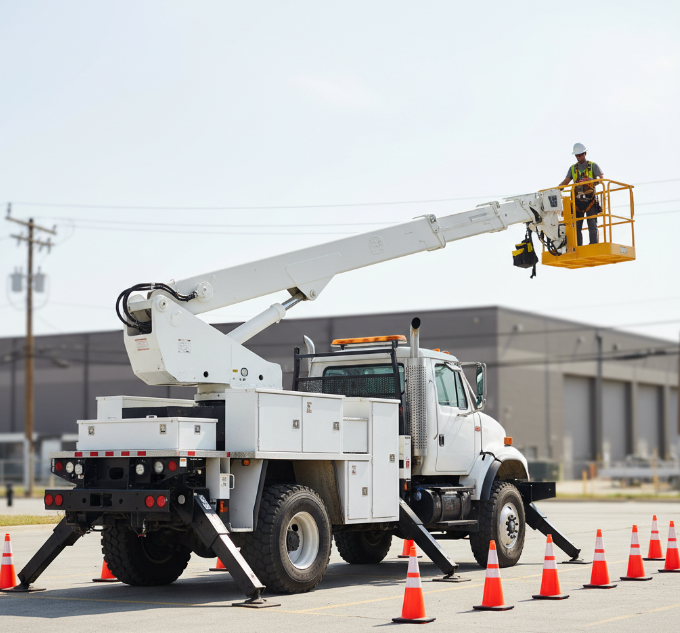
Enhanced Mobility with Heavy-Duty Truck Chassis
At the core of every truck mounted aerial work platform sits a reinforced truck chassis built for serious movement.
Mobility starts with the heavy-duty frame
Reinforced chassis design improves load distribution
Upgraded suspension boosts off-road capability
Heavy braking systems enhance transportation safety
Vehicle-level advantages
Road-legal vehicle configuration
No need for extra hauling equipment
Fast relocation between sites
For contractors using a truck mounted aerial lift daily, that mobility cuts downtime big time. Brands like aerialplatformtruck engineer their truck chassis systems to handle rough terrain without shaking operator confidence.
Versatile Load Capacity via Engine Powertrain
A truck mounted aerial work platform depends heavily on its engine powertrain.
Stable power output keeps lifts smooth.
Consistent torque improves lifting at full extension.
Optimized engine performance supports higher payload demands.
The smart pairing of transmission and engine powertrain directly increases load capacity and job-site versatility. In simple terms, it lifts more and struggles less. That’s a big deal when running a truck mounted bucket truck on tight deadlines.
Precision Positioning from Hydraulic Fluid Reservoirs
Accuracy comes down to the hydraulic system and properly sized hydraulic fluid reservoirs.
Fluid control hierarchy
Reservoir capacity stabilizes pressure
Correct fluid level prevents cavitation
Clean filtration ensures reliable actuation
Performance outcome
Improved precision positioning
Reduced vibration
Smoother operator control
Hydraulic Stability Reference Table
| Reservoir Capacity (L) | Working Pressure (MPa) | Boom Reach (m) | Positioning Error (mm) | Cycle Time (sec) |
|---|---|---|---|---|
| 80 | 16 | 18 | ±8 | 45 |
| 100 | 18 | 22 | ±6 | 48 |
| 120 | 20 | 26 | ±4 | 52 |
| 150 | 22 | 30 | ±3 | 55 |
| 180 | 24 | 34 | ±2 | 60 |
A well-designed truck mounted aerial work platform keeps pressure stable so elevation feels steady, not jumpy.
Improved Safety through Load Sensing Systems
Safety isn’t guesswork. It’s built into load sensing systems.
Detection Layer
Real-time weight detection
Integrated sensor technology
Response Layer
Automatic overload protection
Hydraulic output adjustment
Stabilizer lock control
Stability Layer
Enhanced operational safety
Continuous stability monitoring
“Demand for intelligent load monitoring in mobile elevating work platforms is accelerating as contractors prioritize operator safety and regulatory compliance,” noted the 2025 Global MEWP Safety Outlook published by the International Powered Access Federation (IPAF).
That means every modern truck mounted aerial work platform must treat safety as non-negotiable.
Durable Construction Using High-Strength Steel
Durability starts with high-strength steel and carefully selected steel alloy blends.
Stronger material strength
Improved wear resistance
Long-term structural integrity
Precision machining and robotic welding tighten tolerances. Over time, that means better longevity under repetitive stress. A solid truck mounted aerial lift simply feels tighter and more stable after years of work.
Reduced Maintenance with Corrosion-Resistant Coatings
Corrosion can quietly wreck a truck mounted aerial work platform, so protection matters.
Surface Defense
Advanced corrosion-resistant coatings
Multi-layer surface treatment
Environmental Shield
Moisture blocking
Chemical resistance
UV weather protection
Long-Term Payoff
Better rust prevention
Higher coating effectiveness
Noticeably reduced maintenance intervals
This keeps fleets cleaner and reduces surprise repair bills.
Seamless Operation thanks to Control Modules
Modern control modules make a truck mounted aerial work platform feel intuitive.
Electronic Core
Integrated electronic controls
Real-time feedback loops
Interface Layer
Clear user interface
Simplified joystick response
System Logic
Tight system integration
Boom and rotation automation
Improved operator efficiency
When everything syncs—boom lift, rotation, stabilization—the workflow feels smooth. aerialplatformtruck designs its systems so operators can focus on the job, not the buttons. And that’s what a reliable truck mounted aerial work platform should always deliver.
3 Key Features of Aerial Work Platforms
A truck mounted aerial work platform is more than a lift bolted to a chassis. It’s a moving system where hydraulics, safety tech, and materials all sync up. From city maintenance crews to power utilities, every truck mounted aerial work platform relies on these three core features to keep jobs smooth and safe.
Hydraulic Systems: Valves, Hoses, and Pressure Relief
In a truck mounted aerial work platform, the lifting force starts deep inside the hydraulic loop.
Power Source Layer
Hydraulic pump pushes hydraulic fluid under pressure.
Fluid travels through reinforced hydraulic hoses rated for high PSI.
Flow reaches precision control valves that direct movement.
Motion Control Layer
Cylinders convert pressure into linear lift.
Actuators fine-tune boom articulation.
The pressure relief valve protects pumps and seals from overload.
Protection & Monitoring
Sealed routing prevents leaks.
Pressure gauges confirm system balance.
Scheduled inspection keeps the truck mounted aerial work platform steady on long shifts.
Typical Hydraulic Performance Data for Truck Mounted Aerial Work Platform
| Component | Working Pressure (MPa) | Flow Rate (L/min) | Safety Threshold (MPa) | Service Interval (hrs) |
|---|---|---|---|---|
| Hydraulic pump | 16 | 45 | 20 | 1000 |
| Control valves | 14 | 40 | 18 | 1200 |
| Hydraulic hoses | 18 | 50 | 22 | 800 |
| Cylinders | 16 | 38 | 21 | 1500 |
| Pressure relief valve | 17 | 42 | 19 | 1000 |
When these values stay within range, a truck mounted aerial work platform performs like it should—no jerks, no sudden drops.
Safety Features: Anti-Tilt Mechanism and Emergency Stops
Safety isn’t optional on a truck mounted aerial work platform. It’s built in from the ground up.
Stabilizers and outriggers widen the base before lift-off.
A tilt sensor tracks chassis angle in real time.
A load limiter prevents overcapacity mistakes.
If the boom drifts beyond a safe angle, the anti-tilt logic kicks in automatically. The interlock system can pause motion until ground conditions improve. And when things go sideways, one hit on the emergency stop button cuts hydraulic and electrical flow instantly. Add a fall arrest system, and operators get that extra peace of mind.
“Global demand for safer and more intelligent aerial work platforms continues to rise, driven by stricter jobsite compliance and urban infrastructure upgrades,” noted the 2025 Global Aerial Work Platform Market Report by MarketsandMarkets.
For contractors choosing a truck mounted aerial lift, brands like aerialplatformtruck integrate these controls so crews can focus on the task, not the risk.
Materials & Fabrication: Aluminum Alloys and Fasteners
Strength starts with material choice in every truck mounted aerial work platform.
Structural Frame
High-strength steel forms the chassis backbone.
Boom arms often use lightweight aluminum alloy to cut dead weight.
Fabrication Process
Precision welding secures stress zones.
Robotic alignment keeps geometry tight.
Assembly Integrity
Industrial-grade fasteners lock joints in place.
Torque-rated bolts and nuts prevent vibration loosening.
Strategic rivets reinforce secondary panels.
All these choices protect long-term structural integrity. A well-built truck mounted aerial work platform handles wind load, daily transport, and repeated lift cycles without drama. That’s why many fleet managers stick with aerialplatformtruck models—solid materials, clean fabrication, and reliable truck mounted aerial work platform performance year after year.
Truck Vs. Trailer-Mounted Platforms
Choosing between a truck mounted aerial work platform and a trailer setup can feel like picking between a pickup and a tow rig. Both lift crews safely, yet mobility, setup rhythm, and jobsite flow change the game.
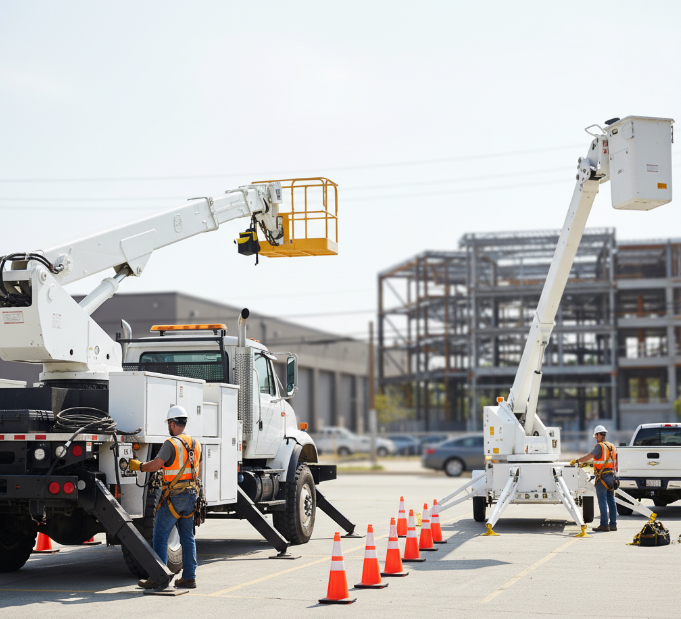
Truck-Mounted Platforms
A truck mounted aerial work platform combines mobility and lifting power in one unit. Built directly onto a Truck chassis, it moves as a single machine, cutting idle time between tasks.
Core Structure
Extends vertically and horizontally
Carries the Basket with steady Stability
Supports the full Hydraulic system
Ensures road-ready Mobility
Truck chassis
Integrated Boom lift
Jobsite Performance
Manages boom angles
Regulates hydraulic pressure
Deploy quickly from the frame
Balance weight before elevation
Outriggers
Central Control panel
Why crews prefer it
Fast arrival and lift in one motion
Ideal for utility repair, signage, lighting
Reduced setup time compared to towable lifts
The truck mounted aerial work platform format suits contractors who bounce between sites all day. Brands like aerialplatformtruck refine this model with smoother controls and reinforced boom sections, making each truck mounted lift reliable under daily pressure. For high-frequency operations, a truck mounted aerial setup simply keeps work moving.
Trailer-Mounted Platforms
A trailer-based aerial lift separates transport from elevation. The Trailer connects to a Towing vehicle, offering lighter transport and storage flexibility.
Structural Layout
Increases Portability
Enhances yard Compactness
Houses the Boom lift
Supports foldable Outriggers
Towable Trailer frame
Detachable from towing unit
Setup Flow
Position trailer
Lower Outriggers
Stabilize before raising Basket
Operational Traits
Slightly longer Setup time
Easier storage in tight depots
Lower initial transport weight
While a trailer unit lacks the one-piece drive of a truck mounted aerial work platform, it shines in mixed fleets. Teams that already run transport trucks often pair them with towable lifts for cost control. aerialplatformtruck also offers solutions aligned with this approach, giving buyers options beyond a single truck mounted aerial work platform model.
Utility Line Repair: Platform Deployment Tips
Working around live lines isn’t the time to wing it. A properly set up truck mounted aerial work platform keeps crews steady, safe, and on schedule. From solid outrigger footing to clean electrical flow and secure harness tie-offs, every detail matters when your truck mounted lift is 20 meters in the air.
Stabilizer Outrigger Setup on Uneven Terrain
When positioning a truck mounted aerial work platform, ground prep decides everything. Start with a sharp terrain assessment before even touching the controls.
Site Evaluation
Check slope angle and soil firmness.
Identify soft shoulders or recently filled trenches.
Measure expected ground pressure from the unit.
Stabilizer Deployment
2.1 Pad Positioning
2.2 Load Distribution
Adjust hydraulic flow gradually.
Watch for uneven sink-in.
Pads must sit flat; no rocking.
On gravel, compact before loading.
Extend stabilizer legs fully as specified.
Place certified outrigger pads beneath each foot.
Confirm the support base is centered and free of debris.
Final Leveling Check
Use onboard indicators.
Reconfirm after partial boom elevation.
A steady truck mounted aerial work platform feels different—no sway, no surprise shifts. Operators from aerialplatformtruck often note that solid outrigger prep cuts mid-job adjustments almost to zero.
Electrical Connectors and Lighting Components Inspection
Power issues mid-air? That’s a headache no one wants. Before lifting a truck mounted aerial work platform, give the electrical system a close look.
Focus on the wiring harness, checking for cracked insulation or loose connections. Reset and test circuit breakers, and confirm stable power supply voltage. Clean corrosion from grounding points. Verify safety interlocks respond correctly when the boom moves.
Indicator checks matter too:
Test all indicator lights on the control panel.
Confirm basket floodlights and hazard lamps work in low light.
Inspect battery terminals tied to the power supply.
Below is a quick inspection reference table used by many utility crews operating a truck mounted lift or aerial device:
| Component | Test Voltage (V) | Resistance Range (Ω) | Inspection Interval (Days) | Status Check |
|---|---|---|---|---|
| Wiring Harness | 24 | <0.5 | 30 | Visual + Meter |
| Circuit Breakers | 24 | N/A | 30 | Trip Test |
| Indicator Lights | 12/24 | N/A | 15 | Function Test |
| Grounding Points | 0 | <0.1 | 30 | Continuity |
| Safety Interlocks | 24 | <1.0 | 15 | Activation Test |
A well-maintained truck mounted aerial work platform runs clean and bright. aerialplatformtruck units are designed with accessible panels, so technicians don’t waste time hunting for hidden connectors.
Fall Protection Systems and Harness Anchor Points Review
Working from a truck mounted aerial work platform without proper fall gear? Not happening. The review starts with personal equipment and ends at fixed structure points.
Personal Gear Check
Inspect the harness webbing for cuts or frays.
Examine the lanyard stitching and shock absorber pack.
Test locking gates on all attachment points.
Platform Anchor System
2.1 Fall Arrest Components
2.2 Structural Integrity
Check basket rails for deformation.
Verify labeling for fall arrest capacity.
Deploy retractable lifelines fully and retract.
Ensure smooth braking action.
Confirm rated anchor points match load requirements.
Inspect welds and mounting bolts.
Compliance Confirmation
Match equipment ID numbers with inspection logs.
Sign off only after full inspection.
A reliable truck mounted aerial work platform pairs mechanical strength with certified tie-off systems. Many crews running aerialplatformtruck models appreciate clearly marked anchor ratings, making daily checks quicker and stress-free.
When the boom goes up, confidence should go up too. Solid outriggers, clean electrical flow, and secure harness systems turn a standard truck mounted aerial work platform into a safe, dependable partner on every utility repair call.
FAQ
What defines a truck mounted aerial work platform and how is it built?
A truck mounted aerial work platform feels like a living machine, shaped around people at work.
Core body
The platform begins with a heavy-duty truck chassis, cab structure, engine powertrain, transmission system, suspension components, and braking system.
Reach system
A telescopic boom works together with an articulating arm, ending in a stable work basket for elevated access.
Ground confidence
Stabilizer outriggers lock the platform in place while hydraulic cylinders raise and extend with steady force.
Behind the steel and motion sits intention—safe height, calm control, and trust under pressure.
How do hydraulic and electrical systems keep movement smooth and predictable?
Short description, then layered flow:
Hydraulic pump draws from the hydraulic fluid reservoir.
Hydraulic valves and pressure relief valves guide lift, swing, and extension through hydraulic hoses.
Sensors and transducers report load and angle back to control modules through wiring harnesses.
The control panel translates this data into gentle, human-paced motion, supported by hydraulic filters and electrical connectors.
Each movement feels deliberate, not rushed.
What safety features protect operators working at height?
Safety here is personal, not abstract.
load sensing system watches weight changes inside the work basket
anti-tilt mechanism and interlock systems hold balance during uneven ground contact
emergency stop buttons answer instinct faster than words
safety harness anchor points and fall protection systems stay close, quiet, ready
These layers calm the mind when the ground feels far away.
How do materials and manufacturing choices shape long-term durability?
A brief narrative, then structure within:
Built from high-strength steel, aluminum alloys, and selective composite materials, the platform passes through precision machining and robotic welding before assembly line integration.
Quality control inspections catch human-scale details—fasteners and bolts, weld seams, alignment.
Surface treatment processes and corrosion-resistant coatings slow time itself.
Component testing procedures finish the story, leaving a machine that ages with dignity, not surprise.