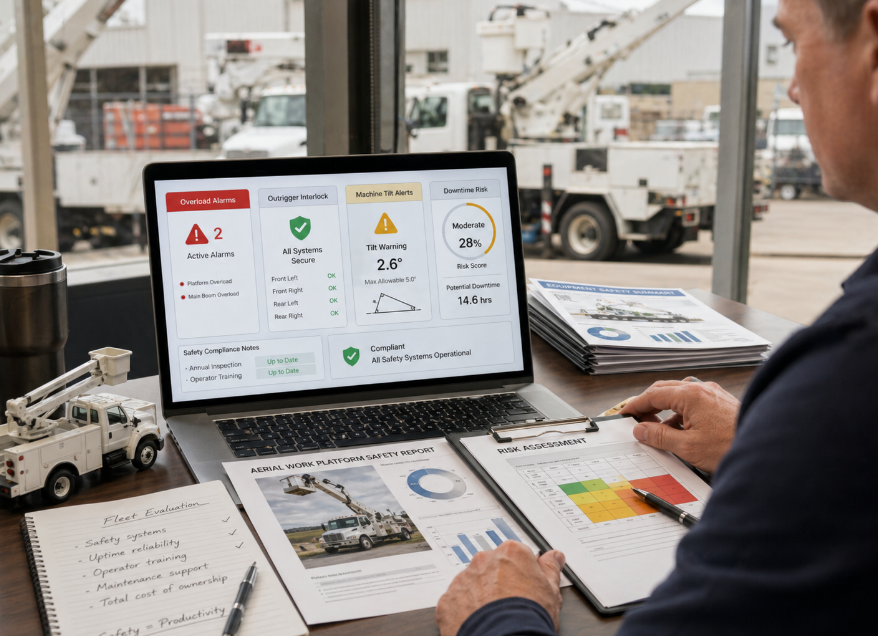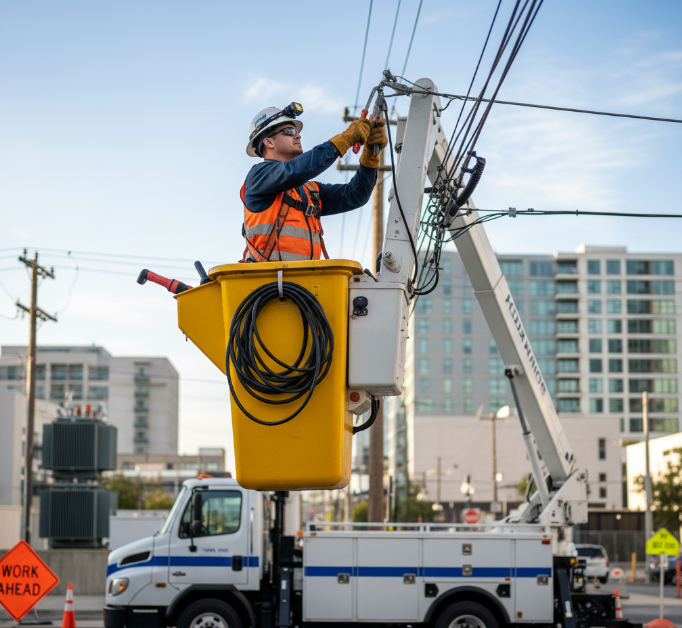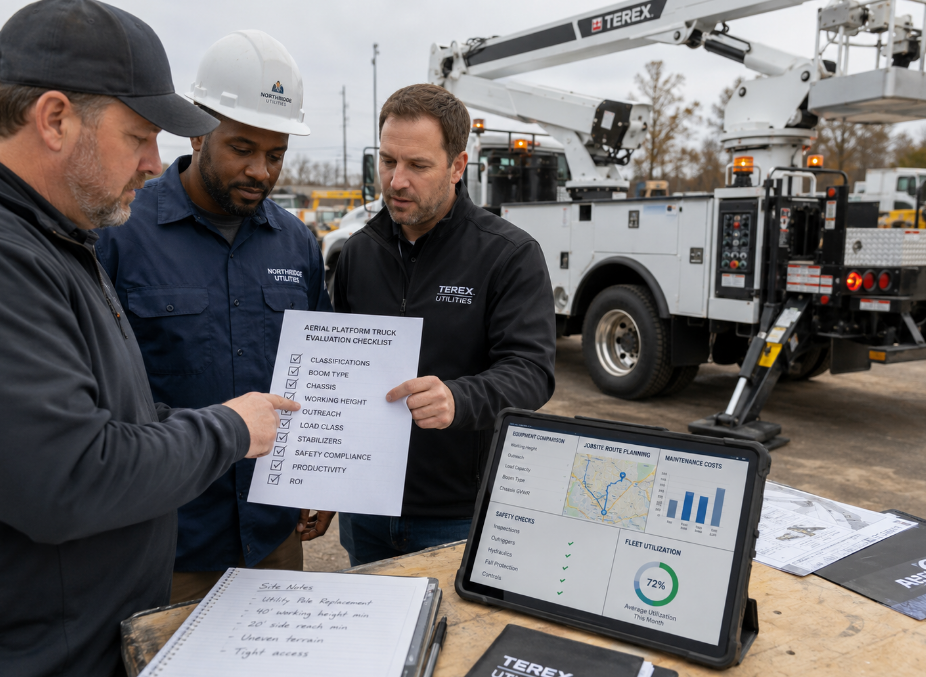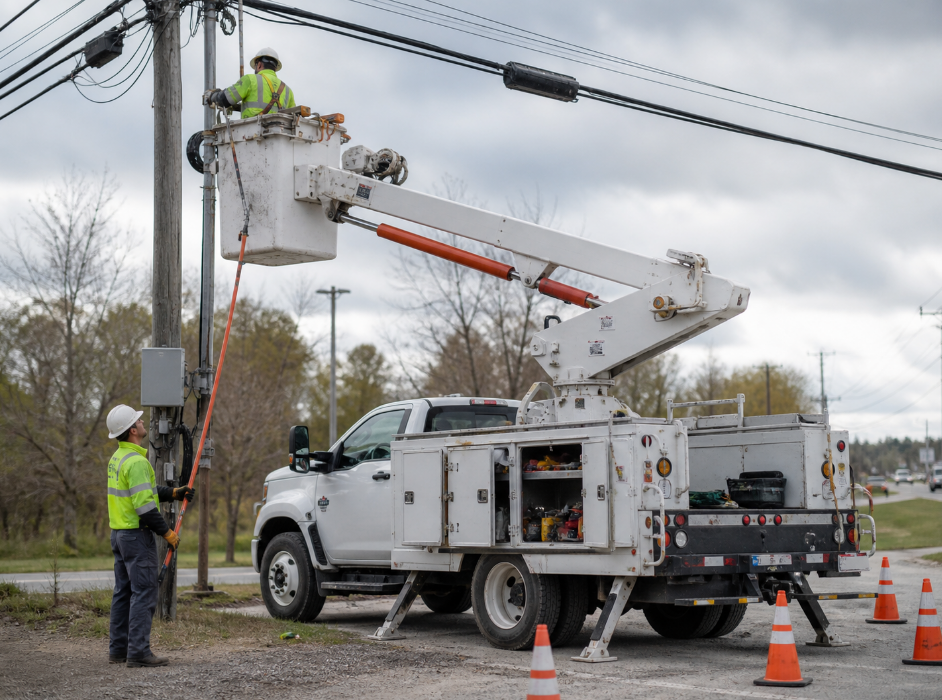
Beat the clock and bad weather—choose a truck mounted aerial work platform that keeps your crew flying high while profits stay grounded.
A truck mounted aerial work platform is the backbone of crews racing daylight to keep power lines humming and fiber online on schedule daily. If uptime slips, profits bleed. Buy smart, or pay twice.
Fleet managers need reach, insulation, and steady controls when the wind kicks up and deadlines close in. Downtime drains cash fast and trust.
Recent reports from MarketsandMarkets and Allied Market Research show rising American demand for aerial work platforms, fueled by grid upgrades and broadband expansion.
Optimize Height & Reach
Choose models with high platform height and extended horizontal outreach to minimize repositioning and cover varied telecom sites.
Prioritize Insulation & Safety
Seek Class C fiberglass booms, load sensing, interlocks, emergency stops, and fall protection to meet OSHA/ANSI standards.
Streamline Controls & Stability
Select proportional joystick controls, 360° rotation, and robust outriggers for precise positioning and reliable steadiness on congested roadways.
Top 5 Bucket Truck Features For Telecom Crews
Telecom jobs move fast, and crews don’t have time for gear that slows them down. A well-built truck mounted aerial work platform keeps technicians steady, safe, and ready to handle overhead lines, fiber installs, and rooftop nodes. Here’s what really counts when choosing the right aerial work platform truck for daily field work.
High Platform Height for Extended Telecom Reach
A serious platform height makes all the difference when chasing tall poles and rooftop antennas.
Core access advantages
Increased working height for dense urban builds
Stable vertical access to overhead lines
Safer positioning at high elevation
On-the-job impact
Fewer relocations of the truck mounted aerial work platform
Cleaner line of sight to attachment points
Better load balance across axles at full extended reach
What to check
Rated aerial access height
Boom stiffness at maximum lift
Chassis support under full elevation
Aerialplatformtruck models are engineered to maintain smooth lift control even at peak height, keeping crews confident up top.
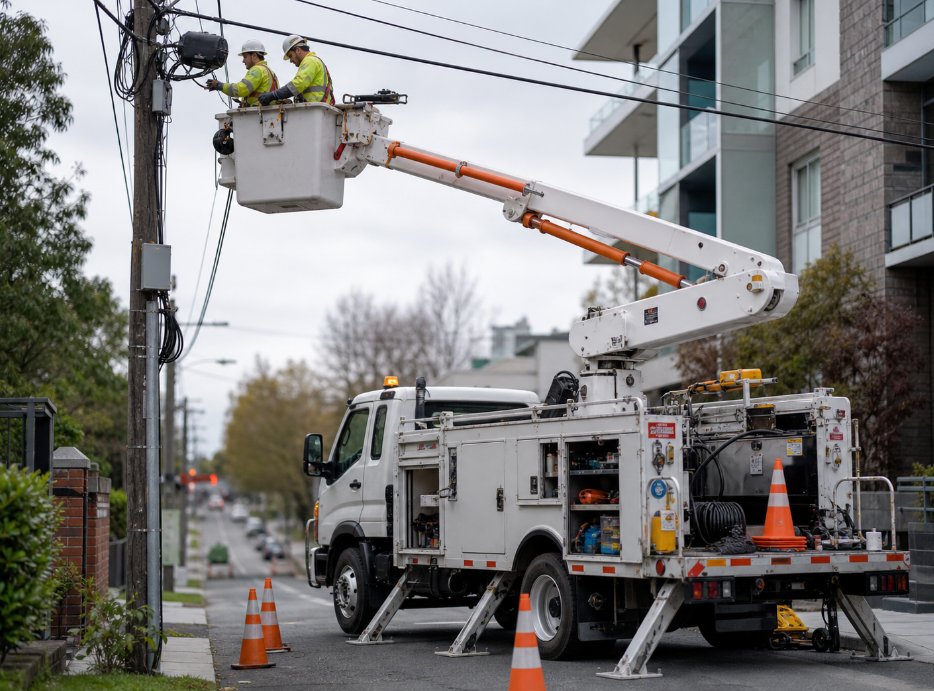
Maximum Horizontal Reach to Span Wide Cable Runs
Long horizontal reach keeps the truck parked once instead of hopping curb to curb.
Strong lateral extension across multi-lane roads
Wider working radius for setback easements
Reliable side reach when spanning long cable runs
Industry demand backs this up:
“Telecom infrastructure expansion in 2025 continues to prioritize equipment that reduces setup time and improves technician efficiency,” notes IBISWorld’s 2025 infrastructure outlook.
A capable truck mounted aerial work platform with strong outreach simply saves hours each week.
Generous Bucket Capacity for Tools and Crew Gear
Heavy days require real bucket capacity, not wishful thinking.
Platform performance
Rated platform load that supports two techs
Ample equipment capacity for splicing kits
Clear weight limit indicators
Operational benefits
Fewer ground trips for forgotten tools
Secure tool storage in tight spaces
Stable handling despite added payload
Safety layer
Integrated overload alerts
Balanced boom response under max crew gear
A well-designed aerial lift truck from Aerialplatformtruck handles daily telecom demands without flirting with overload alarms.
Class C Insulation Rating to Safeguard Against Shock
A Class C insulation rating isn’t optional near energized lines. It provides real electrical safety through tested dielectric strength, shielding operators during live line work. An insulated bucket paired with proper voltage protection reduces the risk of arc exposure and supports strict compliance standards. In a truck mounted aerial work platform, this level of shock protection turns a risky job into a controlled one, especially during fiber installs near mixed utility corridors.
360° Platform Rotation for Precision Positioning
Full 360-degree rotation gives crews total maneuverability.
Continuous platform rotation for tight city streets
Smooth bucket articulation around transformers
Controlled rotational movement without moving the chassis
With precise joystick response, the truck mounted aerial work platform aligns perfectly with clamps, brackets, and splice points. Aerialplatformtruck designs focus on steady precision positioning, so techs can swing, stop, and secure lines without second-guessing their angle.
Comparing Telescopic Vs. Articulating Boom Trucks
Choosing the right truck mounted aerial work platform can feel like picking the right tool from a packed toolbox. Both boom styles get crews safely overhead, yet the way each truck mounted aerial work platform handles reach, height, and tight access makes a real difference on site. Let’s break it down in plain terms.
Telescopic Boom Trucks
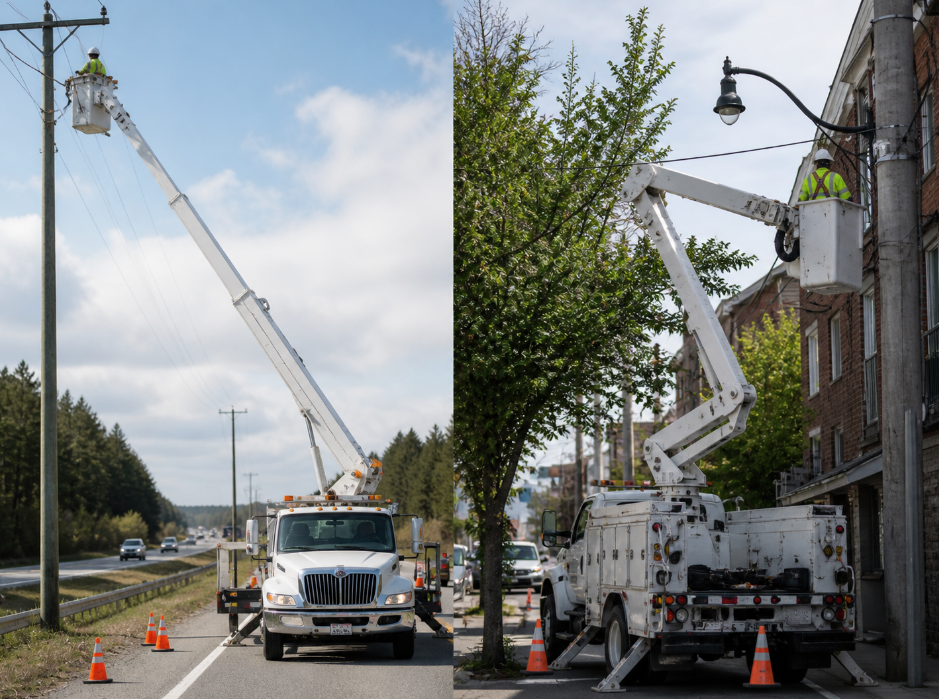
A truck mounted aerial work platform with a telescopic design uses a straight boom that extends outward in one smooth line. That simple motion changes everything for roadside and utility work.
Core Performance
Handles heavier tools for demanding overhead work
Suitable for multi-worker baskets
Higher vertical lift compared to many articulated units
Ideal for tall poles and billboard frames
Strong horizontal extension for long spans across ditches or guardrails
Stable positioning for direct access to power lines
Reach
Platform height
Load capacity
Practical Jobsite Fit
Open highways
Straight cable runs
Clear utility access zones
For contractors running a fleet of truck mounted aerial work platform units, brands like Aerialplatformtruck offer telescopic models built for predictable motion and steady control. When the job is wide open and height is the main goal, this setup just makes sense.
Articulating Boom Trucks
An articulating truck mounted aerial work platform uses an articulated boom with multiple joints. That joint system gives serious maneuverability where space is tight.
Movement Advantage
Navigate trees during tree trimming
Avoid signage or balconies
Swing above rooftops
Drop down behind parapet walls
Up-and-over capability
Obstacle clearance
Access in Tight Areas
Courtyards
Industrial pipe racks
Urban telecom installs
Alleyway maintenance
Confined spaces
Complex access
Operational Value
High versatility across mixed job types
Flexible positioning without relocating the truck
For crews working dense neighborhoods, an articulating truck mounted aerial work platform from Aerialplatformtruck keeps downtime low and positioning precise. When obstacles crowd the site, that bending boom earns its keep fast.
Scenario: Telecom Line Repair With Lift Trucks
Assessing Site Conditions for Power Line Maintenance
Before lifting a truck mounted aerial work platform, crews complete a layered site assessment:
Ground & Base Review
Slope percentage
Drainage paths
Soil compaction check
Hidden void detection
Ground stability
Terrain analysis
Surrounding Risk Scan
Clearance distance
Cross-arm position
Wind speed
Rain or ice buildup
Environmental factors
Nearby power lines
Operational Access
Pedestrian zones
Overhead obstructions
Traffic flow pattern
Emergency vehicle clearance
Access routes
Safety hazards
For a truck mounted aerial work platform, chassis leveling and outrigger spread depend on this groundwork. Aerialplatformtruck units are designed with stable wheelbases to adapt to varied terrain, making roadside maintenance operations smoother and safer.
Selecting Fiberglass Boom Material to Insulate Live Lines
Material choice is not random. It follows a technical path:
Core Construction
Boom construction using reinforced fiberglass boom layers
Electrical Protection
Verified dielectric strength
Tested electrical insulation ratings
Compliance
Alignment with safety standards for live line work
The non-conductive properties of fiberglass add a serious safety edge when a truck mounted aerial work platform works beside energized circuits. Aerialplatformtruck models use certified insulating material that resists moisture and corrosion, reducing shock risk and keeping crews steady at height.
Leveraging Proportional Controls and Joystick Operation
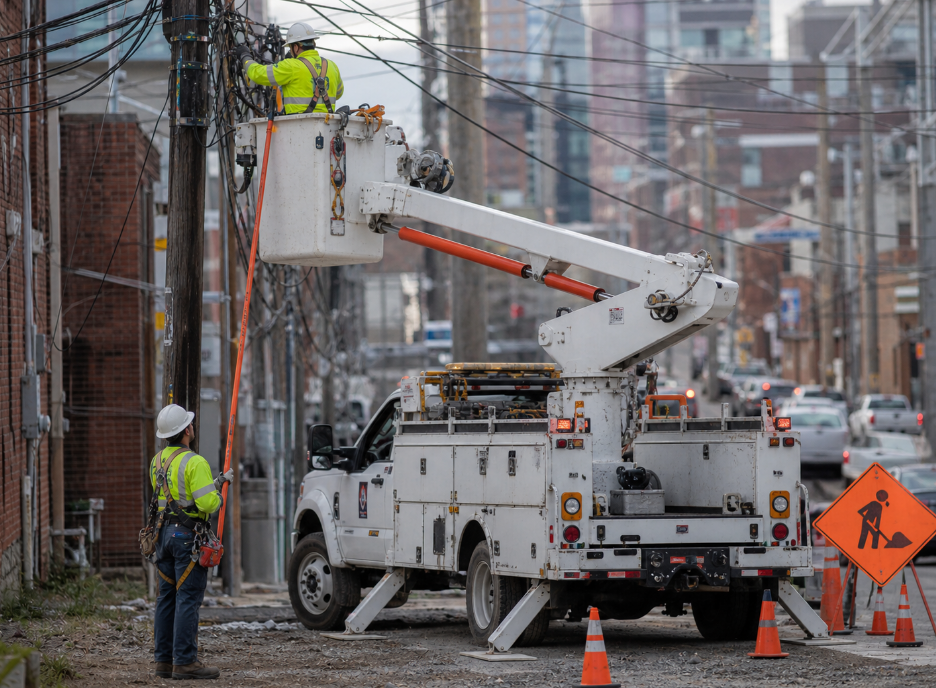
Control precision separates smooth jobs from shaky ones.
Operator Interface
Ergonomic joystick operation
Clear feedback through control systems
Movement Accuracy
Gradual lift
Soft rotation
Fine-tuned proportional controls
Responsive hydraulic controls
Jobsite Advantage
Better maneuverability
Faster control responsiveness
Safer precision movements near cable bundles
An aerial lift truck with refined controls reduces sway during fiber splicing. That steadiness keeps tools, workers, and equipment aligned.
Integrating Emergency Stop and Fall Protection Systems
Safety systems layer together, not stand alone.
Machine-Level Protection
Accessible emergency stop buttons
Interlock-based system integration
Personal Safeguards
Certified fall protection anchor points
Safety harness and lanyard tie-offs
Required personal protective equipment
Incident Response
Clear rescue procedures
Integrated safety systems alerts
A well-built truck mounted aerial work platform combines mechanical safeguards with operator discipline. Aerialplatformtruck focuses on overload control and stability monitoring, helping prevent tip-over events while crews handle high-wire telecom repairs with confidence.
FAQ
What makes a truck mounted aerial work platform suitable for telecommunications installation?
In telecom utility work, height and reach define productivity.
Platform height & reach horizontal: Access tall poles and span roadways without constant chassis repositioning.
Platform rotation & jib articulation: Fine positioning around cables, street lighting arms, and tight construction sites.
Insulation rating (fiberglass boom): Dielectric protection during power line maintenance.
Bucket capacity: Carries a technician plus tools without triggering overload protection.
Mounted on the right chassis type with proper wheelbase length and gross vehicle weight, stability becomes part of daily confidence, not a concern.
How does bucket capacity affect field efficiency?
A cramped bucket slows the job; a well-sized aluminum platform keeps momentum.
Adequate bucket capacity reduces repeated trips to the ground.
Balanced load sensing and stability control prevent sudden lift lockouts.
Fall protection anchor points give technicians freedom to move securely.
In long telecom shifts, comfort and safe space translate directly into fewer interruptions and steadier output.
Why is hydraulic system quality critical in daily operations?
The hydraulic system is the muscle behind every lift.
Hydraulic pump supplies consistent pressure.
Hydraulic cylinders extend smoothly at full platform height.
Control valves regulate motion without jerks.
Filtration system and fluid reservoir preserve internal cleanliness.
Pressure relief devices guard against overload.
When these parts work in harmony, operators feel steady, predictable movement rather than hesitation or drift.
How do telescopic and articulating booms serve different job sites?
Choice depends on the operational environment:
| Application | Telescopic Boom | Articulating Boom |
|---|---|---|
| Open roadside telecom lines | Longer reach horizontal | Moderate |
| Dense tree care areas | Limited flexibility | High jib articulation |
| Construction sites | Direct vertical lift | Maneuver around obstacles |
For street lighting or tight urban utility work, articulation reduces repositioning and operator fatigue.
Which safety systems are essential for telecom repairs?
Working near traffic and energized lines demands layered protection:
Interlock mechanisms prevent lift movement until stabilizers are set.
Emergency stop buttons cut power instantly.
Load sensing and overload protection monitor bucket weight.
Stability control supports safe operation on uneven ground.
Fall protection systems reduce injury risk.
Compliance with ANSI standards, OSHA regulations, and regular safety audits reinforces disciplined operator training.
What vehicle and material specifications influence long-term reliability?
Performance begins below the boom.
Chassis type, axle configuration, and transmission type affect balance and road handling.
Engine displacement supports hydraulic demand under full gross vehicle weight.
High strength steel frames resist flex.
Fiberglass boom delivers dielectric properties and corrosion resistance.
Protective coatings extend service life in harsh weather.
Add ISO standards or CE certification compliance, and the truck mounted aerial work platform becomes more than equipment—it becomes a dependable partner in demanding utility work.