When deadlines bite and safety’s on the line, a truck mounted aerial work platform isn’t gear—it’s your crew’s fearless co‑pilot in the sky.
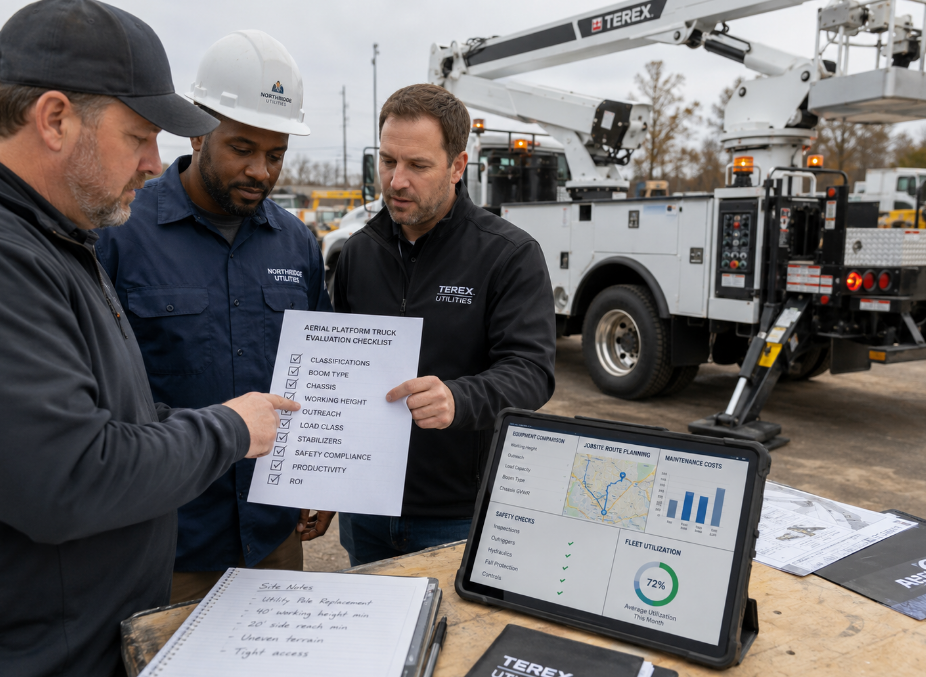
A truck mounted aerial work platform isn’t just a big arm bolted to a truck—it’s the difference between a crew that gets home safe and a crew that rolls the dice. Picture a job site at dawn: steel rising, deadlines barking, and someone’s got to reach 60 feet in the air without wobble or worry. That machine had better be more than “good enough.” It has to perform like a trusted co-pilot.
Behind the lift is a gritty partnership—engine, PTO, hydraulics, boom geometry—all moving in sync like a well-rehearsed pit crew. When one piece underperforms, costs climb fast: downtime, repairs, missed bids. Buyers feel that pinch in their margins.
“Falls remain a leading cause of death in construction,” OSHA reports.
That’s the tension. Understanding how this equipment works isn’t technical trivia—it’s your edge when choosing a model that earns its keep and keeps your people steady in the sky.
Boom Types
Understand boom types—articulated for up-and-over, telescopic for outreach, straight for vertical jobs
Chassis Specs
Verify chassis specs—GVWR, axle configuration and 4x4 drive ensure stability on rough terrain
Hydraulic Power
Maintain hydraulic power—diesel engine, PTO and relief valves deliver smooth lifting and safe load control
Pre-Use Checks
Perform pre-use checks—outrigger interlock, emergency stop, limit switches and fall arrest systems safeguard every lift
What Are The Aerial Platform Components?
Every truck mounted aerial work platform relies on engineering precision. From its boom to safety features, each component adds stability, control, and dependability—vital for elevated tasks across cities and rough terrain alike.
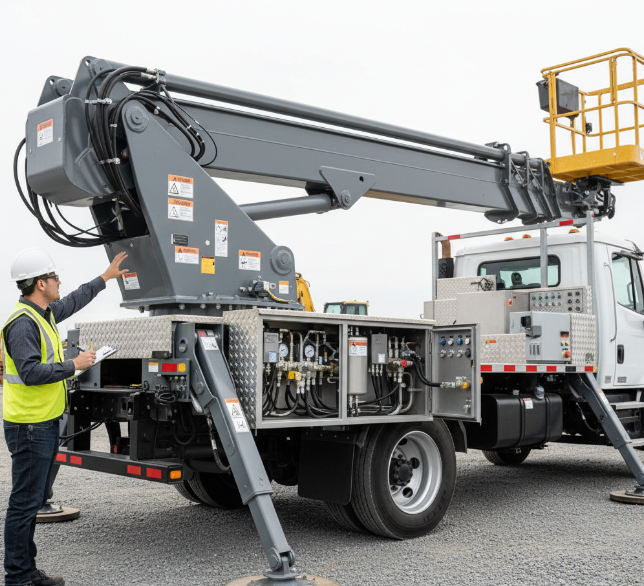
Boom Types: Articulated, Telescopic and Straight
The boom defines how far and flexible a truck mounted aerial work platform can go.
Articulated boom: Built with jointed sections for complex "up-and-over" maneuvers. Operators love it when needing access over rooftops or trees.
Telescopic boom: Extends in straight sections for maximum horizontal reach; ideal when the platform must bridge wide spaces like bridges or shipyards.
Straight boom: A more compact version that favors simple vertical extension, great for maintenance or painting façades.
Aerialplatformtruck engineers design each configuration for purpose-driven work.
“By 2025, flexible aerial platform designs are projected to dominate 60% of fleet upgrades,” according to a 2024 report from the Global Construction Equipment Council.
Vehicle Chassis Essentials — GVWR, Axle Configuration and 4x4 Drive
The vehicle chassis carries it all. A truck mounted chassis must have the correct GVWR—the gross vehicle weight rating that ensures balance between payload and control.
Axle configuration affects turning radius and field performance.
4x4 drive grants traction in loose soil or steep grades.
A quick guide to chassis logic:
Assess stability through proper suspension tuning.
Match mobility requirements with terrain conditions.
Confirm axle configuration suits both road and off-road operation.
A well-built base ensures dependable lift performance even under tough site conditions.
Power System Elements: Diesel Engine, Hydraulic Pump and Battery Pack
At the heart of every truck mounted aerial work platform lies a tight power trio:
The diesel engine delivers raw torque.
A hydraulic pump channels that power to elevation arms.
A battery pack stores auxiliary power for emergency or nighttime maintenance.
Here’s how it works in sequence:
The engine turns mechanical energy into hydraulic pressure.
The hydraulics lift and maneuver the equipment.
The battery pack kicks in silently during idling or low-noise urban operations.
By integrating hybrid power modes, Aerialplatformtruck units balance fuel savings with strong, consistent output.
Core Safety Features — Outrigger Interlock, Fall Arrest System and Anti-Crush Bar
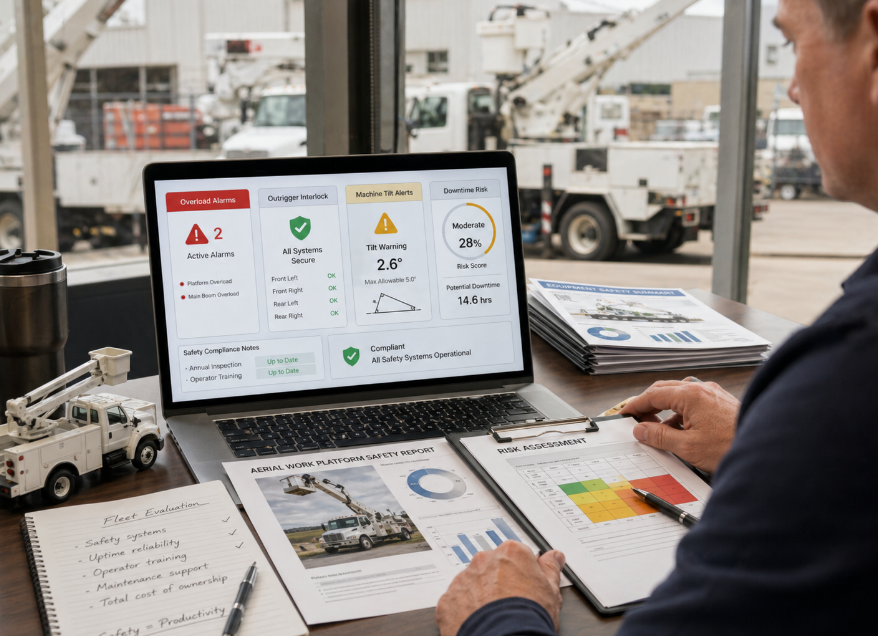
Safety is the last thing to compromise. Modern safety features work like invisible guardians on a truck mounted aerial platform.
The outrigger interlock halts operations unless stabilizers are fully spread.
The fall arrest system anchors the operator against gravity.
And the anti-crush bar prevents accidental entrapment near obstacles.
For added protection:
Test stability control before elevation.
Inspect operator safety gear daily.
Keep the emergency stop mechanism responsive.
When all features sync, the operator gains assurance—knowing every rise is as safe as it is smooth.
How Is Hydraulic Pressure Generated?
Understanding hydraulic pressure means digging into how power moves from a diesel engine to the hydraulic pump, and how backup systems keep everything moving even when the main source is silent.
In a truck mounted aerial work platform, this system defines how smoothly and safely operations run on-site.
Diesel Engine and PTO Drive Mechanism
In a truck mounted aerial platform, the diesel engine is more than just the powerhouse—it’s the heartbeat of the hydraulic pump drive. When the power take-off (PTO) engages, it redirects part of the engine output from the vehicle chassis to spin the pump, converting speed into force.
Power Transmission Chain
The diesel engine transfers torque to the PTO, which then drives the hydraulic pump.
The drive ratio determines how fast fluid pressure builds within the lines, directly affecting boom motion.
Operational Synchronization
Idle speed must remain stable; RPM fluctuations can cause uneven mechanical power delivery.
Maintenance of the PTO coupling is vital—it reduces vibration and loss in energy transfer.
Nested Relationship
Drives PTO gear mechanism
Produces hydraulic pressure for lifting, extending, or rotating the boom.
Turns hydraulic pump shaft
Diesel engine output
That seamless rhythm between the mechanical and hydraulic systems forms the invisible muscle of every aerial lift truck in use today.
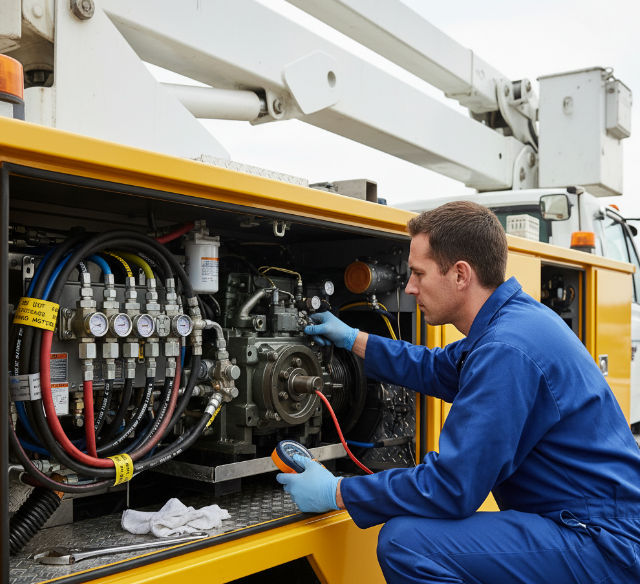
Hydraulic Pump Operation with Relief Valves and Limit Switches
The hydraulic pump turns mechanical power into pressure generation, moving hydraulic fluid through a network of pipes and control valves. In a truck mounted aerial work platform, this flow governs every lift and rotation. Too much pressure, though, can spell trouble.
| Component | Function | Typical Pressure (bar) |
|---|---|---|
| Hydraulic pump | Converts torque to flow | 160–210 |
| Relief valve | Prevents overpressure | 220 max |
| Limit switch | Restricts reach angles | Set by OEM |
| Control valve | Directs flow paths | Variable |
Stepwise pressure control means:
The pump sends fluid to the actuator.
The relief valve opens at limit pressure to protect the system.
The limit switch ensures no mechanical overreach occurs.
According to a 2024 report from Global Fluid Power Insights, “integrating smart relief valves and predictive limit-switch logic has improved hydraulic platform reliability by over 15% worldwide.”
Together, these components work like a choreographed team, protecting the hydraulic circuit and giving the operator precise control.
Auxiliary Power Unit and Battery Pack Support
Sometimes the diesel engine rests. Yet the job must go on. Here’s where the auxiliary power unit (APU) and battery pack take the spotlight on your truck mounted work platform.
Normal Mode: The engine supplies mechanical flow via hydraulic pump rotation.
Backup Mode:
The battery pack energizes an electric motor.
This motor runs a compact hydraulic pump, providing emergency lift or rotation.
The electrical supply feeds basic instrumentation and lighting.
In short, when the main engine sleeps, the APU steps up. This secondary circuit keeps operators safe and mobile—an essential edge for emergency utility servicing, fire rescue, or night maintenance.
Each supporting part—engine, pump, and APU—blends seamlessly into the hydraulic story of the truck mounted aerial work platform, ensuring power never truly stops flowing.
4 Steps To Pre-Use Inspection
A proper pre-use inspection keeps every truck mounted aerial work platform safe, steady, and ready to roll. Operators know that one overlooked detail could flip an entire workday upside down. These four steps combine practical checks with straightforward human judgment, aligning with safety norms and OSHA rules so your lift behaves exactly as designed.
Step 1: Verify Stabilizer Spread and Outrigger Interlock
Before lifting off, confirm each stabilizer is fully extended and the outrigger groundwork is firm. Look for any uneven terrain that could mess with vehicle leveling or the interlock system.
Make sure the stabilizers touch solid ground uniformly.
Inspect under each pad for loose soil or debris.
If uncertain, reposition the vehicle until a smooth stability check passes.
Operators usually rely on a short pressure test: engaging hydraulic spread to lock the ground support system. Many accidents happen just because this part gets rushed. When in doubt, treat it like the foundation of a house—never climb before it’s set.
Step 2: Test Emergency Stop and Overload Protection
Safety systems aren’t just buttons; they’re lifelines. Tap the emergency stop button, watch the lift halt immediately. That’s the way it should feel—instant freeze. Then put slight pressure on the control panel to test overload.
Trigger overload protection during the load setup phase.
Confirm lights or buzzers flash in response.
Review system readings on the safety device, validating a functional cutoff.
A 2024 report from the International Powered Access Federation highlights that 80% of lift-related injuries stem from untested safety circuits before use.
So never skip this functional test—a quick push could spare serious trouble when the platform operation gets intense.
Step 3: Inspect Boom Length, Rotation Angle and Limit Switches
A smooth operator eye-checks every boom length adjustment and rotation angle alignment. The goal? Stop mechanical damage before it begins. Each limit switch defines an invisible wall protecting your gear.
Extend the boom extension gradually, pausing as it reaches set limit marks.
Observe the slewing mechanism for any twitch or delay.
Check electrical leads for fray or corrosion—often missed during casual looks.
Tilt sensors and safety limits tend to kick in early when calibrated right. Use visual cues; your sight and hearing matter as much as control signals. Keeping the operational range clean means longer equipment life and fewer maintenance headaches.
Step 4: Check Platform Capacity and Fall Arrest System
Each platform capacity rating is more than a number—it's a promise between machine and operator. Verify that no one on-site overloads the lift or skips personnel safety gear.
Check weight tags; compare against the load rating label.
Inspect every harness, lanyard, and anchor bolt visually.
If you’re using a truck-mounted aerial platform, match worker count with total allowed weight. Overload means fatigue not just for metal but for people. The fall arrest system should feel comforting, never loose or frayed. Always make sure everyone clips in, no shortcuts.
Four small habits
Construction Site: Maximizing Reach Safely
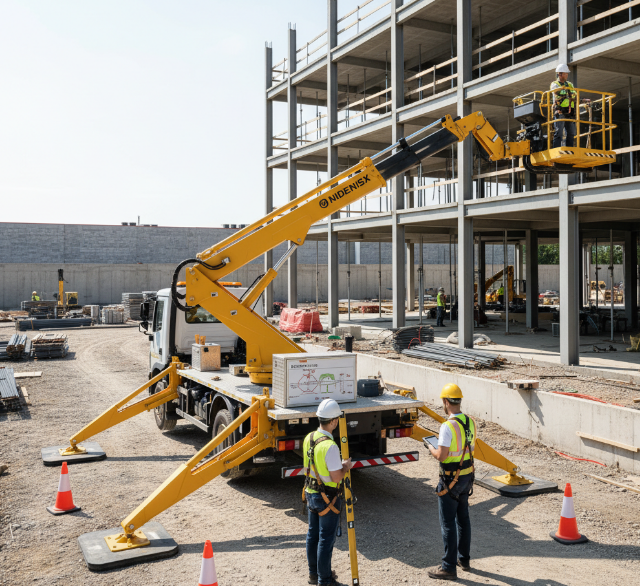
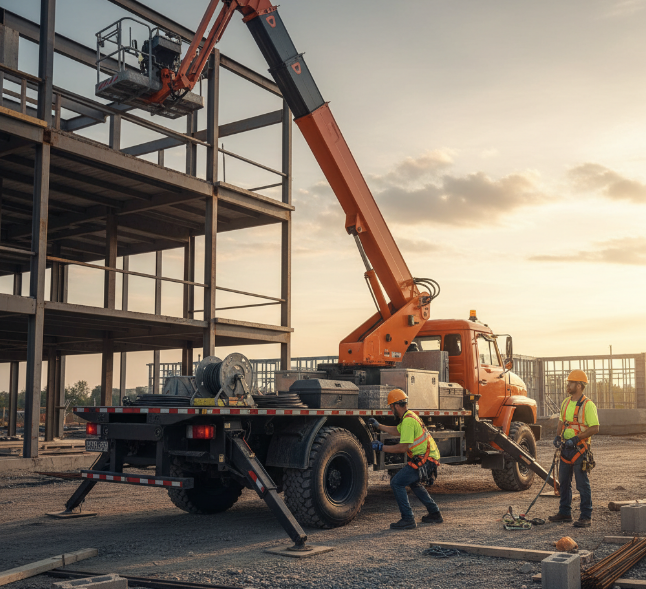
Getting the most out of a truck mounted aerial work platform on a job site means balancing reach, stability, and compliance. Each consideration — from uneven terrain to strict safety rules — plays into how an operator can work efficiently and still keep things safe.
Calculating Horizontal Outreach for Uneven Terrain
Uneven ground changes everything. You can’t just roll up and extend the boom; you’ve got to factor in the slope, the ground conditions, and the outrigger spread before pushing the limits of the horizontal outreach.
Start by checking the terrain profile using standard slope gauges.
Compare readings against the platform’s allowed load distribution.
Reference manufacturer load charts to find the safe boom extension under those specific angles.
Don’t forget stability calculations — they help compensate for crumbled surfaces or soft soil where tires might sink slightly.
| Terrain Type | Slope (%) | Recommended Outrigger Spread (m) | Max Outreach (m) |
|---|---|---|---|
| Gravel Yard | 3% | 2.8 | 10.5 |
| Loose Earth | 5% | 3.1 | 9.2 |
| Concrete Pad | 1% | 2.3 | 12.0 |
| Compacted Clay | 4% | 2.9 | 10.0 |
Every site changes the numbers, and a small error can turn costly fast. A truck-mounted aerial work device should always be set up using slope-aware compensation systems for accurate outreach estimation.
Ensuring Stability with Automatic Platform Leveling
Modern units come with an automatic leveling system that keeps operators balanced even when the ground isn’t. Inside that technology, hydraulic cylinders and tilt sensors react to uneven pressure, aligning the structure through precision control algorithms.
The whole setup runs in a series of steps:
Sensors measure tilt angle.
The algorithm triggers chassis stabilization via controlled fluid pressure.
Safety interlocks ensure no movement occurs while re-leveling.
That’s how the platform maintains leveling accuracy. It’s not magic — it’s engineering meeting safety needs. Aerialplatformtruck units often achieve ±0.5° tolerance, meaning you can work steadily even on minor slopes without feeling like the platform might rock.
Field analysts at Global Construction Metrics in early 2024 noted that automatic leveling systems reduce operator fatigue by nearly 18% on prolonged shifts — that’s not a small deal when safety and productivity intertwine.
Complying with OSHA Regulations and ANSI Standards
Rules aren’t just red tape; they save lives. OSHA regulations and ANSI standards determine how operators handle lifts and how equipment inspection gets logged. A truck mounted aerial work platform crew must demonstrate operator certification before every use.
Safety compliance ties directly into construction workflow through several nested requirements:
Fall protection: Tested harnesses and secure anchor points.
Risk assessment: Reviewing local terrain conditions before lift setup.
Safety protocols: Standardized checklist every time the unit moves to a new job zone.
Under supervision, ensuring routine inspection every 90 operating hours reduces incidents significantly. When these standards meet on-site discipline, both machine and operator stay exactly where they're meant to be — upright and fully compliant.
FAQ
What boom types are available for a truck mounted aerial work platform?
Choosing the right platform type shapes how safely and efficiently crews can work at height.
Articulated boom – Flexible joints allow up-and-over movement around obstacles, ideal for building facade maintenance and tree trimming.
Telescopic boom – Extended horizontal outreach and long boom length support bridge inspection and large construction sites.
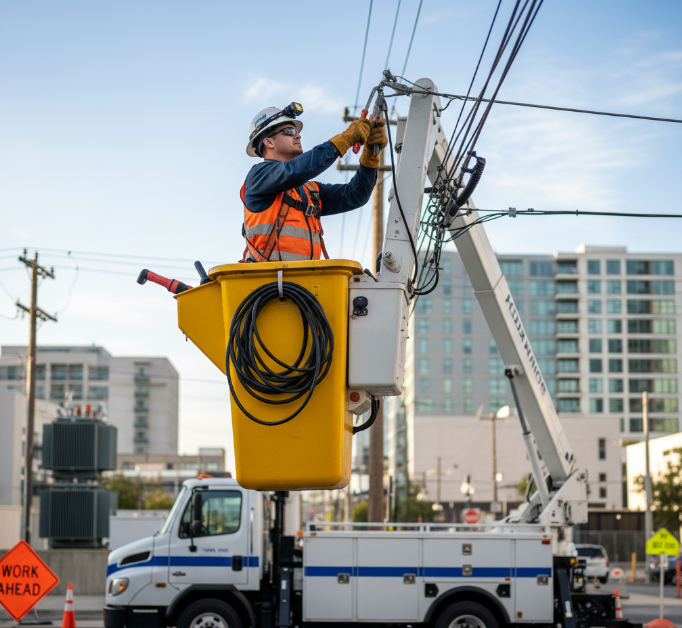
Straight boom – Direct vertical lifting with a wide rotation angle, often preferred for utility maintenance.
For specialized tasks:
Insulated boom bucket truck → Safe for power line work.
Non-insulated boom personnel lift → Suitable for general telecommunications installation.
Key metrics to compare include working height, platform capacity, horizontal outreach, and stabilizer spread.
How does the hydraulic and power system operate on a truck mounted aerial work platform?
At the heart of the machine is a coordinated power chain:
Diesel engine → PTO → Hydraulic pump
Mechanical energy converts into hydraulic pressure for lifting, rotation, and stabilization.
Modern systems may also include:
Hybrid power with an electric motor for low-noise urban jobs.
Battery pack or auxiliary power unit for emergency lowering.
Control flows through:
Proportional controls with joystick control at platform controls.
Ground controls linked by a CAN bus system.
Remote diagnostics to monitor payload capacity, boom length, and rotation angle in real time.
The result is smooth motion, steady platform capacity, and confident handling on demanding construction sites.
What safety and compliance features should buyers prioritize?
For fleet managers, safety is not optional—it protects crews and reputation.
Core protection systems
Outrigger interlock tied to stabilizer spread
Overload protection monitoring platform capacity
Emergency stop at both ground and platform controls
Anti-crush bar near the basket
Stability & operator security
Automatic platform leveling on uneven terrain
Fall arrest system anchor points
Limit switches controlling boom length and working height
Regulatory alignment
Units should comply with OSHA regulations, ANSI standards, and, where required, CE certification or EN280 standard. Proper GVWR, axle configuration, suspension system, and heavy-duty chassis selection ensure inspection requirements are met from day one.