Pick the wrong truck mounted aerial work platform and watch profits plummet; choose right, and your fleet soars past downtime drama.
Choosing the wrong truck mounted aerial work platform can choke productivity and burn budget fast.
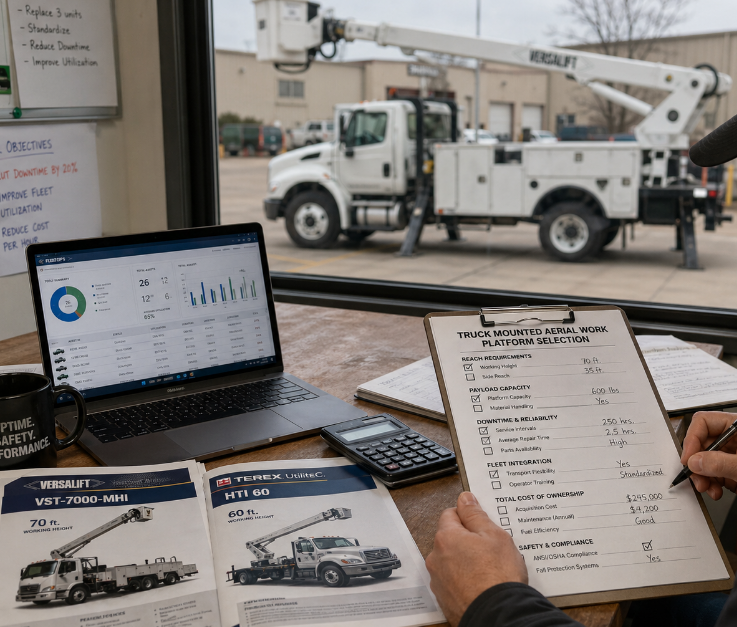
Fleet managers feel the heat when reach falls short, crews idle, or an overbuilt boom guzzles capital that should fund growth. Get the spec right, and uptime climbs while risk drops.
According to IBISWorld’s 2025 industry report, North America’s aerial equipment rental market continues growth driven by infrastructure spending.
Quick Answers for Truck Mounted Aerial Work Platform Mastery
Payload Balance
Balance payload by summing operators, tools, attachments and safety gear to avoid overload locks.
Boom Selection
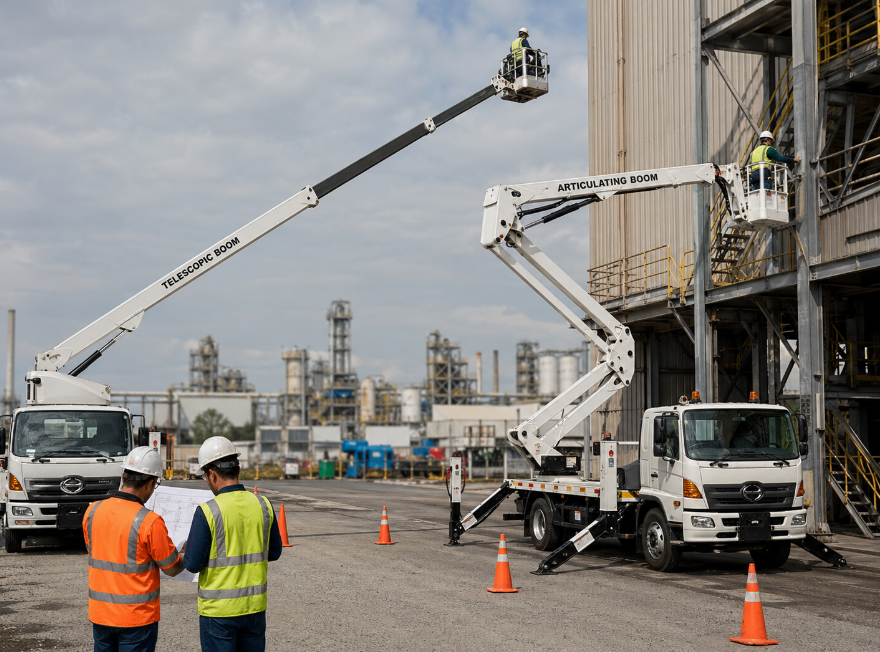
Choose telescopic booms for open-site reach; articulating booms for confined or obstacle-dense jobs.
Chassis Match
Verify chassis load rating, axle setup, suspension and frame reinforcement before mounting the boom.
Safety Priority
Prioritize emergency stop, overload sensors, fall-arrest anchors and tilt-sensor stabilizers for safe operations.
What Lift Capacity Do You Truly Need?
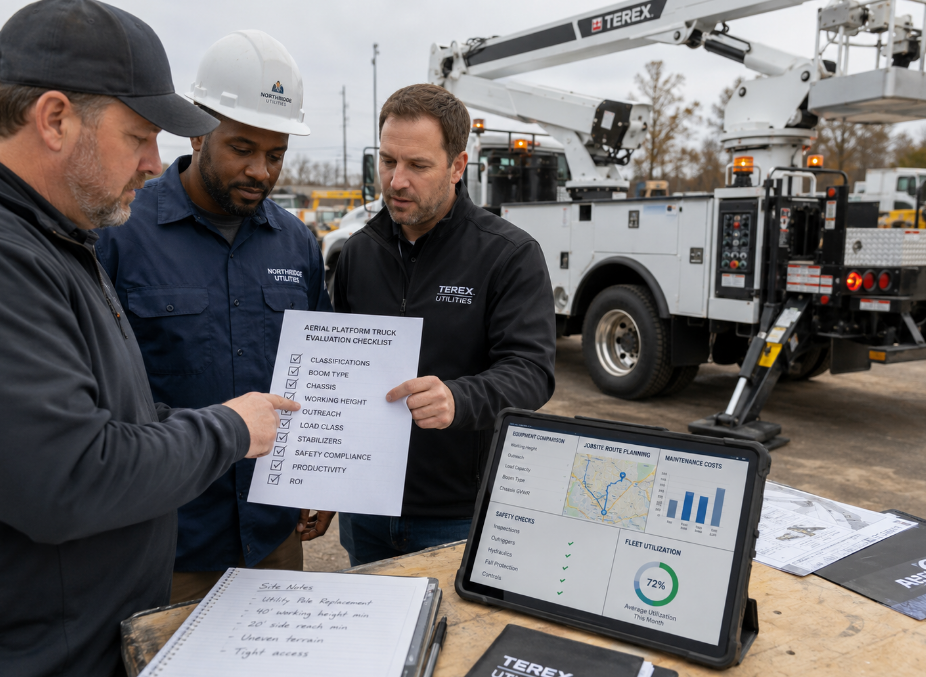
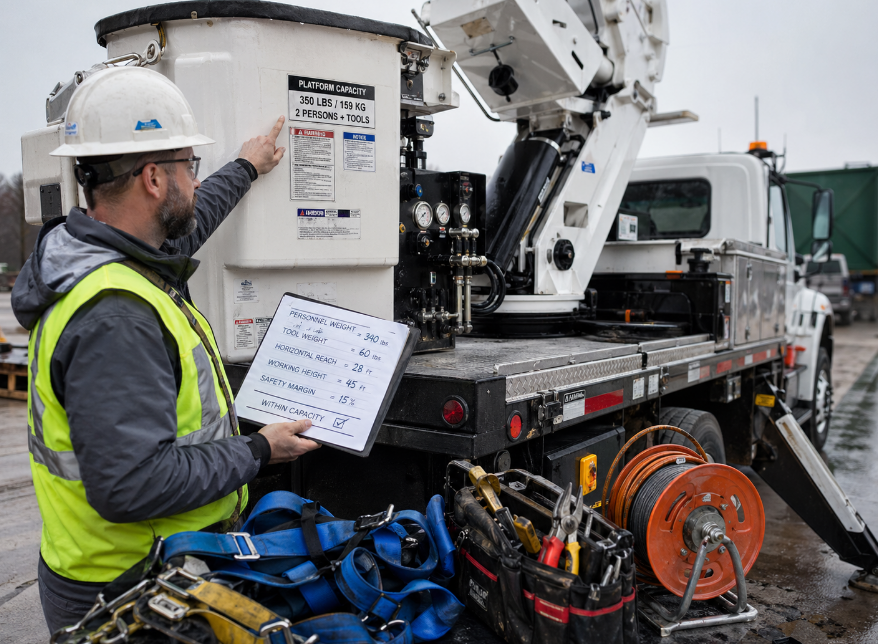
Choosing the right truck mounted aerial work platform isn’t just about height. It’s about weight, reach, and how the whole truck holds up under pressure. A smart pick keeps crews safe, tools steady, and jobs running smooth without nasty overload surprises.
Balancing Payload Capacity with Tools and Personnel
When sizing a truck mounted aerial work platform, break down total demand into clear layers:
Personnel Load
Calculate personnel weight per operator.
Add seasonal gear and harnesses.
Keep a built-in safety margin for real-world shifts.
Equipment on the Platform
Track tool weight including power units.
Include material weight like cable reels or fixtures.
Confirm allowable platform load from manufacturer specs.
Distribution Matters
Check weight distribution inside the bucket.
Offset uneven loading that strains rotation systems.
Protect rated payload capacity limits.
A truck mounted aerial work platform from Aerialplatformtruck is engineered to handle balanced loads without tripping overload alarms mid-task. And yes, that peace of mind counts.
Factoring Working Height and Horizontal Reach Demands
Lift charts tell only part of the story. Real jobs stretch equipment to the edge of its operating envelope.
Vertical Demand
Confirm true working height, not just platform height.
Account for vertical extension under load.
Horizontal Pressure
Measure required horizontal reach and side outreach.
Watch how leverage shifts at full extension.
Ground Interface
Verify ground clearance during travel.
Match outrigger footprint to terrain.
The 2025 Global Access Equipment Outlook by Interact Analysis notes that higher outreach applications are driving stricter stability expectations across mounted lift categories.
A properly configured truck mounted aerial work platform keeps stability tight even when stretch and swing are maxed out. That’s where smart boom geometry pays off.
Matching Chassis Load Ratings and Frame Reinforcement
A lift is only as strong as the truck under it. Every truck mounted aerial work platform should align with:
Core Vehicle Ratings
Confirm chassis load rating.
Check gross vehicle weight compliance.
Validate axle capacity front and rear.
Structural Backbone
Inspect frame reinforcement zones.
Protect long-term structural integrity.
Stability on Site
Evaluate outrigger spread width.
Maintain overall vehicle stability during rotation.
An integrated aerial work platform truck built by Aerialplatformtruck pairs boom design with truck specs from day one. That tight match keeps the truck mounted aerial work platform steady on the road and solid in the air.
Telescopic Vs. Articulating Booms: Which Wins?
Choosing the right boom for a truck mounted aerial work platform can feel like picking tools from a crowded toolbox. Reach, access, and jobsite layout all matter. Let’s break down how each boom style performs in real-world truck mounted aerial work platform operations.
Telescopic Boom
When a truck mounted aerial work platform is built with a telescopic boom, the focus is clear and direct.
Core Structure
Straight extension design keeps movement linear.
Fewer moving parts mean a simple design.
Enhanced stability during high lifts.
Reach & Height
Delivers maximum reach across open ground.
Higher platform height for bridge or stadium work.
Wide work envelope in forward direction.
Performance on Site
Strong load capacity for tools and crew.
Faster positioning on flat terrain.
Ideal for utility fleets using a truck mounted aerial work platform daily.
For highway lighting or wide construction zones, Aerialplatformtruck often recommends this setup. Less swing, more straight-line muscle. That’s the vibe.
Articulating Boom
An articulating truck mounted aerial work platform plays a different game—tight spaces, tricky angles.
Mechanical Design
Multiple articulation points with multiple joints.
Compact turning thanks to a compact footprint.
Access Advantage
True up-and-over reach around steel frames.
Superior obstacle clearance near walls.
Greater maneuverability between structures.
Job Flexibility
Expands the practical work envelope vertically and sideways.
Handles complex access in refineries or urban builds.
Adds real work flexibility for city-based truck mounted aerial work platform fleets.
Aerialplatformtruck highlights this style for maintenance crews who deal with pipes, signage, and tight corners. Different jobs, different strengths—your truck mounted aerial work platform just needs the right arm on top.
Top 4 Safety Features You Need
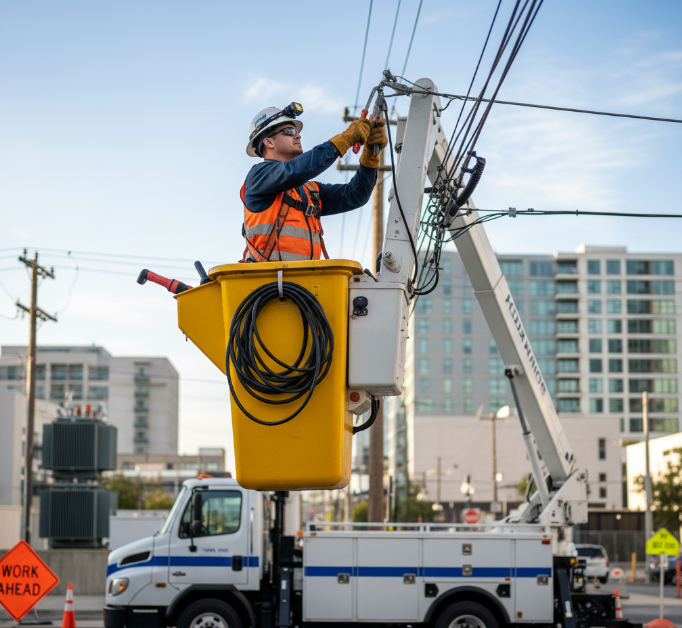
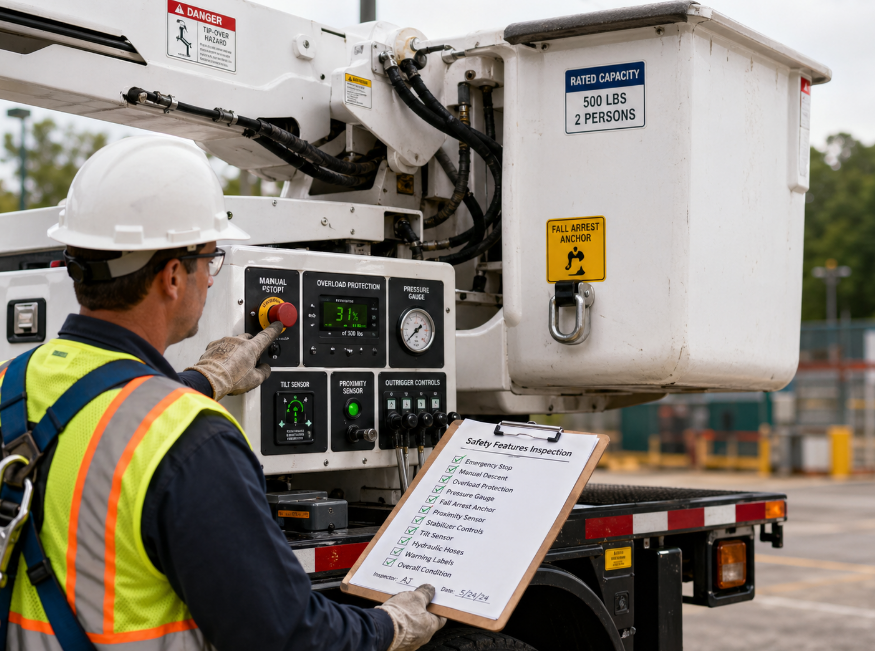
Working at height isn’t a joke. A truck mounted aerial work platform lifts crews fast, but safety tech is what keeps everyone heading home in one piece. From hydraulic backups to smart sensors, each feature below plays a real role on a busy jobsite. If you run a truck mounted aerial work platform, these are the non-negotiables.
Emergency Stop and Manual Descent Mechanisms
On a truck mounted aerial work platform, the emergency stop and manual descent setup acts as the core safety mechanism.
Control Layer
Backup override panel
Assisted emergency lowering
Instant platform control cut-off button
Cuts power to the hydraulic system
Platform Level
Ground Level
Hydraulic Backup
Release valve engages
Controlled oil return flow
Smooth basket descent for operator safety
This setup matters on any truck mounted lift. Aerialplatformtruck integrates dual-channel stop circuits so the boom responds without delay.
Overload Protection Using Pressure Gauges
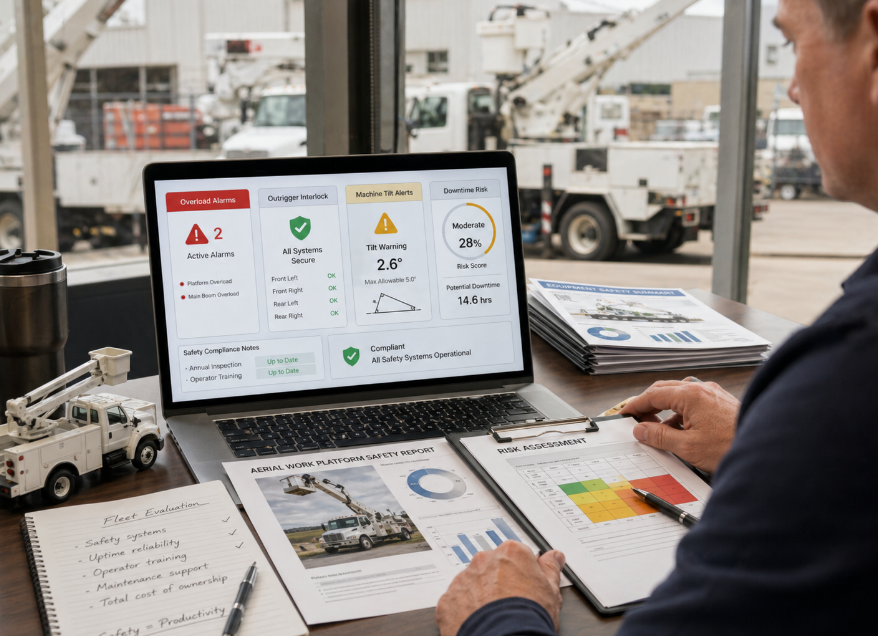
Load safety depends on accurate overload protection tied to a calibrated pressure gauge and weight sensor feedback.
Monitoring Chain
Hydraulic pressure reading
Real-time load limit comparison
Safety alarm trigger
If platform capacity is exceeded:
Warning buzzer activates
Boom extension locks
Lift motion slows or stops
| Rated Load (kg) | Hydraulic Pressure (MPa) | System Response |
|---|---|---|
| 200 | 16 | Normal lift |
| 250 | 18 | Warning alert |
| 300 | 20+ | Movement lock |
A stable truck mounted aerial work platform should never guess its weight. It should know it.
Fall Arrest Anchors with Proximity Sensors
Height work demands reliable fall arrest gear and certified anchor point strength.
Personal Protection
Full-body safety harness
Shock-absorbing lanyard
Rated personal protective equipment
Smart Distance Control
Proximity sensor scans nearby obstacles
Boom slows near restricted zones
Interlock prevents unsafe outreach
Outcome
Active fall prevention
Reduced side-impact risk
On a truck mounted aerial device near power lines, this combo keeps crews sharp and secure.
Tilt Sensors Paired with Stabilizer Outriggers
Ground conditions change fast. A tilt sensor constantly checks chassis angle to protect platform stability.
Stability System
Auto-adjust spread width
Balance ground pressure
Measures slope in degrees
Feeds data to safety interlock
Sensor Detection
Stabilizer outrigger Control
If limits exceed safe range:
Alarm sounds
Boom movement pauses
Operator re-levels using the leveling system
For real-world job sites, Aerialplatformtruck pairs smart sensors with reinforced boom stability so your truck mounted aerial work platform stays steady—even when the terrain isn’t.
FAQ
What factors determine the right lift capacity for a truck mounted aerial work platform?
Choosing the correct load capacity is more than reading a spec sheet—it protects crews and equipment every day.
Key weight considerations
Personnel + safety gear + tool trays
Insulating bucket or fiberglass construction platform
Material handling attachments
Extra items such as work lights or spare components
Technical checks before purchase
Confirm rated payload capacity matches real working conditions, not ideal ones.
Verify overload protection, pressure gauges, and interlock system respond accurately.
Ensure the hydraulic pump, hydraulic cylinders, and relief valves maintain stable lifting at maximum working height and horizontal reach.
A unit that looks strong on paper but strains its PTO system or suspension system under peak load will shorten chassis life and affect stabilizer spread performance over time.
How does boom type affect jobsite performance?
Boom selection shapes how the truck mounted aerial work platform behaves in tight streets or open industrial yards.
Telescopic boom
Straight boom or multi-stage boom design
Faster setup time
Greater horizontal reach in open areas
Higher working height with simpler rotation capabilities
Articulating boom
Multiple pivot points, often with jib extension
Easier obstacle clearance around buildings
Flexible positioning near confined structures
For energized work, an insulating boom paired with an insulating bucket and grounding system adds protection. For material lifting, a material handling boom increases versatility—but demands closer attention to axle configuration and frame reinforcement.
Which safety and control systems are most critical during operation?
When the platform rises, tension rises with it. Stability and response speed matter.
Core safety systems
Emergency stop and manual descent for controlled lowering
Tilt sensors linked to stabilizer outriggers
Boom limit switches and warning alarms near rotation angle limits
Fall arrest anchors and proximity sensors around hazards
Control and hydraulic coordination
Proportional controls with joystick controls for smooth motion
Ground controls plus platform controls with emergency override
Hydraulic pump, control valves, and filtration system working under monitored pressure gauges
A well-matched braking system, tire type, and suspension system keep the truck steady during setup and travel speed transitions. When every system speaks clearly—through display panel feedback or CAN bus system diagnostics—operators feel calm, focused, and in command even at full outreach.