Deadlines don’t wait—when lift meets reliability, your aerial work platform truck turns pressure into profit and downtime into applause.
An aerial work platform truck isn’t just equipment—it’s the difference between hitting deadlines and watching crews stall midair.
In 2025, JLG Industries’ president publicly emphasized that safety engineering and uptime remain the core design drivers guiding every new platform release.
Contractors want reach, stability, and fuel sense without babysitting breakdowns or bleeding cash on every job.
Key Points: Aerial Work Platform Truck Mastery
Feature Essentials
Multi-stage booms, articulating arms and stabilizer outriggers deliver reach, rigidity and safety.
Safety & Uptime
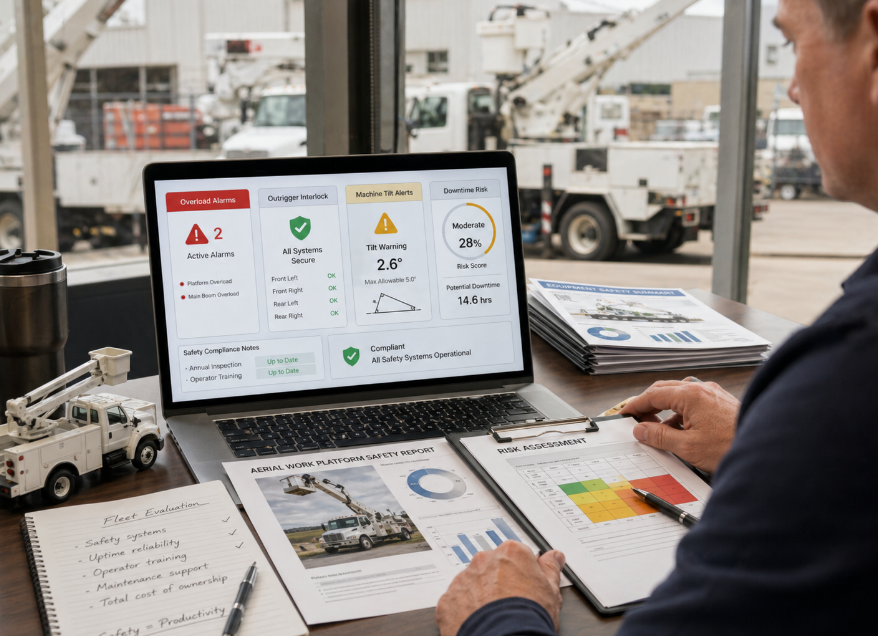
Overload sensors, stability monitors and robust hydraulics minimize downtime and boost jobsite reliability.
Efficiency & ROI
Hybrid power units and lightweight aluminum profiles cut fuel costs, accelerate payback and lower total cost of ownership.
Top 5 Boom Truck Models Worldwide
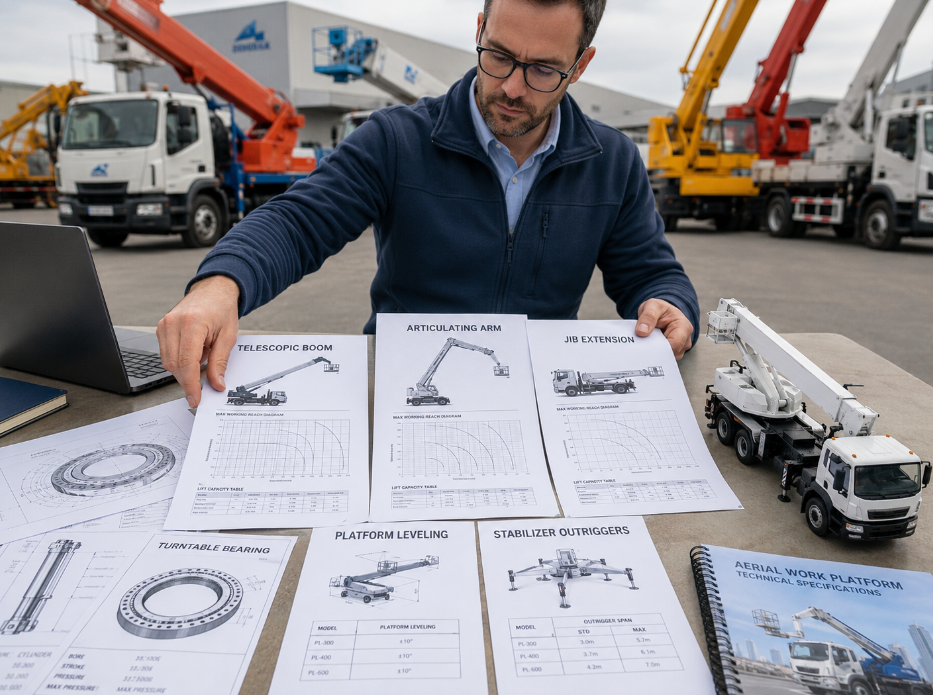
Boom trucks sit at the heart of today’s aerial work platform truck market. From city lighting installs to bridge checks, every aerial work, work platform, and platform truck setup needs height, balance, and guts. Below, we break down what makes each aerial work platform truck model stand out—and why Aerialplatformtruck keeps showing up on serious job sites.
Telescopic Boom Titan with Advanced Hydraulic Cylinder Kits
Core build
Telescopic boom crafted from high-tensile steel
Multi-stage extension system
High-pressure hydraulic cylinders driving the lifting mechanism
Performance logic
Long reach supports higher elevation tasks.
Reinforced welds improve heavy-duty stability.
Smooth cylinder stroke reduces sway.
| Model Type | Max Reach (m) | Lift Capacity (kg) | Cylinder Pressure (MPa) |
|---|---|---|---|
| Titan 28 | 28 | 1000 | 25 |
| Titan 32 | 32 | 900 | 28 |
| Titan 36 | 36 | 800 | 30 |
| Titan 40 | 40 | 700 | 32 |
| Titan 45 | 45 | 600 | 35 |
This aerial work platform truck configuration suits utility crews that need straight-up height without fuss.
Articulating Arm Ace Featuring Precision Turntable Bearings
Structural motion
Dual articulating arm layout
Heavy-duty turntable bearings
Flexible jointed boom
Movement control
Full rotation for tight urban sites.
Enhanced maneuverability between obstacles.
Stable articulation under offset loads.
Stability chain
Bearing preload
Frame rigidity
Controlled articulation
For crowded streets, this truck-mounted lift keeps things smooth and steady.
Jib Extension Expert for Unmatched Height Versatility
Reach system
Adjustable jib extension
Optimized working height
Extended vertical reach
Versatility flow
Deploy jib.
Fine-tune outreach.
Lock platform angle.
Short jobs, tricky corners, high signs—this aerial work platform truck handles it with easy aerial access and steady elevation.
Platform Leveler Pro Equipped with Robust Hydraulic Pumps
Power core
High-flow hydraulic pumps
Smart platform leveling controls
Reinforced work platform
Safety rhythm
Detect tilt.
Adjust leveling system.
Maintain operator balance.
The result is steady control and better operator safety, especially on uneven roads.
Stabilizer Supreme Incorporating Heavy-Duty Outrigger Assemblies
Ground contact
Wide stabilizers
Reinforced outrigger assemblies
Integrated support system
Deployment order
Extend outriggers.
Engage ground support pads.
Confirm load balance.
Aerialplatformtruck designs its aerial work platform truck lineup with this heavy-duty base, giving each platform truck solid footing before lift-off. For contractors who don’t cut corners, that stability is a big deal.
Aerial Platform Specs Explained Layer by Layer
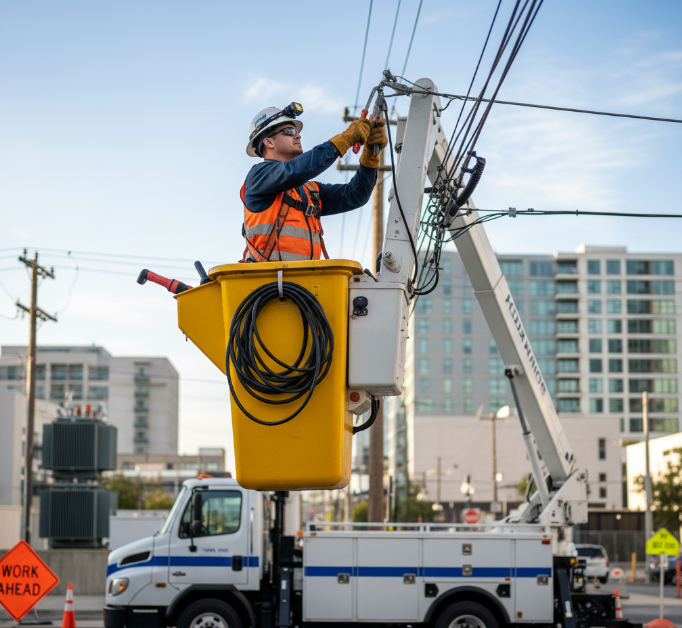
Modern fleets rely on the aerial work platform truck to handle city lighting, telecom installs, and facility maintenance. To get solid uptime, every aerial work platform truck must balance lift geometry, truck stability, smart controls, and safety backups. Here’s how each layer works together on a work platform truck built for real-world jobs.
Lift Mechanism Components
An aerial work platform truck earns its height from a tightly integrated lift assembly:
Core Structure
hardened pivot pins
sealed bushings
telescoping profiles
internal wear pads
boom sections
articulation joints
Motion Delivery
telescopic cylinders
lift chains and wire ropes
Platform Control
self-leveling linkages
micro-angle sensors
On a bucket truck, these parts sync so elevation stays smooth, even at full outreach.
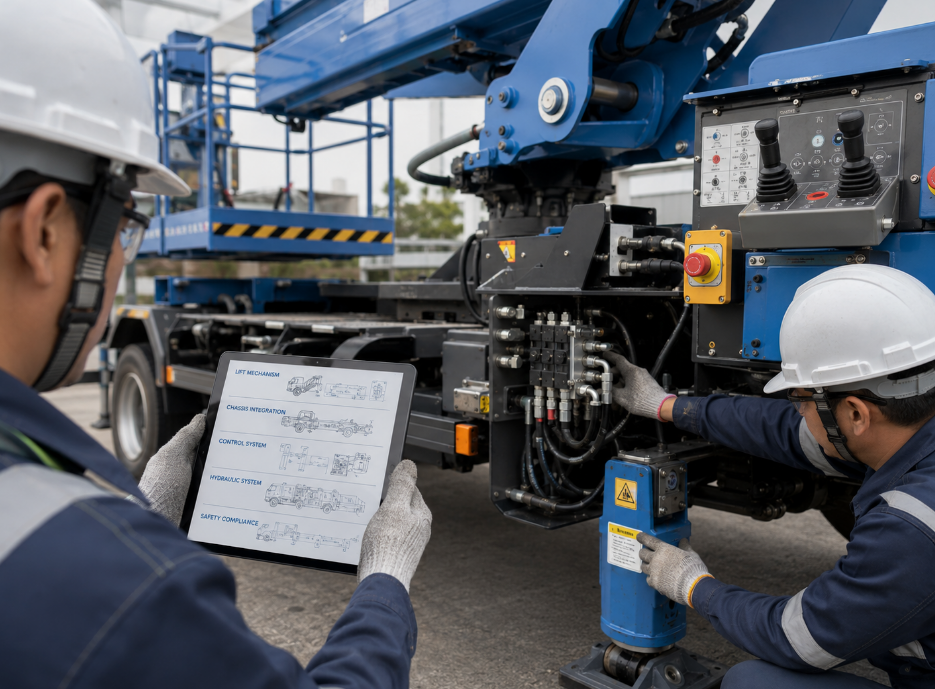
Chassis Integration Elements
The truck base keeps the aerial lift truck steady on rough streets.
truck chassis alignment
Reinforced subframe structure
Hydraulic outrigger jacks deployment
Load transfer through mounting brackets
Underneath, the turntable bearing distributes rotation forces across vehicle axles and the suspension system. Aerialplatformtruck tunes this integration so the aerial work platform truck feels planted, not shaky.
Control System Components
Control logic keeps movement predictable and safe.
Operator Interface
control panel
dual joysticks
backup remote control
Safety Loop
limit switches
pressure sensors
emergency stop buttons
Brain
electronic control unit (ECU)
shielded wiring harness
In daily use, the aerial work platform truck responds with steady, proportional motion instead of jerks.
Hydraulic System Components
Fluid power drives lifting and rotation in every aerial work platform truck.
| Component | Typical Pressure (bar) | Function |
|---|---|---|
| hydraulic pump | 180–250 | Supplies flow |
| hydraulic cylinders | 160–220 | Extends boom |
| control valves | 150–210 | Regulates speed |
| hydraulic motors | 140–200 | Powers rotation |
Supporting parts include hydraulic hoses, pressure filters, and a sealed fluid reservoir. Clean oil and stable pressure mean longer service life.
Safety and Compliance Features
Safety isn’t an add-on; it’s baked in.
Protection Systems
load sensing system
stability sensors
interlock systems
Operator Safeguards
platform guardrails
fall arrest anchors
audible alarms
Emergency Backup
emergency lowering system
With verified compliance certifications, the aerial work platform truck from Aerialplatformtruck keeps crews secure while the truck does the heavy lifting.
Compact vs. Heavy-Duty Aerial Trucks
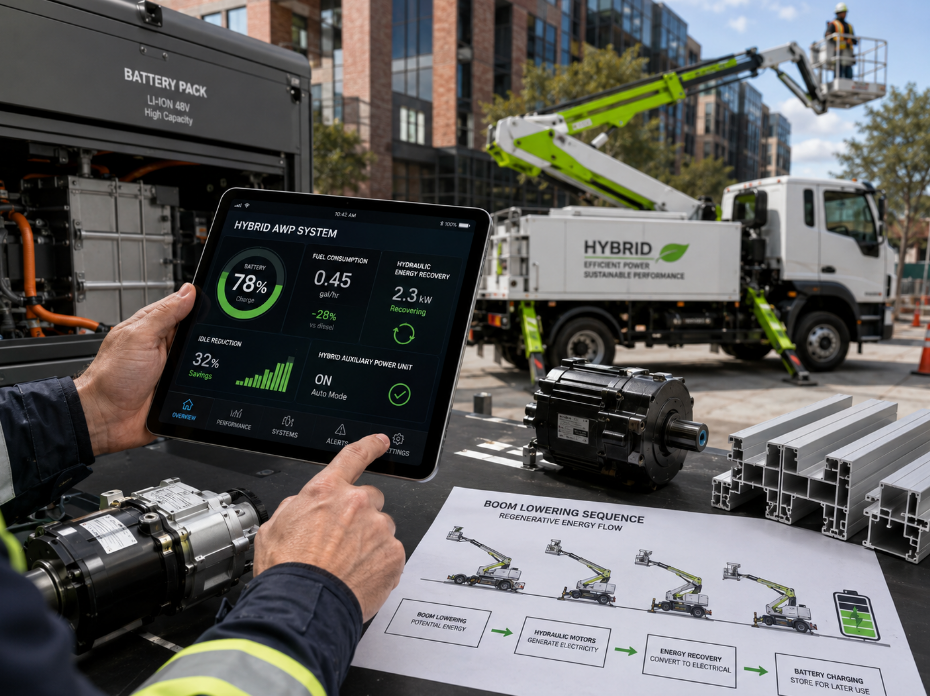
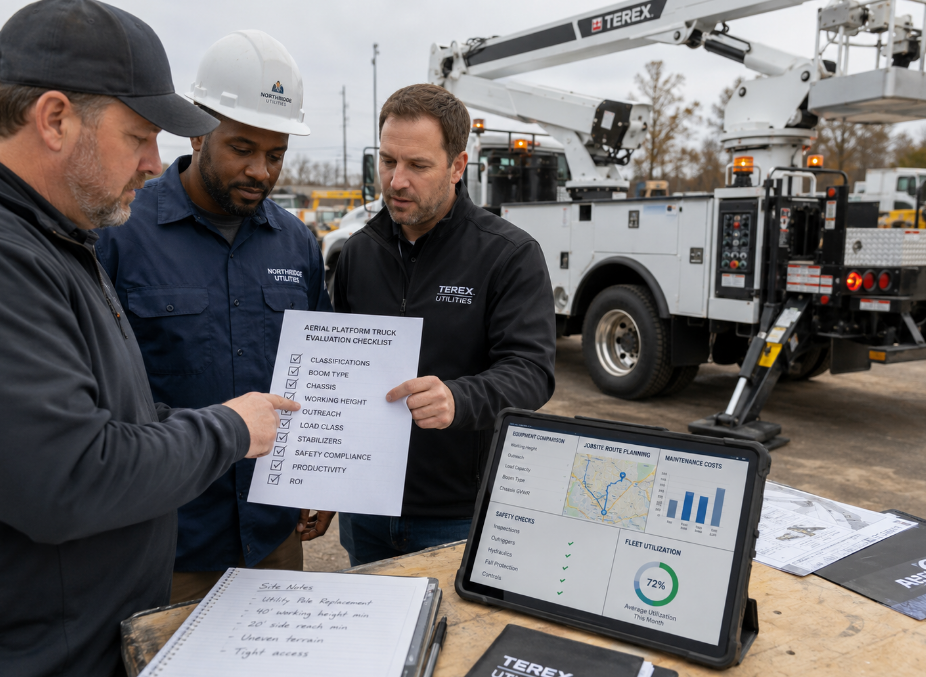
Choosing the right aerial work platform truck is not just about height. It’s about reach, weight, space, and the job vibe. From tight city streets to open industrial yards, each aerial work platform truck setup plays a different game. Let’s break it down in plain terms.
Compact Aerial Trucks
A compact aerial work platform truck is built for movement and control.
Core Build
Lightweight aluminum extrusion profiles
Compact subframes
Optimized Lightweight design
Operational Advantages
Strong Maneuverability in Tight spaces
Easy access for Indoor applications
Ideal for Urban construction
Minimal turning radius, real Accessibility
Work Environment Fit
Streetlight repair
Telecom line checks
Facility maintenance
Projects needing a Small footprint
This type of aerial work truck fits crowded downtown zones where traffic is messy and space is tight. For contractors wanting fuel savings and quick repositioning, Aerialplatformtruck offers compact models that keep the aerial platform truck steady without feeling bulky.
Heavy-Duty Aerial Trucks
A heavy-duty aerial work platform truck is built for scale and grit.
Structural Strength
High-strength steel alloys
Reinforced outriggers for added Stability
Engineered for Robust construction
Performance Capacity
Extended High reach
Serious Heavy lifting
Designed for Large capacity loads
Application Zones
Power grid installation
Bridge inspection
Mining and refinery tasks
Industrial applications on Rough terrain
When outdoor crews need height and muscle, this aerial work platform truck stands firm. Aerialplatformtruck heavy-duty units are made for long shifts, wide sites, and demanding Outdoor projects where strength truly matters.
Fuel Efficiency Challenges? Hybrid Aerial Trucks
Fuel bills sting, especially when an aerial work platform truck runs long shifts on construction or utility jobs. Cutting fuel use isn’t just about saving cash; it’s about smarter design. From hydraulic upgrades to lighter builds, today’s aerial work platform truck is evolving fast.
Regenerative Hydraulic Motors for Energy Recovery
Modern aerial work platform truck fleets are upgrading their hydraulic motor systems to unlock real energy recovery gains.
Core Energy Flow
Redirected into onboard energy storage units
Released during lifting to support motor torque
Activates regenerative braking within the hydraulic system
Converts kinetic force into power regeneration
Boom lowering phase
Captured energy
Efficiency Impact
Improved motor efficiency during peak load
Reduced engine throttle demand
Lower hydraulic heat buildup
Operational Payoff
Smoother boom descent
Less fuel burned per lift cycle
Extended component lifespan
In a busy worksite, that means the aerial work platform truck works smarter, not harder. Aerialplatformtruck integrates advanced recovery circuits so operators feel steady control without wasting energy.
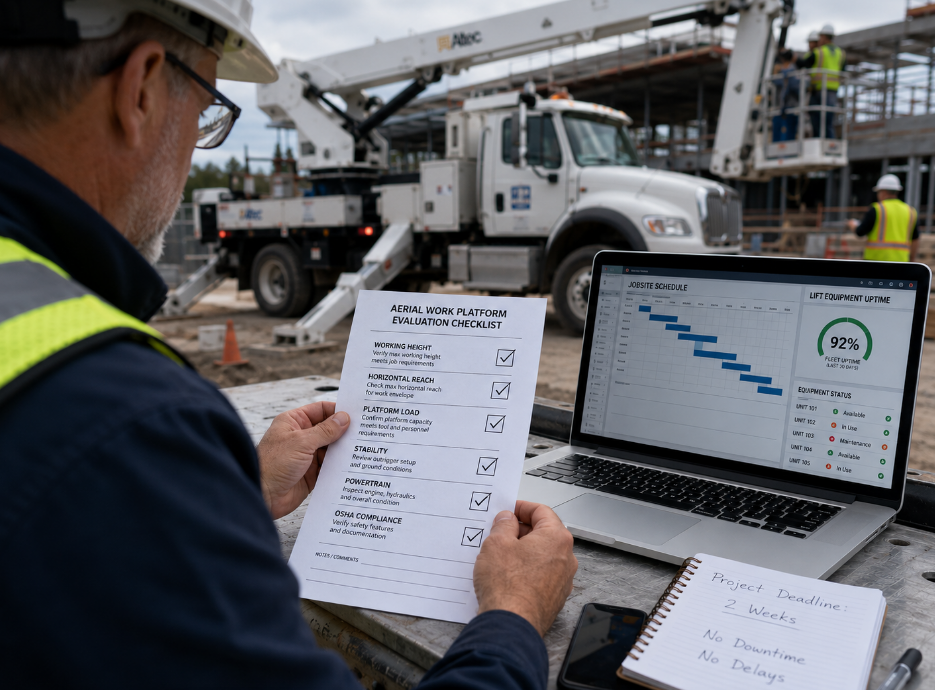
Integrated Hybrid Auxiliary Power Units
A hybrid-ready aerial work platform truck doesn’t rely solely on engine idle anymore.
Hybrid Architecture
Diesel engine core
High-torque electric motor
Hybrid power unit combines:
Linked through an integrated system controller
Energy Coordination
Battery pack stores excess power generation output
Smart power management shifts between engine and electric drive
Optimized energy source selection for lift, rotate, or standby
Jobsite Advantages
Reduced idle time
Quieter night operation
Lower overall fuel draw
The International Energy Agency noted in its 2025 transport outlook that hybridization in commercial vehicles “continues to deliver measurable fuel savings in urban-duty cycles, especially where idle reduction strategies are applied.”
For contractors running a bucket truck or aerial lift truck in city zones, that’s a big deal. Aerialplatformtruck hybrid APUs keep the aerial work platform truck responsive while trimming waste.
Lightweight Aluminum Extrusion Profiles for Weight Reduction
Weight drags down every aerial work platform truck on the road.
Material Strategy
Developed through advanced alloy development
Refined via precision extrusion process
Adoption of aluminum profiles
Replaces heavier steel in key structural components
Engineering Layers
Fatigue resistance checks
Corrosion performance validation
Maintains torsional rigidity
Supports boom stability
Cross-sectional optimization
Applied material science testing
Performance Outcomes
Noticeable weight reduction
Higher payload efficiency
Lower fuel consumption per mile
Less mass means the work platform truck needs less push from the engine. Over months of operation, that translates into meaningful savings while keeping strength right where it counts.
Aerial Work Platform Truck ROI Analysis
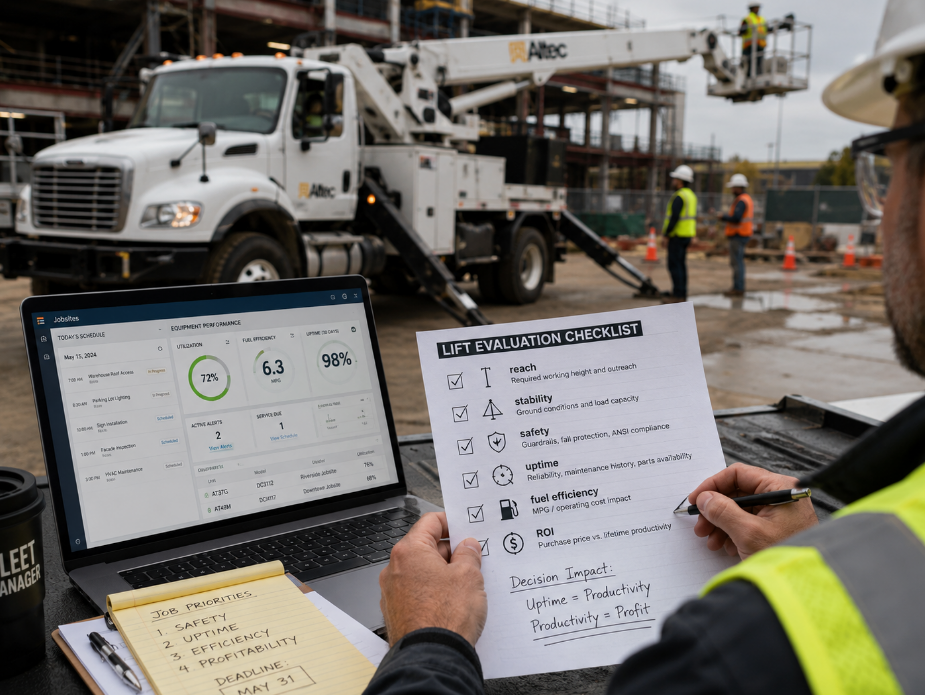
Running an aerial work platform truck isn’t just about lift height. It’s about dollars in, dollars out. From daily fuel burn to resale numbers, every aerial work platform truck decision shapes long-term profit. Let’s break it down in plain terms.
Calculating Total Cost of Ownership
When budgeting an aerial work platform truck, ROI starts with layered cost tracking:
Upfront Financials
Acquisition cost
Financing interest
Dealer preparation fees
Operating Phase
Fuel and fluids
Routine maintenance costs
Operator training
Insurance premiums
Asset Value Over Time
Annual depreciation rate
Service record impact on resale value
Downtime losses tied to unplanned repairs
Hidden Drains
Idle-time operating expenses
Revenue gaps from downtime
A well-built aerial work platform truck, like those from Aerialplatformtruck, holds value longer because manufacturing quality reduces repair cycles. Lower wear means steadier cash flow.
Savings from Reduced Fuel and Maintenance
Cost control gets real in daily operation of a work platform truck:
Fuel Side
Optimized engines cut fuel consumption
Cleaner combustion supports emissions reduction
Service Intervals
Extended maintenance intervals
Lower repair costs
Reduced labor costs
Parts Strategy
Predictable spare parts planning
Fewer emergency call-outs
Efficient hydraulics improve operational efficiency, which directly shrinks total ownership cost. An aerial work platform truck with smarter filtration simply spends less time in the shop.
Payback Period with Hybrid and Electric Systems
Hybrid and electric aerial lift trucks change the math:
Initial Layout
Higher initial investment
Possible charging infrastructure upgrades
Performance Returns
Better energy efficiency
Longer projected battery life
Measurable operational savings
External Boost
Local government incentives
Stronger brand image from reduced environmental impact
Financial Outcome
Calculated return on investment timeline
FAQ
What defines the performance difference between compact and heavy-duty aerial work platform truck models?
Compact models are shaped for city streets and tight yards, while heavy-duty units stand ready for height and load pressure.
Structural materials
Compact: aluminum extrusion profiles, composite fiber panels, lighter subframe structures.
Heavy-duty: high-strength steel alloys, reinforced structural fasteners, thicker corrosion-resistant coatings.
Lift mechanism strength
Telescopic boom sections with shorter outreach for urban access.
Larger articulating arm assemblies, jib extensions, and heavy hydraulic cylinder kits for demanding elevation.
Behind the metal, vehicle stability controls and outrigger assemblies quietly determine how confident an operator feels when the platform rises.
How do hydraulic and control systems influence daily efficiency?
An aerial work platform truck lives and breathes through fluid power and precise control.
Hydraulic flow path
Hydraulic pumps → hydraulic hoses and fittings → hydraulic motors → pressure relief valves → fluid reservoirs with filtration units.
Smooth flow reduces heat, saves fuel, and keeps motion steady during repeated lifts.
Operator command layer
Proportional control valves for gentle movement
Joystick controllers that respond to fingertip pressure
Human-machine interfaces with diagnostic modules
Safety interlock sensors guarding unsafe actions
When wiring harnesses and power take-off units are properly integrated, the truck feels predictable, not tiring.
Which safety and compliance features truly protect operators at height?
Working at height carries tension; protection must be visible and immediate.
Overload sensing devices prevent silent structural stress.
Stability monitoring systems track tilt when outriggers meet uneven ground.
Emergency stop buttons stay within reach.
Fall protection anchor points secure harnesses.
Warning light assemblies and audible alarm systems alert ground crews.
Platform leveling systems and turntable bearings also support safe positioning, helping operators focus on the task rather than fear of sway.
What affects long-term ownership cost for fleet buyers?
Cost is shaped long before the truck reaches a jobsite.
Manufacturing foundation
Robotic welding cells, CNC bending machines, paint booth systems, and quality inspection jigs influence durability from day one.
Area Influence on Ownership Structural materials High-strength steel alloys extend service life Hydraulic components Reliable filtration units reduce maintenance cycles Chassis integration Well-designed chassis mounting hardware lowers stress cracks Auxiliary systems Auxiliary power units reduce engine idling fuel burn A carefully built aerial work platform truck rewards attentive fleets with fewer repairs, steadier uptime, and calmer operators at the end of each shift.