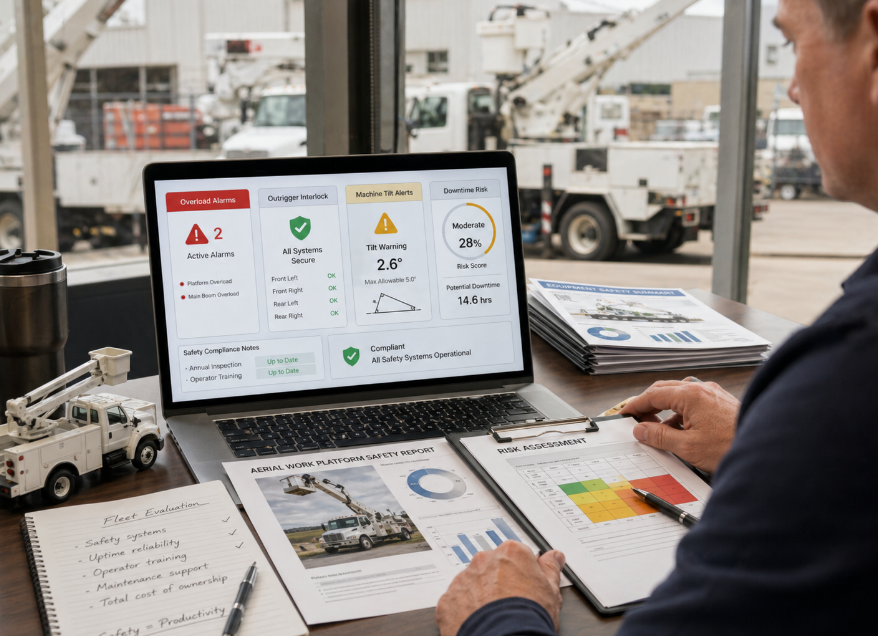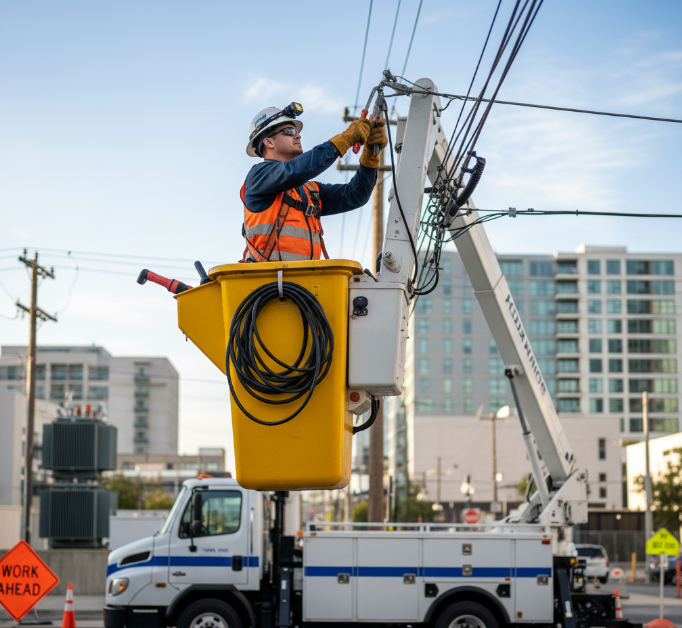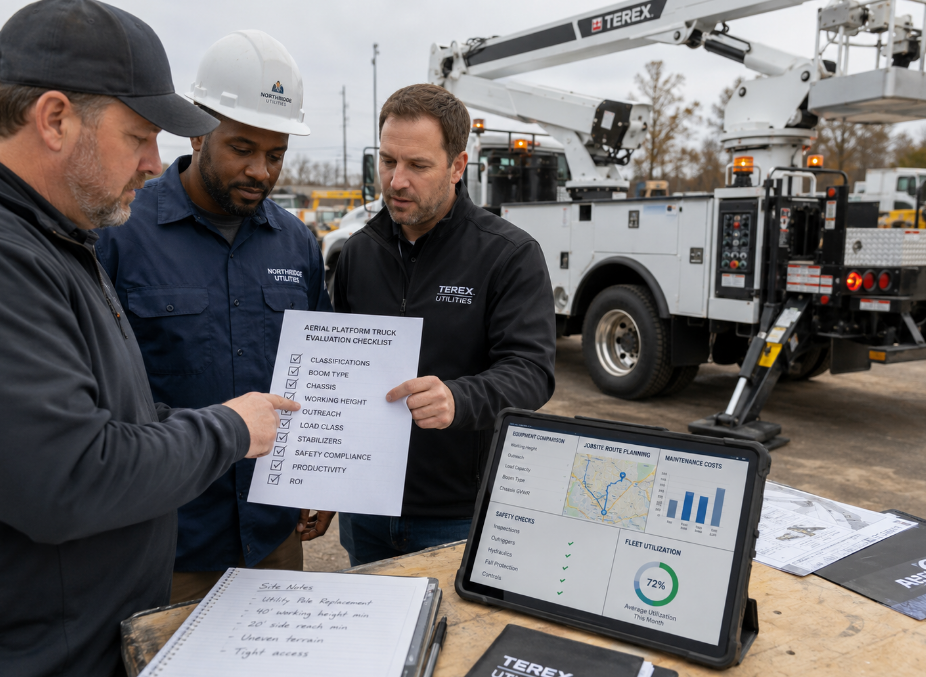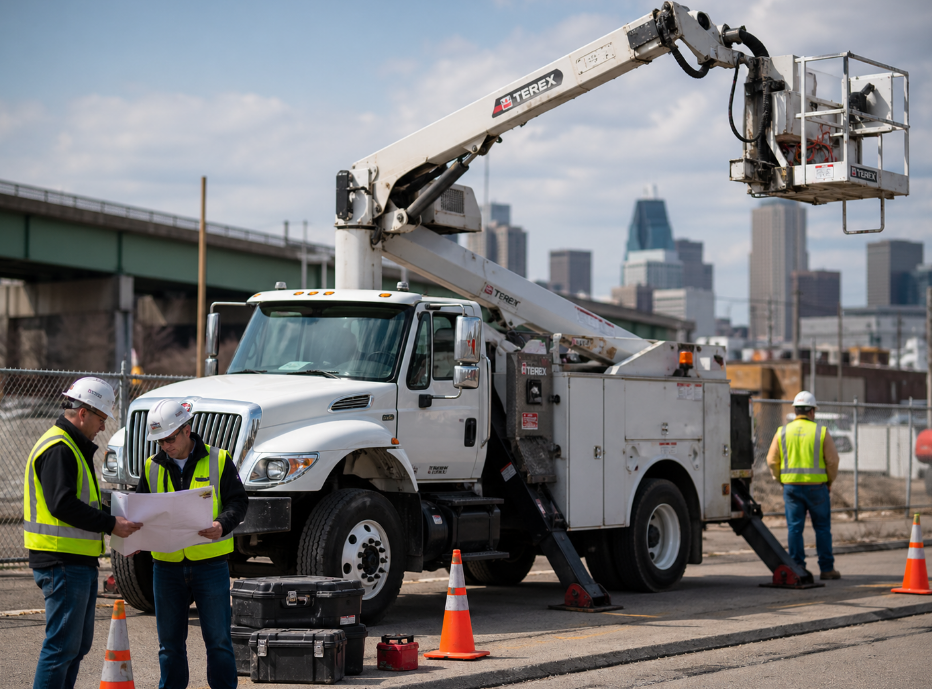
Buy the wrong truck mounted aerial work platform and watch profits vanish—spec smart, stay safe, and keep your fleet soaring above losses.
Buy the wrong truck mounted aerial work platform and you bleed cash, time, and credibility.
Aerialplatformtruck engineers and fleet managers in 2025 continue to stress that uptime is designed at the spec stage and safety compliance dictates every joint and hose.
Pick smart, stay working and profitable.
Assess Environment & Height
Match working height, outreach, and wind rating to the task—utility, telecom, or inspection.
Choose Boom & Platform
Select articulating or telescopic boom and the right platform configuration for obstacles and load capacity.
Confirm Chassis & Safety
Align chassis GVW, power system, outriggers, and safety interlocks for reliable, compliant uptime.
5 Key Steps To Choose The Right Truck Mounted Aerial Work Platform
Choosing a truck mounted aerial work platform isn’t just ticking boxes. It’s about safety, reach, stability, and real jobsite fit. From city streets to rough terrain, the right truck aerial lift keeps crews productive and stress levels low.
Step 1: Assess Application Environment and Working Height
When selecting a truck mounted aerial work platform, start with the job itself. The application type shapes everything.
Job Conditions
Working height required for utility lines or bridge inspection
Horizontal reach needed to clear parked vehicles or guardrails
Obstacle clearance around trees, cables, or building edges
Site Factors
Terrain conditions such as soft soil or sloped pavement
Indoor outdoor use limits related to emissions and space
Environmental factors like wind exposure at full boom extension
A well-matched aerial work platform truck prevents overreaching and unsafe positioning. Brands like Aerialplatformtruck focus on matching real-world site demands with precise lift geometry, so the machine works with you—not against you.
Step 2: Select Boom Design and Platform Configuration
Boom selection defines flexibility.
Boom type
Telescopic for long, straight outreach
Articulating for tight urban spots
Knuckle style for layered access
Platform Setup
Platform size for tools and crew comfort
Platform capacity for materials and operators
Turret rotation for smoother positioning
Jib extension to fine-tune reach
Insulated boom for live-line tasks
Options for material handling attachments
A properly configured truck mounted aerial work platform reduces repositioning and saves serious time.
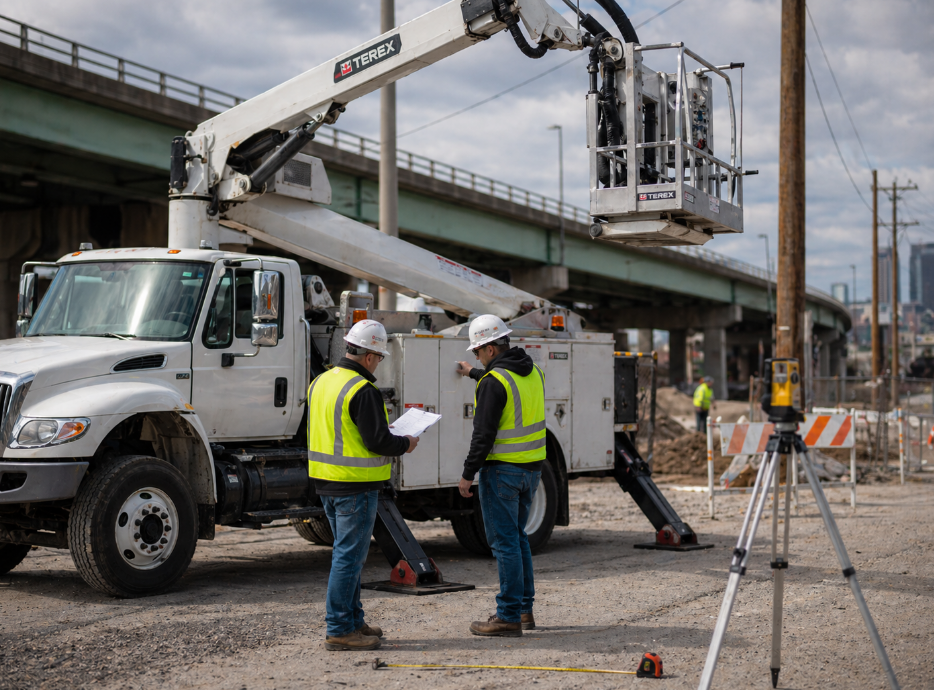
Step 3: Match Vehicle Chassis and Gross Vehicle Weight
Stability starts below the boom.
Chassis type
4x2 for city routes
4x4 for mixed terrain
6x4 for heavy-duty builds
Load and Compliance
Confirm gross vehicle weight supports full system load
Check axle capacity against boom and outrigger mass
Review payload capacity for tools
Align with road legal requirements
Evaluate maneuverability in narrow streets
Balanced specs improve vehicle stability and extend service life of your truck mounted aerial work platform.
Step 4: Verify Power System and Hydraulic Pump Capacity
Power keeps the lift smooth and predictable.
Power source
Diesel for remote sites
Electric for low-noise zones
Hybrid for mixed duty cycles
Hydraulic Performance
Hydraulic pump sizing
Required flow rate for steady boom motion
Correct pressure rating for safe lifting
Adequate engine horsepower
Battery considerations like battery life and fuel efficiency
A strong hydraulic backbone ensures your truck mounted aerial work platform operates without jerky movement or lag.
Step 5: Confirm Safety Mechanisms and Outrigger Spread
Safety isn’t optional. It’s the baseline.
Core safety features
Reliable emergency stop controls
Active overload protection
Integrated interlock systems
Stability Setup
Proper outrigger spread width
Electronic stability control
Certified fall protection anchor points
Responsive operator controls
A dependable bucket truck should feel steady even at full extension. Aerialplatformtruck builds systems where safety hardware and structure work together, giving operators confidence every time the boom rises.
Comparative Study: Articulated Vs. Telescopic Booms
Choosing the right truck mounted aerial work platform can feel like picking tools from a packed toolbox. Each boom type brings its own strengths to real job sites. Let’s break it down in plain terms so you know what fits your crew best.
Articulated Boom
An articulated truck mounted aerial work platform is built for flexibility. Its design focuses on smart movement and tight positioning.
Core structural traits
Supports Up-and-over access
Handles Complex angles near walls and roofs
Connected by reinforced Joints
Allows complex folding and unfolding
Multi-section boom design
Expanded Working envelope
Performance advantages
Moves around trees
Reaches behind structures
Ideal for crowded streets
Fits confined construction zones
Strong Maneuverability
Reliable Obstacle clearance
Jobsite applications
Urban maintenance
Tree trimming
Façade repair
When mounted on a truck, this aerial work platform becomes a nimble partner for city crews. Aerialplatformtruck engineers its articulated truck mounted aerial work platform models to balance reach and stability, so operators feel in control even at tricky angles. If your day involves weaving around barriers, this boom just makes life easier.
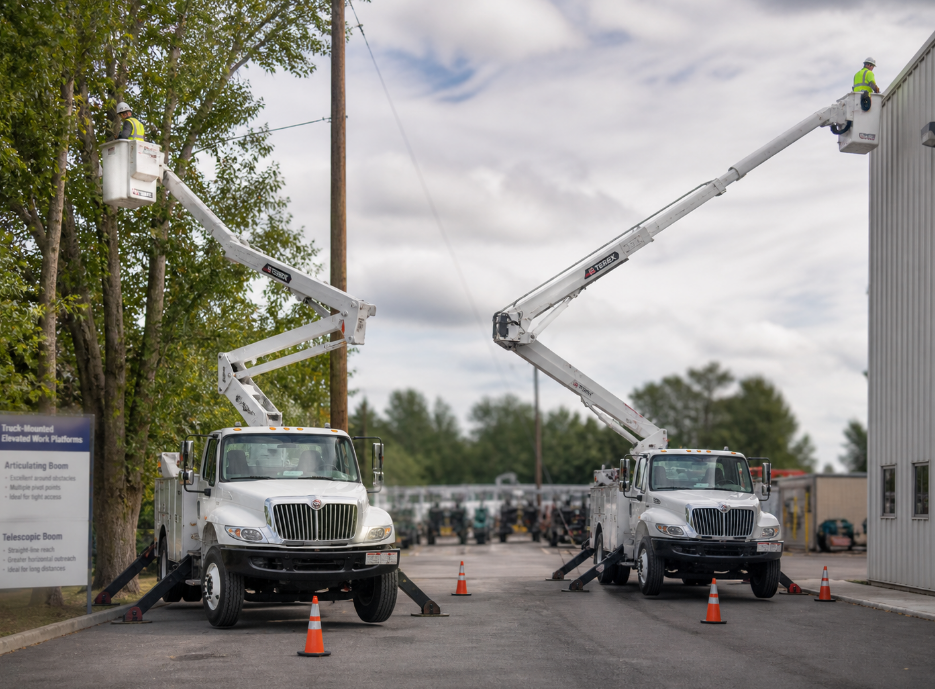
Telescopic Boom
A telescopic truck mounted aerial work platform keeps things straightforward and powerful.
Straight reach with smooth boom Extension
Higher Maximum height
Longer Horizontal outreach
Quick setup and Simple operation
Drive into an open area.
Deploy outriggers for Stability.
Extend the boom at steady Speed to target height.
That’s it. Clean and direct.
This type of truck mounted aerial work platform shines on highways, bridge inspections, and street lighting projects where distance matters more than tight turns. The straight boom aerial lift offers fewer moving pivot points, which many operators appreciate for its predictable handling.
Aerialplatformtruck designs telescopic units that focus on height and reach without overcomplicating controls. For crews working in wide-open spaces, this truck mounted aerial work platform delivers exactly what the job demands—no drama, just solid performance.
Preventing Downtime: Maintenance Tips For Boom Lifts
Keeping a truck mounted aerial work platform in top shape isn’t just shop talk—it’s how crews stay productive and safe. From the hydraulic pump to the engine, small checks prevent big repair bills. If your truck mounted aerial work platform sits idle, money burns fast. Let’s keep it rolling.
Routine Hydraulic Pump and PTO Drive Checks
For any truck mounted aerial work platform, the heart of motion starts with the hydraulic pump and PTO drive. A weak link here? The boom slows down, jerks, or stalls mid-air.
Maintenance flow usually works best like this:
Fluid Control
Check fluid levels daily before dispatch.
Inspect for discoloration or burnt smell.
Replace clogged filters on schedule.
Pressure Stability
Test operating pressure under load.
Compare readings to OEM specs.
Investigate irregular drops.
Leak Prevention
Inspect hoses for cracks.
Check fittings for leaks.
Examine seals around pump housing.
Recommended Hydraulic Benchmarks
| Inspection Item | Standard Range | Check Interval | Action Threshold |
|---|---|---|---|
| Hydraulic Pressure | 2,500–3,000 psi | Weekly | ±10% variance |
| Fluid Level | 90–100% capacity | Daily | Below 85% |
| Filter Condition | <15 psi restriction | Monthly | >20 psi |
| Hose Wear Rating | No surface cracking | Monthly | Any fiber show |
Brands like Aerialplatformtruck design systems for steady output, but performance still depends on routine care. A clean truck mounted platform simply works better.
Inspecting Boom Limit Switches and Interlock Systems
A stuck limit switch can ground an entire aerial work truck. That’s frustrating—and risky.
Break inspections into layers:
Boom Movement Validation
Extend and retract the boom fully.
Confirm limit switches stop motion at safe angles.
Reset and repeat to confirm consistency.
Interlock Integrity
Inspect interlock systems tied to outriggers.
Review wiring harness routing.
Test signal feedback from sensors.
Safety Confirmation
Trigger emergency stop.
Verify restored functionality only after reset.
Tighten loose electrical connections.
Short checks. Clear results. Solid safety backup.
On a busy jobsite, even one faulty sensor in a truck mounted aerial work platform can halt operations. Aerialplatformtruck units are engineered with accessible wiring layouts, making inspections quicker and less of a headache.
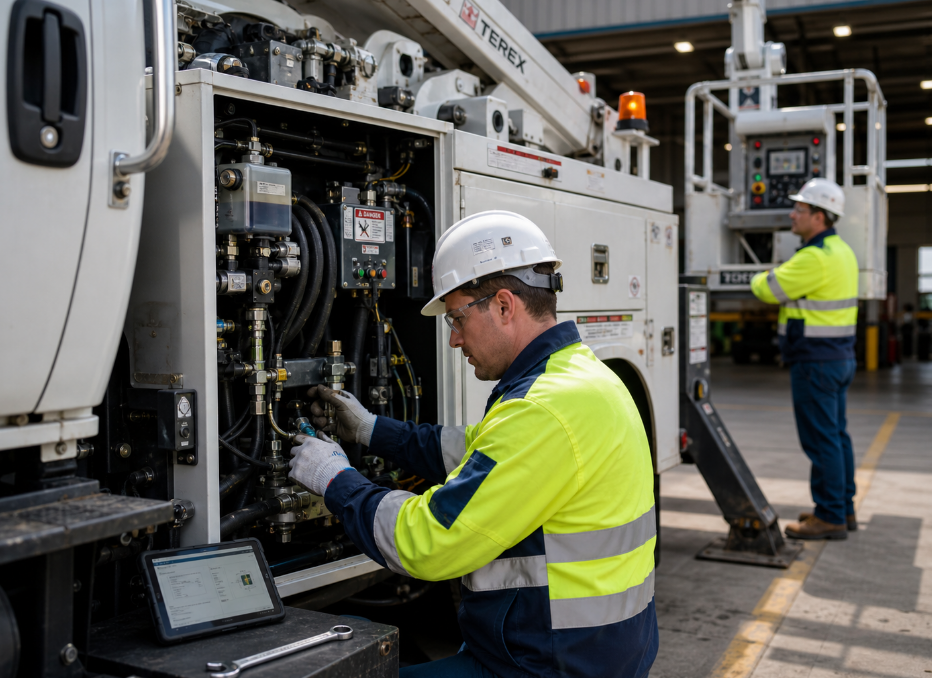
Outrigger Interlocks & Platform Leveling Validation
Stability keeps everyone calm. No one likes a shaky lift.
For a truck mounted aerial work platform operating on uneven terrain, this routine keeps things steady:
Deploy outriggers fully.
Confirm interlocks prevent boom movement before full spread.
Check platform tilt readings.
Validate automatic leveling response.
Inspect ground pads for load distribution.
Review diagnostic logs from sensors.
Then go deeper:
Stability Checks
Angle sensors calibration
Control panel warning lights
Cylinder extension symmetry
Lock pin engagement
Mechanical
Electronic
Proper validation of these safety mechanisms protects both operator and equipment. A stable truck mounted lift simply feels right—solid, balanced, predictable.
Engine, Battery Pack, and Auxiliary Power Unit Care
Power systems decide uptime.
For diesel models:
Inspect the engine oil and coolant.
Clean the fuel system filters.
Check belts and vibration mounts.
For electric configurations:
Monitor battery pack charge cycles.
Inspect the charging system output voltage.
Tighten electrical connections to prevent heat buildup.
And don’t ignore the auxiliary power unit. It’s your backup when the main system acts up.
A steady maintenance rhythm—fluids topped, terminals clean, fluid levels stable—keeps every truck mounted aerial work platform ready to move when the call comes in. With consistent care and smart equipment from Aerialplatformtruck, downtime stays rare and productivity stays high.
FAQ
How do I choose the right truck mounted aerial work platform for demanding projects?
Selection begins with the jobsite reality—tight city streets or open construction sites.
1) Define operational metrics
Working height & horizontal outreach for bridge inspection or street lighting
Platform capacity for tools and crew
Wind speed rating for exposed environments
2) Match configuration to movement
Articulating platform with knuckle boom for tree care or building facade work
Telescopic platform with straight boom for long, direct reach
Insulated platform for utility maintenance near live lines
3) Align chassis & power
4x2 or medium-duty truck for urban telecom installation
6x4 heavy-duty truck for tall multi-section boom systems
Diesel engine + PTO drive for long shifts, or hybrid power with battery pack for quieter zones
A precise match protects uptime—and reputation.
Why is boom design critical in confined or complex environments?
Boom design shapes every movement above ground.
Articulating boom or knuckle boom: bends around steel frames and tree branches.
Telescopic boom: fast vertical lift, strong horizontal outreach.
Jib boom: fine positioning when centimeters matter.
Insulating boom: added safety near energized lines.
In narrow streets, a rotating platform with compact stowed length keeps traffic flowing. In open construction sites, an extendable platform pushes reach without relocating the truck. The wrong boom slows work; the right one feels effortless.
What safety mechanisms must be checked before fleet deployment?
Safety testing should feel deliberate, never rushed.
A. Control protection
Emergency stop response
Boom limit switches accuracy
Overload protection calibration
B. Stability assurance
Outrigger interlocks linked to boom controls
Proper outrigger spread under rated gross vehicle weight
Platform leveling on uneven ground
C. Operator security
Fall arrest anchors inside the personnel basket
Interlock system preventing unsafe extension angles
When each safeguard performs under no-load and rated-load tests, confidence replaces doubt.
Which power systems improve efficiency in high-frequency operations?
Short cycles drain fuel—and patience. Smart power choices change that.
| Power System | Best For | Operational Impact |
|---|---|---|
| Diesel engine + hydraulic pump | Heavy-duty truck, long bridge inspection shifts | Stable pressure, strong lift response |
| Electric motor (electric truck) | Indoor building facade work | Low noise, zero tailpipe emissions |
| Hybrid power with auxiliary power unit | Urban utility maintenance | Reduced idle fuel use, steady hydraulic output |
Consistent hydraulic pump flow keeps the articulating platform steady at full working height. In daily telecom installation rounds, that reliability defines productivity.