When tight deadlines meet open roads, the truck mounted aerial work platform turns chaos into profit—fleet buyers call it their secret weapon.
A city crew rolls at dawn, coffee sloshing, radios crackling. Deadlines don’t care about traffic jams or weather tantrums. That’s where a truck mounted aerial work platform struts onto the stage—part workhorse, part Swiss Army knife—hauling height, reach, and speed wherever the road bends. For fleet buyers, this isn’t gear lust; it’s the daily grind of keeping crews moving and clients calm.
Here’s the rub: pick wrong, and productivity leaks like a bad gasket. A boom lift shines inside fences and floors; a truck-mounted unit eats miles for breakfast. Fuel bills, setup minutes, crew idle time—those numbers decide margins long before a wrench turns.
“Downtime is the silent cost killer,” notes the U.S. Bureau of Labor Statistics, which tracks equipment utilization across construction and utilities. ANSI A92 standards echo the same tune: stability, reach, and transport matter as much as height. Stick around—this comparison cuts through the noise and points to the machine that earns its keep when schedules get tight.
Poetic Pointers for Truck Mounted Aerial Work Platform
Mobility Mastery
Leverage chassis frame strength and axle capacity for rapid road transfers between sites.
Reach & Stability
Combine telescoping booms with outrigger sensing systems to extend horizontal outreach safely.
Cost Containment
Opt for efficient hydraulic units and lightweight materials to slash fuel use and downtime.
Truck Mounted Aerial Work Platform Vs. Boom Lift
Choosing between a truck mounted aerial work platform and a boom lift can feel tricky on a busy job site. Both lift crews high above ground, yet the truck, the boom, and the way each unit moves change everything. Let’s break it down in plain terms.
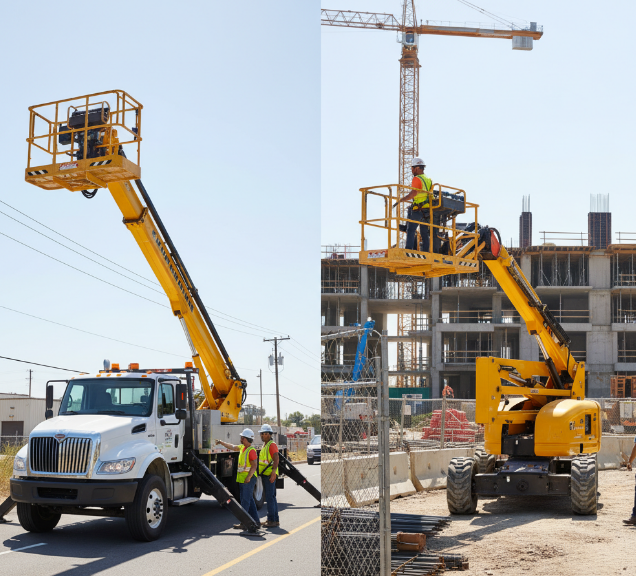
Truck Mounted Aerial Work Platform
A truck mounted aerial work platform combines a commercial vehicle and lifting system into one smart setup.
Core Structure
PTO-driven pump
Stabilizing outriggers
Rated gross vehicle weight
Balanced axle load for highway travel
Truck base with certified chassis
Hydraulic system
Mobility & Road Use
Quick transfer between utility sites
No trailer required
Built for public road driving
Ideal for city maintenance crews
Work Performance
Higher vertical reach than many self-propelled lifts
Fast setup once parked
Stable lift platform for power-line or lighting jobs
A truck mounted aerial work platform shines when long-distance mobility and height matter. Brands like Aerialplatformtruck design each truck mounted aerial work platform with reinforced chassis strength and dependable hydraulic flow, making daily utility work smoother and safer.
Boom Lift
A boom lift focuses on tight access and flexible positioning.
Machine Configuration
Compact frame
Self-propelled drive system
Diesel or electric power
Boom Types
Multiple pivot points
Smooth movement around obstacles
Straight outreach
Greater horizontal span
Telescopic
Articulated
Site Adaptability
Strong maneuverability in construction zones
Designed for rough terrain models with heavy-duty tires
Elevated platform control box for precision placement
Compared with a truck mounted aerial work platform, a boom lift trades highway-ready vehicle travel for on-site flexibility. Some contractors even pair a boom with a truck mounted aerial work platform from Aerialplatformtruck to cover both city streets and confined builds without missing a beat.
Which Provides Better Outreach Coverage?
Outreach coverage can make or break a job site schedule. When a truck mounted aerial work platform rolls in, reach, rotation, and safety tech all matter. Let’s break down how a truck mounted aerial work platform really stretches its limits without losing balance.
Maximizing Horizontal Reach with Telescoping Mechanisms
A truck mounted aerial work platform gains serious horizontal reach through smart telescoping boom engineering.
Boom Structure Design
Hydraulic cylinder sequencing
Cable and chain synchronization
Load-based extension control
Inner base section: structural backbone
Mid extensions: controlled extension capabilities
Outer fly section: precision at max outreach distance
Boom sections
Mechanism design
Performance Snapshot
| Boom Length (m) | Outreach Distance (m) | Rated Capacity (kg) |
|---|---|---|
| 18 | 14 | 250 |
| 22 | 17 | 230 |
| 26 | 20 | 200 |
| 30 | 23 | 180 |
| 34 | 25 | 160 |
For contractors using a truck mounted aerial work platform, that extra outreach means fewer truck moves and faster utility installs. Aerialplatformtruck models are tuned so the aerial platform stays steady even when fully stretched.
Articulation Points and Platform Rotation Advantages
Reach isn’t only about length. Articulation points let a boom lift snake up and over steel frames or tree canopies. Add platform rotation, and the operator fine-tunes position without nudging the chassis every few minutes.
Up-and-over clearance in tight alleys.
180–360° basket swing for clean alignment.
Better maneuverability in blocked work zones.
A truck mounted aerial work platform with dual articulation arms improves outreach flexibility while cutting idle time. That’s real-world access advantages for telecom and signage crews.
The International Powered Access Federation’s 2024 Global Safety Report notes that improved boom control and rotation functions are linked to measurable reductions in repositioning-related incidents across mobile elevating work platforms.
In short, a well-built truck mounted aerial work platform behaves less like heavy gear and more like a precise tool.
Stability Sensing System for Extended Outreach
Extended reach only works when stability keeps up. On a truck mounted aerial work platform, built-in stability sensing constantly checks balance.
Sensor Technology Layer
Load cells track load monitoring at the platform.
Angle sensors read boom geometry.
Axle pressure sensors confirm ground stability.
Safety Systems Response
Movement speed reduction near limits.
Automatic lockout beyond safe range.
Real-time alerts for platform safety compliance.
Extended Outreach Control Logic
Compare live data with rated charts.
Adjust hydraulic output.
Protect structural thresholds.
For crews pushing a truck mounted aerial work platform to max height and side reach, this quiet background tech is what keeps jobs smooth and safe.
Load Capacities of Aerial Machines
Load ratings can make or break a job site. When choosing a truck mounted aerial work platform, it’s not just about reach; it’s about balance, weight, and power working together. A smart pick keeps crews safe and keeps projects moving without nasty overload surprises.
Platform Capacity vs. Gross Vehicle Weight
When sizing a truck mounted aerial work platform, capacity connects directly to gross vehicle weight and overall stability.
Platform capacity fundamentals
Rated platform capacity defines safe payload limits.
The vehicle chassis must handle total operating weight.
Weight distribution logic
a) Even load distribution reduces tip risk.
b) Rear axle overload can trigger safety cutoffs.
c) Poor balance stresses the mounted aerial platform frame.
Compliance and safety flow
Inspect rating plate on the aerial work platform truck.
Confirm tools plus crew stay within limits.
Monitor overload protection indicators.
A well-matched truck mounted platform keeps lifting smooth and avoids costly downtime. Aerialplatformtruck units are engineered so the vehicle chassis and boom strength work as one system.
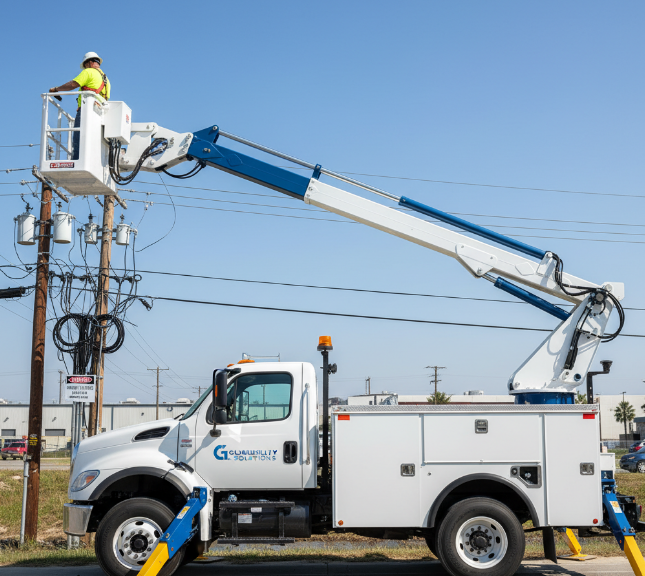
Axle Capacity and Basket Material Trade-Offs
Axle strength shapes real-world performance.
Higher axle load rating supports a wider platform structure.
Lightweight basket material cuts overall mass.
Smart weight reduction improves road handling.
Now factor in material choices:
1) Aluminum – solid durability, lighter build.
2) Fiberglass – insulation plus steady material strength.
3) Composite materials – balanced strength-to-weight ratio.
On a busy site, small differences matter. A lighter basket lets a truck mounted aerial work platform carry tools without pushing limits. That’s why Aerialplatformtruck designs focus on durable yet efficient builds for every truck mounted aerial work platform in their lineup.
Engine Type Influence on Load Ratings
Power source directly affects lifting muscle in a truck mounted aerial work platform.
Diesel configuration
a) Higher engine torque supports bigger hydraulic system demand.
b) Strong power output improves peak lifting capacity.
Electric configuration
a) Lower noise suits urban jobs.
b) Steady engine power delivery enhances controlled performance.
c) Better fuel efficiency profile in stop-start duty cycles.
Choosing between diesel and electric comes down to job type. Heavy utility work often favors torque-driven systems, while city maintenance may lean toward cleaner operation. Match the engine to the load, and the truck mounted aerial work platform will handle the day without drama.
3 Key Advantages of Truck Mounted Aerial Work Platform
A truck mounted aerial work platform blends mobility and height access in one smart setup. From city lighting jobs to highway bridge checks, this truck mounted aerial work platform keeps crews moving fast. Let’s break down how smart chassis, responsive boom systems, and a steady hydraulic setup make daily work smoother.
Enhanced Mobility through Chassis Frame Material
The strength of a truck mounted aerial work platform starts at its chassis and frame.
Structural Foundation
1.1 Chassis Design
1.2 Reinforced Structure
Cross-member layout increases torsional rigidity.
Balanced wheelbase reduces sway at transport speed.
High-tensile steel material improves load-bearing capacity.
Optimized vehicle weight distribution boosts road mobility.
Material Engineering
2.1 Lightweight Alloys
2.2 Surface Treatment
Anti-corrosion coating
Extended durability cycle
Lower curb weight
Better fuel economy
Performance Snapshot
| Parameter | Standard Steel Frame | High-Strength Frame | Weight Reduction (%) | Stability Rating |
|---|---|---|---|---|
| Frame Weight (kg) | 3200 | 2750 | 14% | A |
| Torsion Resistance (Nm/°) | 18,000 | 24,500 | — | A+ |
| Fuel Consumption (L/100km) | 18 | 15.5 | 13.8% | — |
| Max Travel Speed (km/h) | 85 | 95 | — | A |
| Service Life (Years) | 8 | 12 | 50% | A+ |
For crews using a truck mounted aerial work platform, that stronger frame means fewer transport headaches and faster relocation between sites.
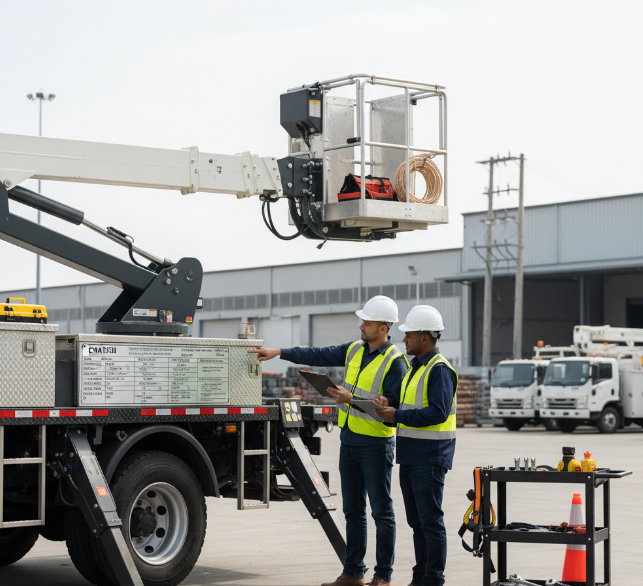
Faster Positioning via Boom Rotation Drive
Speed on-site depends on the boom and its rotation drive.
Rotation Core System
1.1 Slewing Ring
1.2 Hydraulic Drive Motor
Stable torque output
Controlled positioning speed
Precision slew bearing supports 360° continuous rotation.
Reduces vibration during high-angle articulation.
Motion Control Logic
2.1 Valve Coordination
2.2 Articulation Geometry
Multi-joint mechanism for tight urban access
Balanced extension for steady lift
Smooth start-stop response
Reduced overshoot
Operator Impact
Faster basket alignment
Shorter setup window
Improved task speed
With a well-tuned truck mounted aerial lift, crews can park, deploy outriggers, rotate the boom, and reach working height in minutes. That efficiency makes the truck mounted aerial work platform a favorite for utility teams.
Reduced Downtime with Hydraulic Pump Unit
A steady hydraulic pump unit keeps the truck mounted aerial work platform ready for daily use.
Core Hydraulic Assembly
1.1 Main Pump
1.2 Fluid Circuit
Maintains oil temperature
Multi-stage filter protects fluid purity
Filtration Layer
Cooling Loop
Constant flow output
Pressure stability under load
Reliability Framework
2.1 Pressure Monitoring
2.2 Preventive Maintenance Path
Scheduled oil checks
Seal inspection
Integrated gauges detect imbalance
Downtime Control Strategy
Cleaner hydraulic system
Longer component life
Higher reliability
A dependable hydraulic setup means less unexpected downtime and fewer call-backs. That’s why many contractors turn to Aerialplatformtruck when choosing a truck mounted aerial work platform or other truck mounted access platform solutions built for long-haul reliability.
High Operating Costs? TM-AWP Reduces Fuel Use
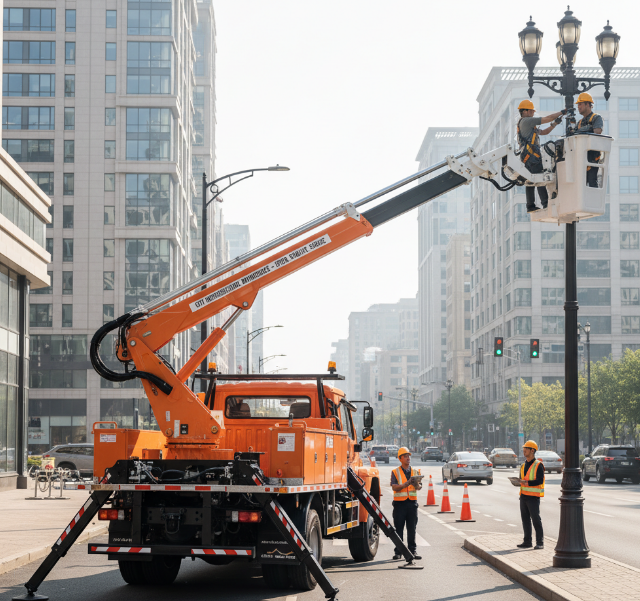
Running a truck mounted aerial work platform every day can burn through fuel fast. Cut the waste, ease the strain, and your truck aerial work platform starts paying you back instead of draining the tank.
Efficient Hydraulic Cylinders Cut Engine Load
On a busy site, a truck mounted aerial work platform depends heavily on its hydraulic cylinders. When the system is tuned right, engine load drops and power consumption follows.
System Optimization in Action
1.1 Hydraulic Cylinders
1.2 Control Manifold
Smarter valve timing stabilizes fluid power flow.
Less pressure spike means real energy saving.
Precision seals reduce internal leakage.
Balanced bore design improves efficiency.
How It Reduces Strain on the Truck Mounted Aerial Work Platform
2.1 Lower peak torque demand on the engine
2.2 Smoother lift and outreach cycles
2.3 Reduced idle compensation fuel burn
| Operating Mode | Avg Engine Load (%) | Fuel Use (L/h) | Energy Saving (%) |
|---|---|---|---|
| Conventional | 78 | 12.5 | — |
| Optimized | 64 | 10.2 | 18 |
| Eco-Control | 59 | 9.6 | 23 |
For a truck mounted aerial work platform, that gap adds up over months.
Lightweight Chassis Frame Material Lowers Consumption
A heavy chassis frame pushes fuel consumption up. Trim the vehicle weight, and the truck mounted aerial work platform feels less sluggish on the road.
Material Strategy
1.1 High-strength lightweight materials
1.2 Refined structural design
Finite load mapping to remove excess steel
Improved material properties with thinner cross-sections
Performance Impact
2.1 Lower rolling resistance during transit
2.2 Reduced braking stress
2.3 Better overall energy efficiency
An aerial lift truck built this way carries height and reach without dragging unnecessary mass. Over time, smarter weight control keeps the truck mounted aerial work platform compliant, efficient, and easier on the fuel budget.
Utility Line Repair: TM-AWP Advantages Explained
Utility crews count on speed and safety when power lines go down. A truck mounted aerial work platform keeps teams steady, insulated, and well-lit, even when the job site feels chaotic.
Insulation Rating and Fall Arrest Anchor Points
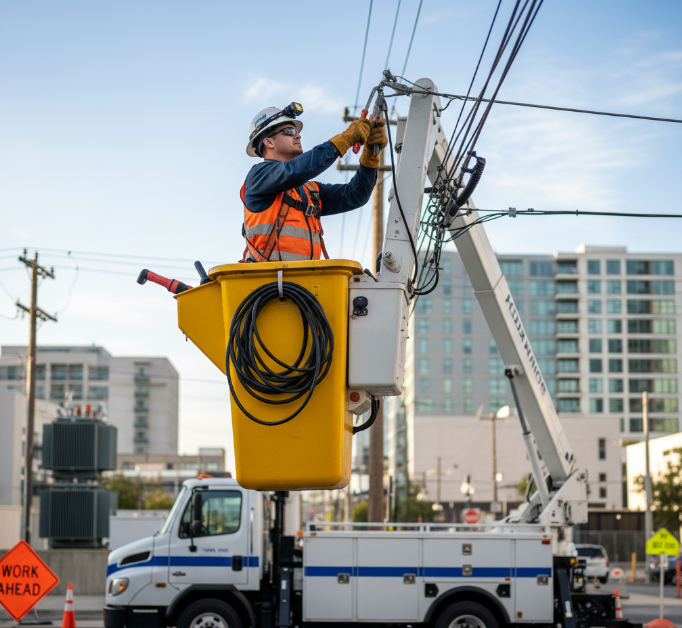
A truck mounted aerial work platform used for live-line service must focus on two safety layers:
Electrical protection
1.1 Certified insulation and tested dielectric components
1.2 Verified rating for voltage exposure
1.3 Added safety margin for field conditions
Worker security at height
2.1 Integrated fall arrest system
2.2 Reinforced anchor points mounted to the boom
2.3 Clear tie-off access for personnel
On a busy roadside repair, crews rely on a truck mounted aerial work platform that keeps current away from the basket while keeping technicians clipped in and steady. Aerialplatformtruck units are built with both electrical shielding and OSHA-aligned anchor layouts, giving operators real peace of mind.
Outrigger System Stability on Uneven Terrain
A truck mounted aerial work platform earns its keep when the ground isn’t flat.
Site assessment
1.1 Check ground conditions
1.2 Measure slope and load spread
Outrigger system deployment
2.1 Hydraulic extension for balanced support
2.2 Auto leveling adjustment
2.3 Live stability sensing feedback
Elevated operation
3.1 Secured platform alignment
3.2 Maintained axle load distribution
3.3 Continuous safety monitoring
With a truck mounted lift from Aerialplatformtruck, crews can position the truck mounted aerial work platform on gravel shoulders or soft verges without feeling sketchy.
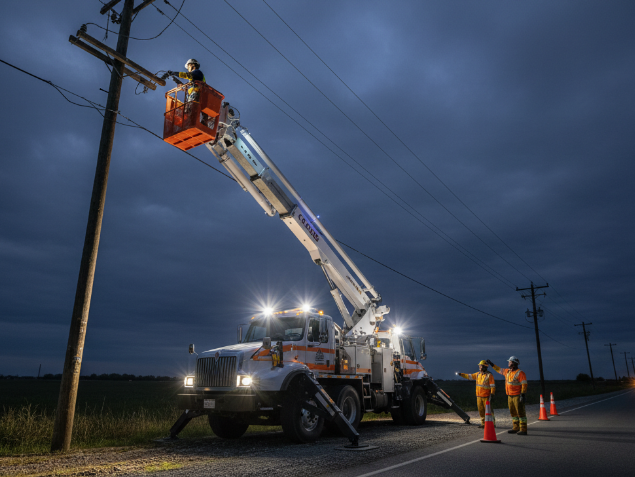
Work Lighting Package for Nighttime Operations
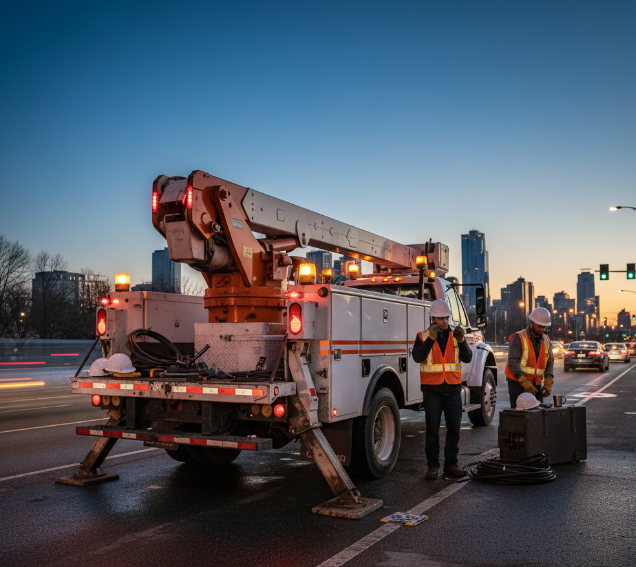
Storm repairs rarely wait for daylight, so a truck mounted aerial work platform must shine—literally.
Lighting hardware
1.1 High-output LED arrays
1.2 Wide-angle floodlights for full illumination
Power continuity
2.1 Onboard battery backup
2.2 Emergency supply integration
Operational impact
3.1 Clear visibility in low-light zones
3.2 Safer nighttime operations
3.3 Reduced risk to roadside crews
A well-equipped truck mounted aerial work platform keeps lines visible and crews alert, turning a dark repair call into a controlled, well-lit job.
FAQ
What makes a truck mounted aerial work platform suitable for utility contractors?
A truck mounted aerial work platform combines mobility with efficient height access, making it ideal for utility contractors who need to move quickly between job sites.
It typically offers high working height and long horizontal reach for accessing poles and transformers, while a certified insulation rating helps meet OSHA-related job requirements.
Stability is supported by a reliable outrigger system and a calibrated stability sensing system, while the chassis frame material and required gross vehicle weight determine whether the unit can safely handle field demands.
In operation, the hydraulic pump unit, control valve manifold, and reinforced boom sections work together to keep elevation smooth and controlled. Compliance with ANSI A92 standards and structural integrity certification adds confidence when working near energized lines.
How do platform specifications and chassis design affect performance?
Performance depends on how well lift capability is balanced with road stability.
1) Platform Factors
Platform capacity determines how many crew members and tools can be lifted safely.
Platform size and basket material affect operator comfort, durability, and service life.
Platform rotation improves positioning efficiency when working around obstacles.
2) Chassis Factors
Wheelbase and axle capacity influence travel stability and load support.
Engine type and transmission system affect hydraulic performance and fuel efficiency.
Cab configuration shapes operator visibility and overall crew comfort during transport.
When the telescoping mechanism, articulation points, and boom rotation drive are properly matched to chassis load distribution, the machine performs more smoothly and feels less strained. This helps protect hydraulic cylinders and reduces long-term structural fatigue.
What safety and electrical systems are critical in modern units?
Modern truck mounted aerial work platforms rely on layered protection throughout every stage of operation.
An emergency stop button should be available at both the ground control panel and the platform control console.
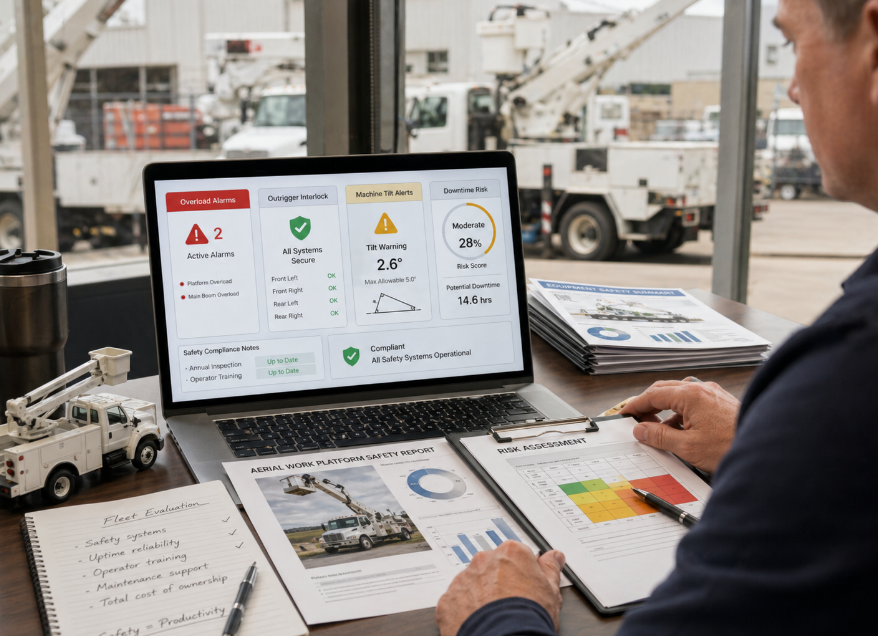
An overload protection system helps ensure the platform stays within its rated capacity.
An interlock safety system linked to outrigger deployment prevents unsafe operation.
Integrated fall arrest anchor points in the basket improve worker protection at height.
Electrical reliability is equally important. A well-organized wiring harness assembly, protected control panel wiring, and a clearly arranged circuit breaker panel help reduce the risk of faults and simplify maintenance.
For night operations, a work lighting package supported by a battery power system and emergency power supply helps maintain visibility without overstressing the electrical system.
Compliance with CE certification requirements and emissions control standards further confirms that the unit’s safety, electrical, and structural systems operate within regulated limits.