Choosing a truck mounted aerial work platform isn’t guesswork—it’s a high-stakes match between reach, safety, and fleet-saving smarts.
Choosing between a truck mounted aerial work platform and a bucket truck can feel like picking the right tool from a crowded toolbox while the job clock is ticking. One promises reach and flexibility; the other swears by insulation and utility grit. For fleet buyers staring at budget sheets and uptime targets, this isn’t small talk—it’s about productivity, safety, and keeping crews moving without burning cash.
The U.S. Bureau of Labor Statistics reports falls remain a leading cause of fatalities in construction (BLS, 2023). As OSHA puts it, “falls are preventable.” Equipment choice plays a starring role.
So here’s the real question: do you need surgical precision for live-line work, or a high-reaching all-rounder that can hustle across job sites? Pick wrong, and costs stack up fast. Pick right, and your fleet runs like a well-oiled machine.
Working Height & Outreach
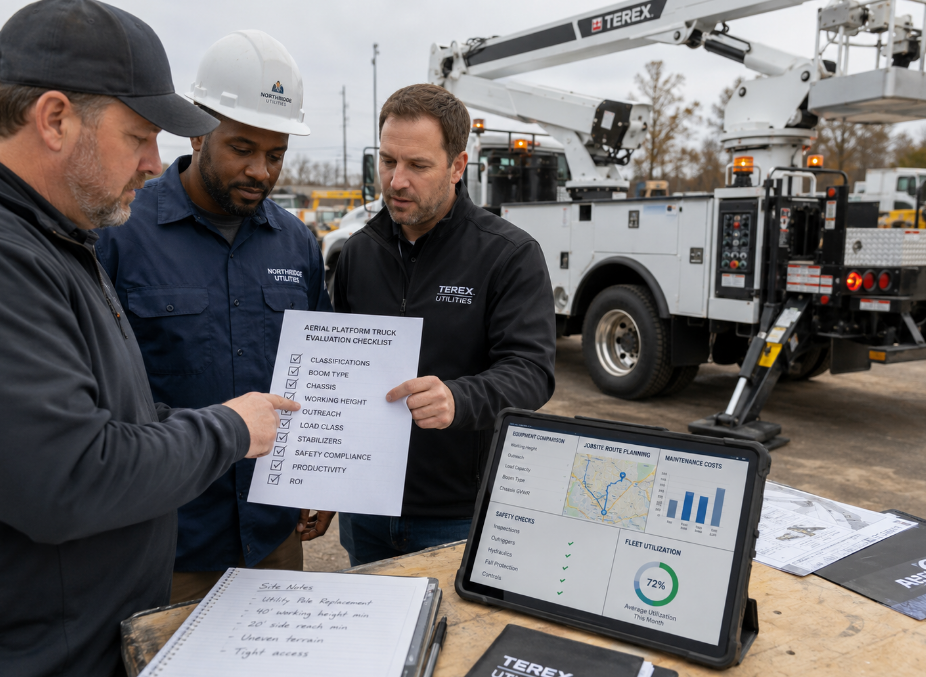
Choose based on required working height and horizontal outreach to match jobsite profile.
Capacity & Stability
Compare basket capacity vs. stabilizer spread for multi-operator support and stability compliance.
Insulated Boom
Prioritize insulated boom performance if live-line utility work is in scope.
GVWR & Wheelbase
Factor GVWR, axle configuration, and wheelbase for payload capacity and maneuverability.
Operating Cost
Evaluate total cost per operating hour: fuel burn, maintenance, depreciation, and training expenses.
Bucket Truck Vs Truck Mounted Aerial Work Platform
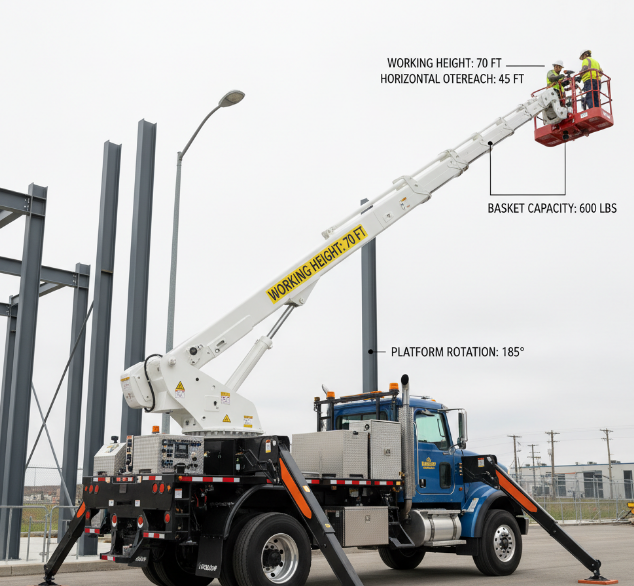
Choosing between a bucket truck and a truck mounted aerial work platform can feel like splitting hairs at first glance. Both lift personnel high above ground on a truck chassis, using a powered boom and controlled lift mechanism. Still, the purpose, safety focus, and working style are quite different once you dig into daily job demands.
Bucket Truck
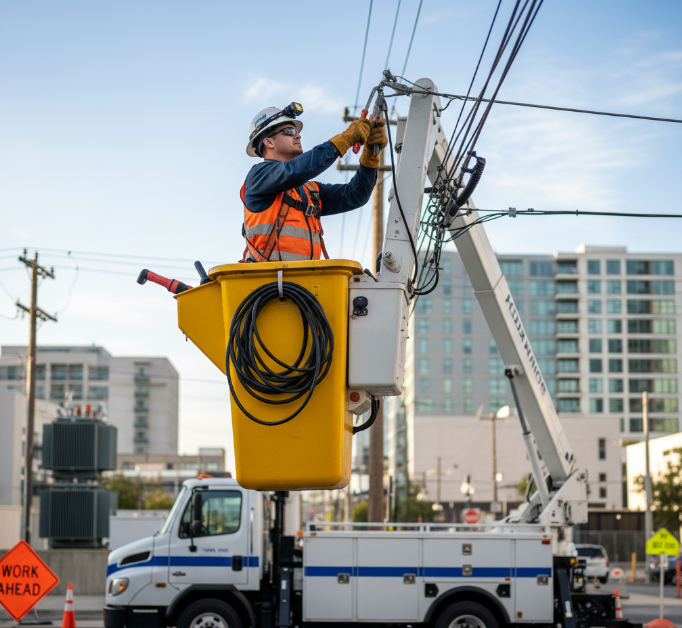
A bucket truck is built with utility crews in mind. The core idea is electrical safety, steady reach, and dependable stability during routine utility work.
Structural Design
1.1 Boom Configuration1.2 Bucket & Personnel HandlingSingle bucket for one operator
Compact design reduces sway
Focused insulation between operator and energized lines
Insulated boom with tested dielectric rating
Limited articulation compared to complex aerial platform systems
Optimized for moderate working height rather than extreme outreach
Safety & Compliance
2.1 Regulatory Alignment2.2 Electrical ProtectionFiberglass sections rated for high voltage
Periodic dielectric testing required
Clear separation between chassis and live conductors
Meets ANSI A92 standards
OSHA-aligned safety systems
Ground-level ground controls for emergency descent
Operational Fit
3.1 Best-Use Cases3.2 Why Contractors Choose ItStraightforward integration onto a commercial truck
Lower training curve
Stable ride for daily grid work
Power distribution repair
Streetlight maintenance
Telecom line servicing
For crews dealing with energized lines, a bucket truck keeps things simple and safe without overcomplicating the setup.
Truck Mounted Aerial Work Platform
A truck mounted aerial work platform expands the playbook. This truck mounted aerial work platform category supports heavier loads, wider outreach, and multi-operator capacity. It’s the go-to when height and flexibility matter.
Here’s a quick comparison snapshot:
| Equipment Type | Max Working Height (m) | Max Outreach (m) | Basket Capacity (kg) | Rotation (°) | Operators |
|---|---|---|---|---|---|
| Basic Bucket Truck | 18 | 12 | 200 | 360 | 1 |
| Insulated Utility Lift | 20 | 14 | 230 | 360 | 1 |
| Articulated Truck Mounted Aerial Work Platform | 28 | 18 | 300 | 450 | 2 |
| Telescopic Aerial Platform Truck | 32 | 22 | 400 | 540 | 2–3 |
| Heavy-Duty Truck Mounted Aerial Work Platform | 40 | 25 | 500 | 540 | 3 |
In construction and bridge inspection, that extra articulation changes everything.
Greater articulation allows operators to move up, over, and around obstacles.
Advanced safety systems monitor load and angle in real time.
Dual ground controls and basket controls improve coordination.
According to IBISWorld’s 2025 construction machinery outlook, demand for high-reach aerial platform truck equipment continues to grow alongside infrastructure upgrades and industrial retrofits.
“Spending on access equipment has remained strong through 2025, supported by infrastructure renewal and commercial redevelopment,” IBISWorld notes in its latest industry update.
Brands like Aerialplatformtruck respond by offering customizable truck mounted aerial work platform configurations—telescopic, articulated, insulated, or hybrid—mounted on reinforced chassis options for higher working height and load flexibility. For contractors who need a serious truck mounted aerial work platform, not just a basic lift, that flexibility keeps projects moving without renting multiple machines.
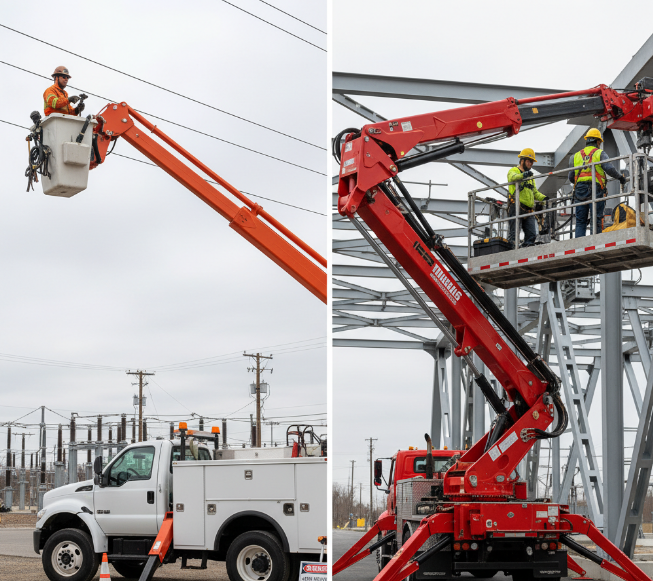
In short, a bucket truck handles focused line work. A truck mounted aerial work platform handles scale, reach, and heavier crews. Different tools. Different jobs.
5 Specs To Compare: Bucket Truck Vs Platform
Choosing between a bucket truck and a truck mounted aerial work platform can feel tricky. The specs tell the real story. Let’s break it down in a clear, no-nonsense way.
Working Height and Horizontal Outreach
When comparing reach, focus on how a truck mounted aerial work platform performs inside its rated envelope:
Vertical Performance
Working height defines the maximum operator reach.
Platform height measures floor level, not hand reach.
Boom length directly affects vertical reach and safe elevation limits.
Side Reach Capability
Horizontal outreach determines access over obstacles.
Reach envelope charts show safe positioning angles.
Extension sections influence stability under load.
Real-World Application
Street lighting and telecom crews using a truck mounted aerial work platform need balanced working height and outreach without exceeding load charts. Aerialplatformtruck models are engineered to maintain stable geometry across full reach envelope limits, keeping operators steady even at max horizontal outreach.
Basket Capacity vs Stabilizer Spread
Load and footprint go hand in hand on any truck mounted aerial work platform.
Capacity Factors
Basket capacity
Platform capacity
Tool weight within weight limit
Stability Mechanics
Stabilizer spread width
Outrigger spread design
Overall stability footprint
Higher load capacity supports two operators plus gear, yet requires wider outrigger spread.
On a truck mounted aerial work platform, interlock systems prevent lift unless the stabilizer spread meets safe specs. That’s critical on uneven ground.
Platform Rotation and Jib Articulation
Access isn’t just height—it’s motion control.
Rotation System
Platform rotation for fine positioning
Turret rotation for full swing coverage
Defined degree of rotation
Articulation Points
Jib articulation for tight corners
Boom articulation for multi-angle reach
Wider range of motion
An articulated truck mounted aerial work platform can snake around steel beams or tree limbs. That added maneuverability cuts repositioning time and fuel use.
Insulated Boom Performance
For live-line tasks, insulation is serious business.
Structural Protection
Certified insulated boom build
Tested dielectric rating
Verified electrical insulation
Compliance Layer
OSHA-aligned safety standards
Defined insulation class
Reliable voltage protection
Utility crews rely on a truck mounted aerial work platform with proven non-conductive material integrity. One weak layer is not an option.
GVWR and Chassis Wheelbase
Mobility shapes daily operations.
Weight and Road Limits
GVWR (gross vehicle weight rating)
Total vehicle weight
Rated axle capacity
Structural Dimensions
Chassis wheelbase
Overall vehicle dimensions
Compatible truck chassis
A properly matched truck mounted aerial work platform must align boom system weight with GVWR and chassis wheelbase. Aerialplatformtruck units are tuned to balance lift performance and road compliance, so operators get solid reach without compromising drivability.
When specs line up, productivity follows.
What’s The Real Cost Per Operating Hour?
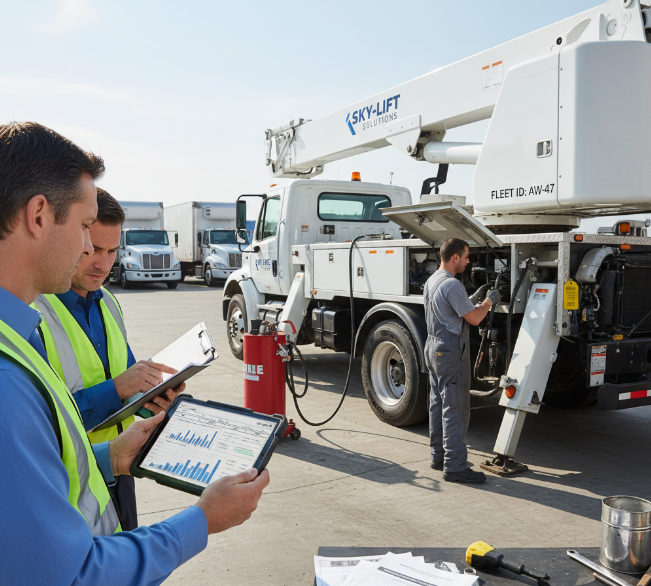
Running a truck mounted aerial work platform isn’t just about the sticker price. The real story shows up in fuel logs, payroll sheets, and insurance renewals. From engine power to asset depreciation, every detail shapes your hourly burn rate. Let’s break down what truly drives the numbers for a truck mounted aerial work platform.
Fuel Consumption and Engine Power Impact
When calculating hourly cost for a truck mounted aerial work platform, fuel sits right at the top.
Core performance drivers
Higher horsepower supports heavy basket loads.
Excess output during low-demand tasks increases idle burn.
Diesel engines often deliver higher torque for continuous lifting.
Gasoline options may reduce upfront cost but impact fuel efficiency.
Engine type
Horsepower and power output
Operational variables
Regional pricing shifts hourly cost quickly.
After-treatment devices can slightly affect fuel flow.
Long hydraulic cycles raise total fuel draw.
Operating hours
Emissions systems
Fuel type
Short version? A balanced aerial work platform truck with optimized PTO settings keeps fuel predictable. Brands like Aerialplatformtruck tune engine power and hydraulic pairing to avoid wasted burn while meeting strict emissions standards.
Maintenance & Warranty Expenses
Maintenance costs stack up quietly.
Preventive layer
Fluid checks
Hydraulic filter swaps
Scheduled preventative maintenance
Strict service intervals reduce surprise downtime.
Reactive layer
Boom cylinder leaks
Electrical diagnostics
Repair costs
Spare parts access and labor rates drive invoice totals.
Protection layer
Length of structural coverage
Electronics protection terms
Warranty coverage
Frequency of inspection and component replacement
In 2025, Deloitte’s industrial equipment outlook noted:
“Maintenance optimization remains one of the fastest ways to cut lifecycle equipment costs, often reducing total ownership expense by 8–12%.”
That hits home for any truck mounted aerial work platform owner.
Operator Labor and Training Program Costs
People cost more than fuel in many fleets.
Workforce structure
Operator wages tied to skill level
Overtime from extended labor hours
Qualification system
Safety drills
Equipment handling
Certified training curriculum
Ongoing certification renewals
Documented qualification and supervision
Compliance focus
OSHA-aligned safety protocols
Site-specific risk assessments
A well-trained crew running a truck mounted aerial work platform works faster and avoids costly errors. Aerialplatformtruck supports structured onboarding programs that align equipment features with real-world job demands.
Depreciation, Insurance, and Regulatory Fees
Fixed costs often feel boring—until renewal season.
Financial decline
Calculated against expected residual value
Annual asset depreciation
Risk protection
Based on fleet claims history
Insurance premiums
Extended liability coverage
Legal alignment
Emission checks
Safety audits
Regulatory compliance
Licensing fees and registration
Local safety regulations
Add it all together and the hourly cost of a truck mounted aerial work platform becomes crystal clear. Not just fuel. Not just labor. It’s the full operating equation.
High Fuel Costs? Try Hybrid Aerial Work Platform
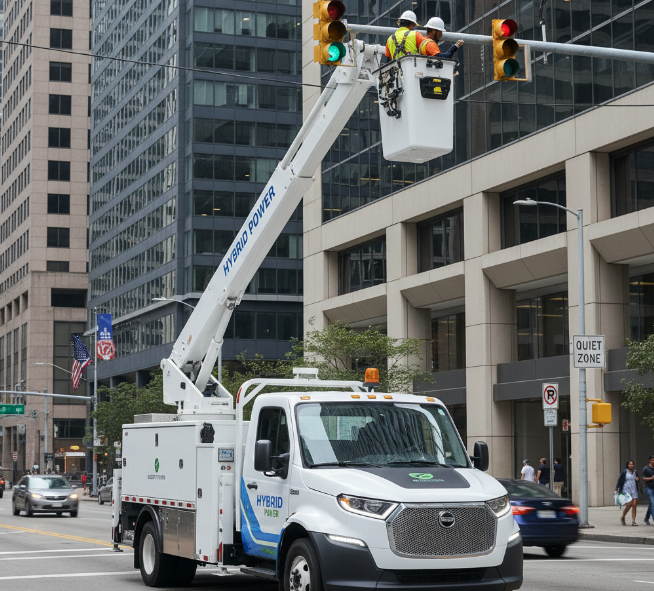
Fuel bills are climbing, and fleet managers feel it every month. A smart shift to a hybrid truck mounted aerial work platform can cut waste, meet rules, and keep jobs moving. Let’s break down how this truck mounted lift setup actually saves real money on site.
Reduced Fuel Burn with Dual-Power PTO
A hybrid truck mounted aerial work platform blends diesel drive with electric power take-off (PTO). That combo changes daily jobsite math.
Hybrid power system design
Handles stationary lifting
Reduces idle time and lowers fuel consumption
Used for road travel and long-distance relocation
Supports heavy-duty climbing with steady engine optimization
Engine mode
Electric PTO mode
Intelligent power management
Auto-switch between engine and battery
Real-time load sensing for better energy efficiency
Financial upside
Lower daily fuel burn
Noticeable operational savings across fleet units
When a truck mounted aerial work platform runs lift operations electrically, fuel use drops sharply during bucket positioning and overhead repair. On urban maintenance routes, this hybrid aerial lift truck approach keeps engines quieter and cuts unnecessary burn.
Compliance with Emissions Standards
Regulations are tightening fast. A hybrid truck mounted aerial work platform helps fleets stay ahead without shrinking working height.
Environmental regulations alignment
Meets city-level low-emission zone rules
Supports national regulatory compliance targets
Improved exhaust control
Reduced engine runtime
Lower carbon emissions during lift cycles
Long-term sustainability goals
Cleaner fleet profile
Stronger green bidding credentials
Here’s a simplified emissions comparison for urban utility duty cycles:
| Operating Mode | Avg Fuel Use (L/hr) | CO₂ Emissions (kg/hr) |
|---|---|---|
| Diesel PTO Active | 4.8 | 12.6 |
| Hybrid Electric PTO Active | 1.9 | 5.1 |
| Road Travel (Standard Engine) | 6.2 | 16.4 |
For contractors running multiple truck mounted platforms, that drop in air quality impact adds up quickly. Aerialplatformtruck integrates green technology systems that make compliance less of a headache and more of a selling point.
Lower Operating Expenses and After-Sales Support
Cutting fuel is only part of the story. The bigger win is long-term cost control.
Fewer engine hours mean lower maintenance costs.
Reduced wear trims overall operational expenditure.
Smarter diagnostics protect vehicle uptime.
Here’s how it plays out:
Hybrid lift mode reduces strain on core engine parts.
Service intervals extend due to balanced workload.
Predictive systems flag issues early, limiting downtime.
Fleet managers also care about backup. Strong service support, fast spare parts availability, and responsive technical assistance keep a truck mounted aerial work platform earning instead of sitting in the yard.
Aerialplatformtruck backs its truck mounted aerial work platform line with dedicated customer care programs focused on total cost of ownership. That means fewer surprise bills and more stable budgeting.
In simple terms, hybrid power keeps fuel in the tank longer, engines healthier, and crews on schedule. And that’s what really matters when margins get tight.
FAQ
What specifications matter most when choosing a truck mounted aerial work platform?
Choosing the right truck mounted aerial work platform means balancing reach, lifting strength, and road compliance together. Focus on two key layers:
1) Platform performance
Working height and horizontal outreach for bridge inspection or construction site access
Basket capacity matched to crew size and tools
Platform rotation and jib articulation for tight industrial facility maintenance zones
Insulated boom for utility line maintenance under OSHA regulations
Stabilizer spread for safe positioning on uneven ground
2) Truck chassis foundation
Gross Vehicle Weight Rating (GVWR) for roadworthiness certification
Axle configuration and chassis wheelbase for stability
Engine power and transmission type for urban versus highway travel
Power Take-Off (PTO) compatibility with hydraulic systems
A poor match between platform load and GVWR can reduce mobility or even violate local safety codes.
How do safety systems and standards protect operators on site?
Safety is built in layers, not in slogans. A compliant truck mounted aerial work platform should align equipment design with ANSI A92 standards, CE certification, ISO 16368, and OSHA regulations.
Key protection systems include:
Emergency stop buttons at both ground and basket controls
Overload protection systems that prevent excess basket capacity
Deadman controls requiring active operator input
Fall arrest anchor points for harness tie-off
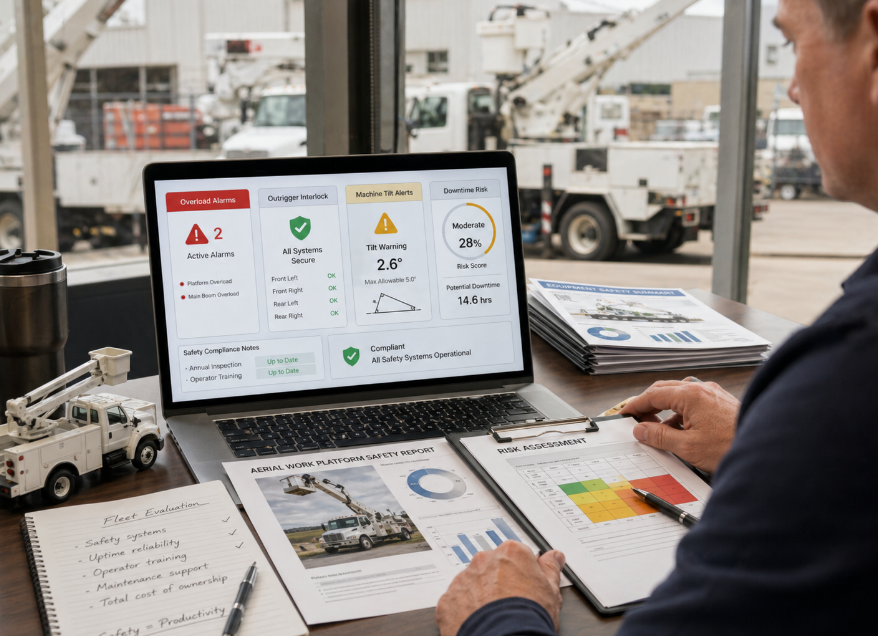
Tilt alarm systems with outrigger interlocks
Interlock safety systems that restrict unsafe boom movement
For street lighting installation or telecommunications infrastructure work, these systems help reduce human error and allow crews to focus on precise, controlled operation.
What affects long-term ownership cost and fleet reliability?
The real cost of a truck mounted aerial work platform becomes clear over years of operation, not just at delivery.
Operational drivers
Engine power and emissions standards compliance for city operating zones
Preventive maintenance schedules tied to recommended service intervals
Diagnostic software access for faster troubleshooting
Support structure
Spare parts availability
Warranty coverage period for the boom and stabilizers
Technical support hotline and operator training programs
For fleet managers, standardization across units, supplier reputation, delivery lead times, and after-sales service quality often matter as much as working height. Strong documentation and compatibility with existing equipment quietly protect uptime and reputation.