When deadlines dare gravity, an aerial work platform truck keeps crews safe, jobs rolling, and your fleet looking like the boss of the skyline.
An aerial work platform truck isn’t just another rig in your fleet; it’s the difference between crews getting home safe or playing dice with gravity.
Downtime bleeds cash, ladders wobble, and permits pile up. A purpose-built lift on wheels moves fast, parks steady, and keeps jobs on schedule without drama. Plain and simple.
What Defines An Aerial Work Platform?
An aerial work platform truck is more than a truck with a lift bolted on. It blends reach, strength, and smart control into one tight system. From city lighting jobs to telecom installs, the right aerial lift truck keeps crews safe and steady. Let’s break down what really defines a serious aerial work platform truck.
Key Platform Specifications: Working Height, Capacity & Outreach
When sizing up an aerial work platform truck, specs tell the real story.
Core lift metrics
Reach geometry
Stability envelope
1) Vertical reach
2) Horizontal access
3) Safe load limits
Under the hood of platform performance:
Working height
Maximum platform elevation
Influenced by stowed height
Impacts bridge clearance and fleet routing
Platform capacity
Rated lift capacity
Includes operator + tools
Tied directly to ground clearance and chassis rating
Horizontal outreach
Side reach from turntable center
Changes with load curve
Affects tip-over stability
Technical comparison snapshot:
| Model Type | Working Height (m) | Platform Capacity (kg) | Horizontal Outreach (m) |
|---|---|---|---|
| Light Duty | 16 | 200 | 8 |
| Mid Range | 22 | 250 | 12 |
| Heavy Duty | 28 | 300 | 16 |
| Insulated | 18 | 220 | 10 |
Other physical factors include platform dimensions, basket rotation angle, and insulation rating for live-line work. A well-built aerial work platform truck from Aerialplatformtruck balances these specs so operators don’t feel pushed to the limit during daily jobs.
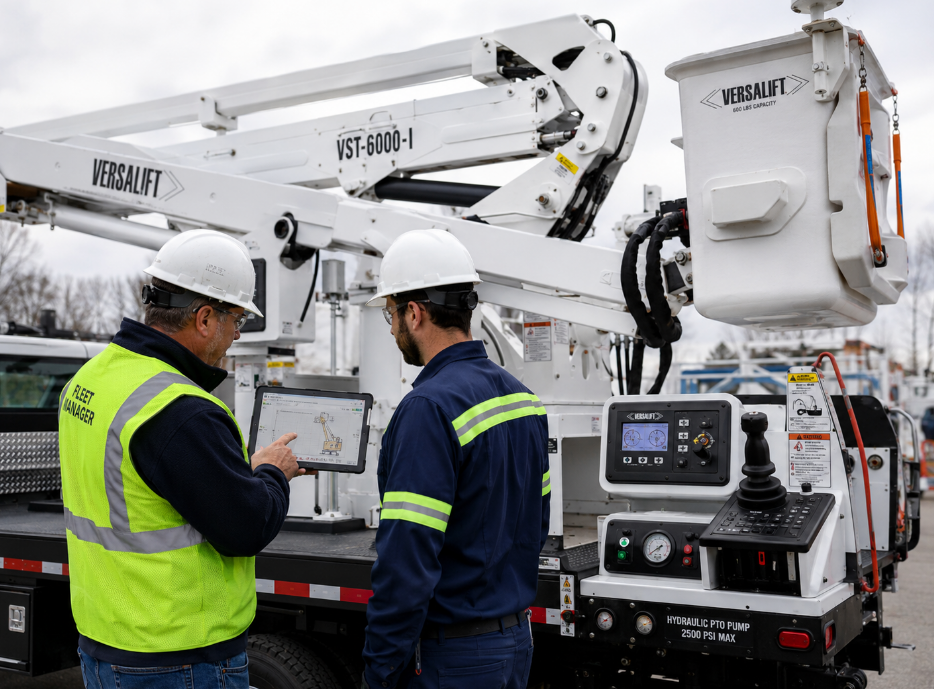
Boom Mechanisms Explained: Articulated vs. Telescopic Sections
The boom mechanism defines how an aerial lift truck behaves in tight streets or open highways.
Articulated design:
Uses multi-joint boom sections
Includes a rotating jib arm
Mounted on a turntable with controlled slew
It bends around rooftops, trees, and signage. That flexibility makes it a favorite for maintenance crews working in crowded areas.
Telescopic design:
Straight-line boom extension
Higher side outreach
Faster elevation cycles
A telescopic boom shines on long-span access, like highway lighting. An articulated boom shines when access is tricky. Many aerial work platform truck buyers compare both before locking in fleet specs.
“Global demand for vehicle-mounted aerial platforms continues to grow steadily through 2025, driven by utilities and telecom upgrades,” notes the 2025 Access Equipment Market Update by IPAF.
That demand pushes manufacturers like Aerialplatformtruck to refine articulation angles, smoother slew control, and lighter boom steel without cutting strength.
Power, Hydraulics & Controls: Flow Rate, PTO Pump & Proportional Joysticks
At its core, an aerial work platform truck runs on a tuned hydraulic system powered by a dedicated power source.
Power chain overview:
Engine or hybrid engine type
Drives transmission
Engages PTO pump
PTO pump
Converts mechanical energy
Generates hydraulic pressure
Feeds pressurized hydraulic fluid
Control precision depends on:
Calibrated flow rate
Balanced pressure relief valves
Responsive proportional joysticks
Inside the cab, the control system links joystick input to valve response. Small hand movement, smooth boom motion. Push harder, higher flow rate, faster lift. Emergency lowering circuits and diagnostic displays keep the operator covered if power drops.
For contractors running an aerial work platform, smooth hydraulics mean less sway, tighter positioning, and fewer call-backs. That’s why Aerialplatformtruck focuses heavily on pump efficiency and joystick sensitivity—because steady hands deserve steady machines.
5 Tasks Ideal For Platform Trucks
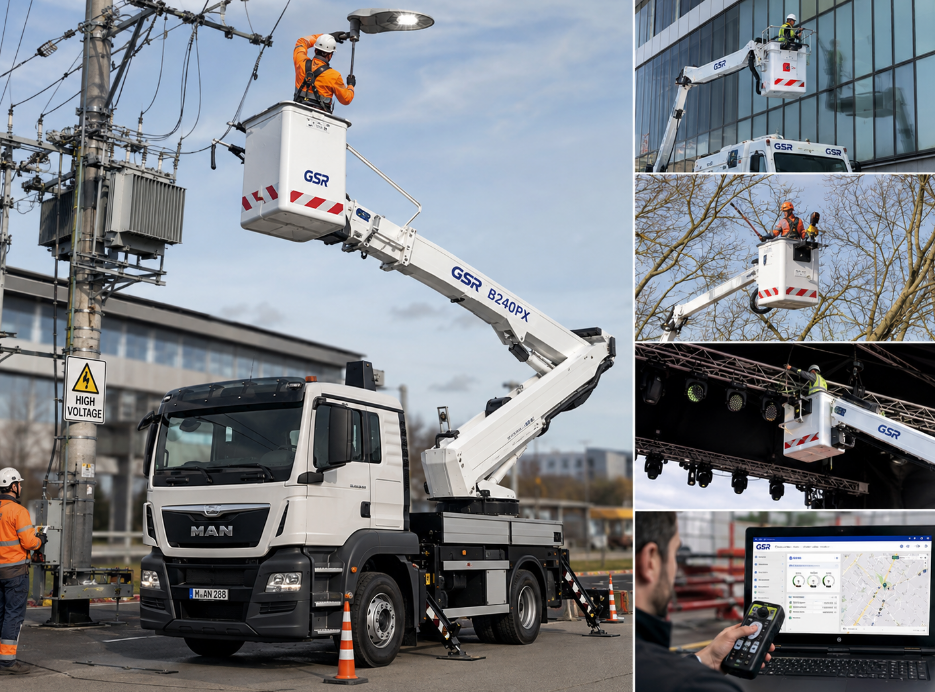
Platform trucks keep crews moving safely above ground without the usual hassle. From city lighting to tree trimming, an aerial work platform truck handles tough height jobs while keeping tools, operators, and timelines in check.
Task 1: Routine Overhead Maintenance with Tool Mounting Points
When it comes to routine maintenance and overhead work, an aerial work platform truck becomes the go-to access equipment for crews handling lighting or signage repairs.
Work Platform Setup
1.1 Secure safety harness to certified anchor points.
1.2 Check tool mounting brackets and onboard power outlets.
1.3 Confirm stable work platform positioning.Tool Organization
2.1 Built-in tool mounting rails reduce clutter.
2.2 Storage compartments protect gear during elevated tasks.
Quick access to fixtures
Reduced climb time
Safer elevated tasks
For teams using Aerialplatformtruck models, the layout supports smooth movement during long shifts with fewer interruptions.
Task 2: High-Voltage Inspections Using Insulation-Rated Baskets
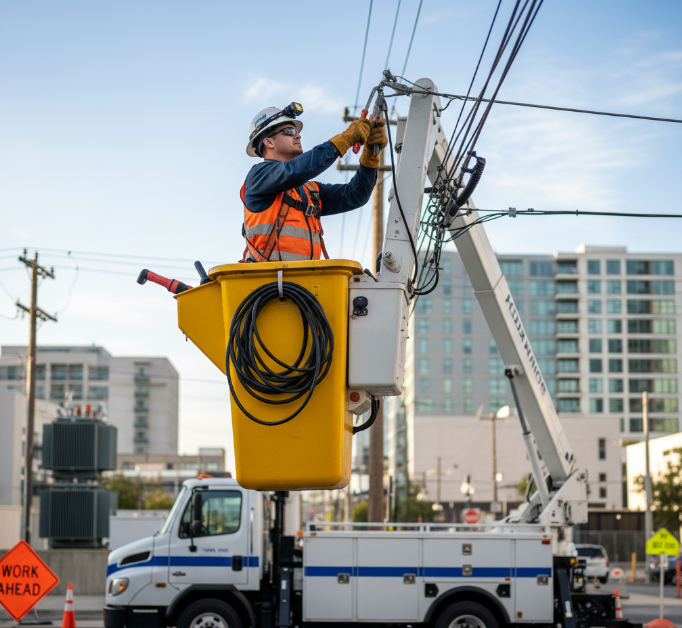
Utility crews rely on an aerial work platform truck designed for high-voltage inspection and serious electrical safety demands.
Insulated Protection
1.1 Insulated basket with verified dielectric rating.
1.2 Non-conductive boom sections near power lines.Operational Controls
2.1 Overload sensing in the aerial device.
2.2 Emergency descent in the personnel lift.Compliance
3.1 ANSI-aligned safety testing.
3.2 Fall protection anchors for utility work crews.
As noted in a 2025 International Energy Agency grid resilience update:
“Utility infrastructure upgrades are accelerating globally, increasing demand for insulated aerial access equipment that meets strict safety compliance.”
That trend makes the aerial work platform truck essential for power-sector reliability.
Task 3: Façade Cleaning on Skyscrapers with Basket Rotation
High-rise crews trust an aerial work platform truck for façade cleaning and skyscraper maintenance.
Access Control
1.1 Smooth basket rotation around corners.
1.2 Horizontal outreach from the articulated boom.Stability
2.1 Wind monitoring safeguards the aerial platform.
2.2 Balanced weight distribution at height.Precision Work
3.1 Close positioning for window washing.
3.2 Controlled descent along the building exterior.
It’s straightforward, steady, and far less stressful than swing-stage setups.
Task 4: Tree Pruning & Landscaping at Height with Material Handling Capacity
Arborists tackling tree pruning and branch removal appreciate the muscle of a well-built aerial work platform truck.
Elevated Reach
1.1 Flexible boom angles for arborist work.
1.2 Smooth lift response in dense canopies.Load Support
2.1 Strong material handling capacity for debris.
2.2 Secure platform edges on the bucket lift.Ground Coordination
3.1 Stabilizers on uneven lawns.
3.2 Clear communication during landscaping tasks.
Aerialplatformtruck units are built to keep balance steady even when limbs get heavy.
Task 5: Event Rigging for Lighting & AV Using Telematics Integration
Fast-paced event rigging calls for accuracy. An aerial work platform truck handles lighting installation and audio-visual setup without guesswork.
Precision Placement
1.1 Controlled lift speed near trusses.
1.2 Fine adjustments on the work platform.Smart Oversight
2.1 Telematics integration for usage tracking.
2.2 Remote diagnostics through fleet dashboards.Production Flow
3.1 Stable access during stage production.
3.2 Data logs supporting remote monitoring.
When timing matters and crews are racing the clock, a reliable aerial work platform truck keeps installs smooth and stress low.
Truck-Mounted Vs. Self-Propelled Units
Choosing the right aerial work platform truck isn’t just about height; it’s about how you move, park, and operate on real job sites. From city streets to indoor plants, both truck lift and self-propelled aerial platform options shape productivity. Let’s break down how each aerial work platform truck fits daily work demands.
Truck-Mounted Units
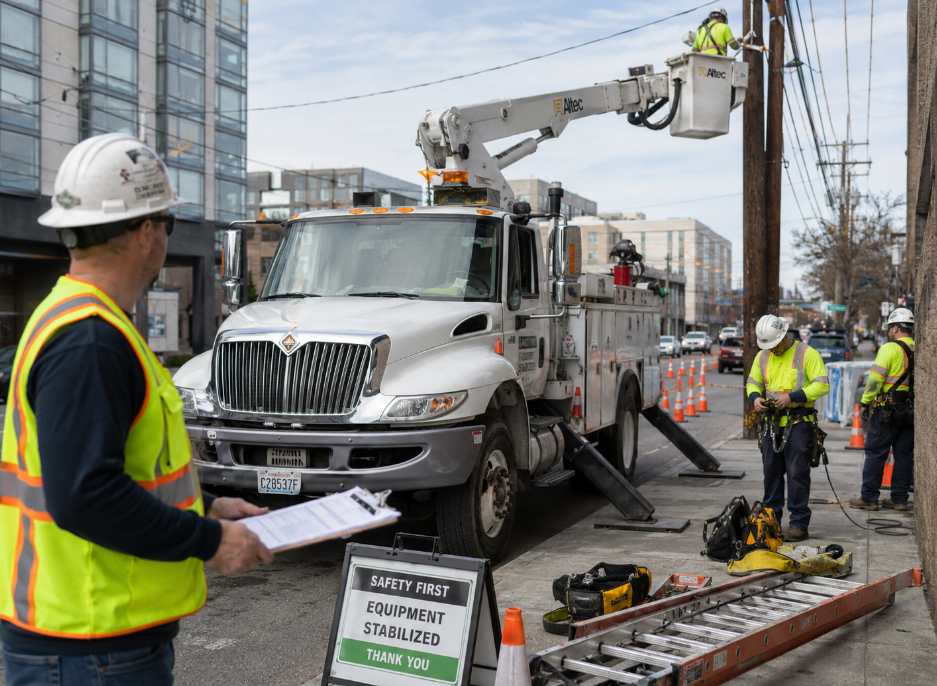
A truck mounted aerial work platform truck integrates directly with a vehicle chassis, built for smooth road transport between sites.
Chassis Integration
Gross vehicle weight and axle ratings define load margins.
Reinforced frames support heavy boom type systems.
Stability System
i. Manual or hydraulic extension
ii. Ground pressure monitoring
a. Outrigger system deployment
b. Stability requirements compliance for urban lifts
Boom Performance
a. Articulation for obstacle bypass
b. Telescopic reach for extended vertical access
An aerial work platform truck like this handles telecom, lighting, and utility tasks with quick setup. Many contractors prefer Aerialplatformtruck for reliable PTO engagement and consistent lift control across long-distance routes.
Self-Propelled Units
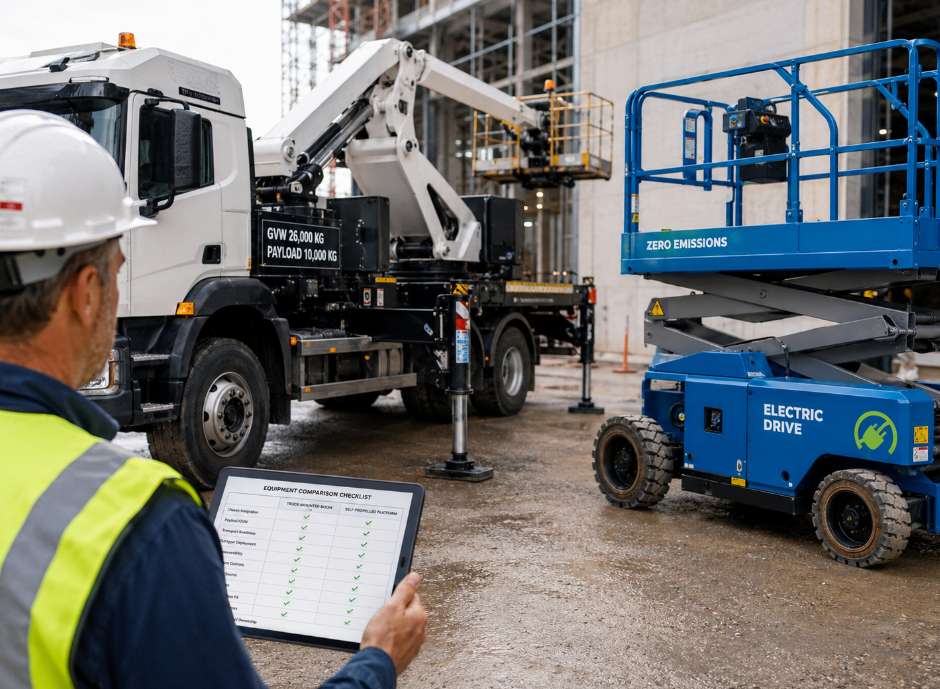
A self-propelled aerial work platform truck focuses on compact motion and tight access.
Built on a compact chassis with an onboard engine or electric drive
Smooth platform controls for precise positioning
Strong maneuverability in confined zones
Key formats include:
Scissor mechanism for vertical-only lift.
Articulated boom for flexible outreach.
Telescopic boom for straight elevation.
Add rough terrain capability or zero-emission drive, and the aerial work platform truck becomes warehouse-friendly. Aerialplatformtruck models even support hybrid options, giving this aerial work platform truck category a practical edge for indoor and outdoor crews alike.
FAQ
What defines a high-performance aerial work platform truck?
An aerial work platform truck is judged by how safely and smoothly it lifts people into the air under pressure.
Core platform specifications
Working height and horizontal outreach shape real job access.
Platform capacity and platform dimensions affect crew size and tool handling.
Basket rotation, insulation rating, and tool mounting points support precision and utility work.
Chassis integration matters
Gross vehicle weight and axle capacity balance load stability.
Engine horsepower, transmission type, and PTO engagement drive lifting power.
Frame reinforcement protects structural integrity during full extension.
When these elements align, operators feel stable, not exposed.
How do articulated and telescopic boom systems change job performance?
The choice between an articulated boom and a telescopic boom defines how crews confront obstacles.
Articulated boom
→ Multiple boom sections with jib articulation
→ Flexible movement around signage, trees, or steel structures
→ Larger stabilizer footprint with advanced leveling system
Telescopic boom
→ Straight extension for maximum horizontal outreach
→ Faster elevation cycles
→ Ideal for façade maintenance and bridge inspections
Outrigger type and ground conditions often decide which system keeps the crew confident at height.
Why is hydraulic and power system performance so critical?
At full elevation, hydraulic hesitation is not acceptable.
| Component | Operational Impact |
|---|---|
| PTO driven pump | Transfers engine power directly to lifting system |
| Hydraulic flow rate & pressure | Control lift speed and stability |
| Oil cooler | Prevents overheating during continuous cycles |
| Auxiliary power unit | Maintains operation if engine stalls |
| Battery backup system | Supports emergency lowering |
Fuel efficiency and controlled fuel consumption reduce downtime, while a well-tuned hydraulic pressure system gives operators smooth, predictable motion.
What safety and control features protect operators at height?
Working above traffic or energized lines demands layered protection.
Safety & Compliance
Emergency lowering for rapid descent
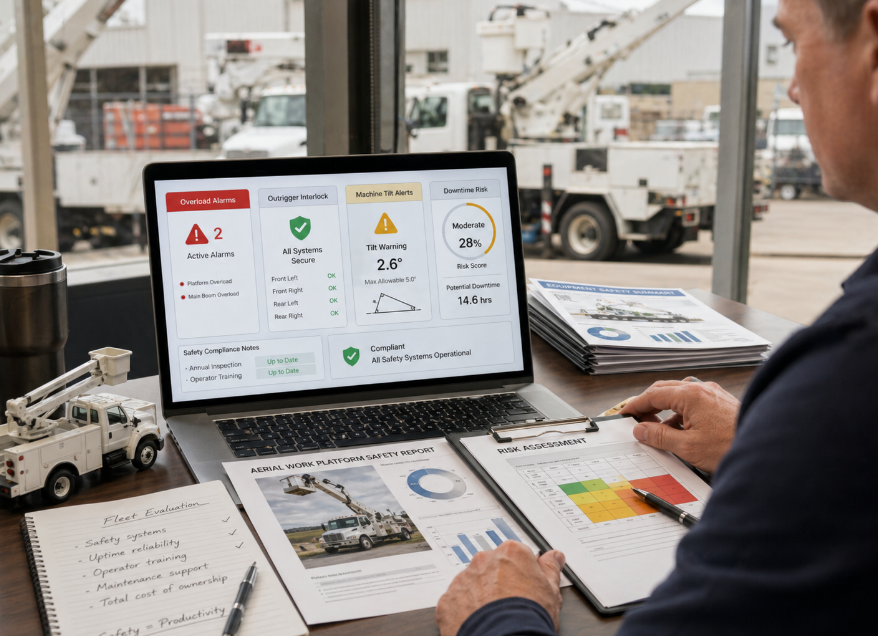
Overload sensing and interlock functions
Fall protection anchors and tilt alarm
Wind speed monitoring with ANSI standards compliance
Control & Operation
Proportional controls with refined joystick sensitivity
Platform control panel plus ground level controls
Diagnostic display and remote diagnostics
Auto-leveling function on uneven terrain
When alarms sound and systems respond instantly, tension drops and focus returns to the task.
How do environmental efficiency and operational features influence buying decisions?
Urban contracts and utility tenders now weigh sustainability alongside lift height.
Emission standards compliance, hybrid powertrain, or electric drive option reduce noise levels in city centers.
Biodegradable hydraulic fluid and regenerative braking lower environmental impact.
Telematics integration and data logging capabilities track usage and service intervals.
Tool power outlets, storage compartments, work light package, and material handling capacity improve daily productivity.
Custom paint options reinforce fleet identity.
An aerial work platform truck today must lift high, move fast, and leave a lighter footprint behind.