When ladders quake and deadlines scream, the aerial work platform truck rises—lifting crews, pride, and profits sky‑high with zero drama.
An aerial work platform truck is the no-nonsense fix when ladders wobble and scaffolding drags your schedule into the mud. It lifts crews, tools, and nerves off the ground fast.
Contractors need reach without circus tricks, uptime without babysitting equipment, and safety that keeps OSHA off their backs.
According to a 2025 Grand View Research report, demand continues rising across utilities, telecom, and construction as fleet owners prioritize equipment for compliant operations.
Key Points Spotlight: Aerial Work Platform Truck
Core Definition
Vehicle-mounted boom system on a GVWR-rated chassis, with hydraulics and turret rotation, enabling safe elevated access.
Main Variants
Telescopic, articulating, trailer-mounted, and jib-equipped trucks offer tailored reach, flexibility, and transport options.
Top Specs & Safety
Focus on working height, outreach, platform capacity, load sensing, emergency stop, and ANSI A92/EN 280 compliance.
What Is An Aerial Platform Truck?
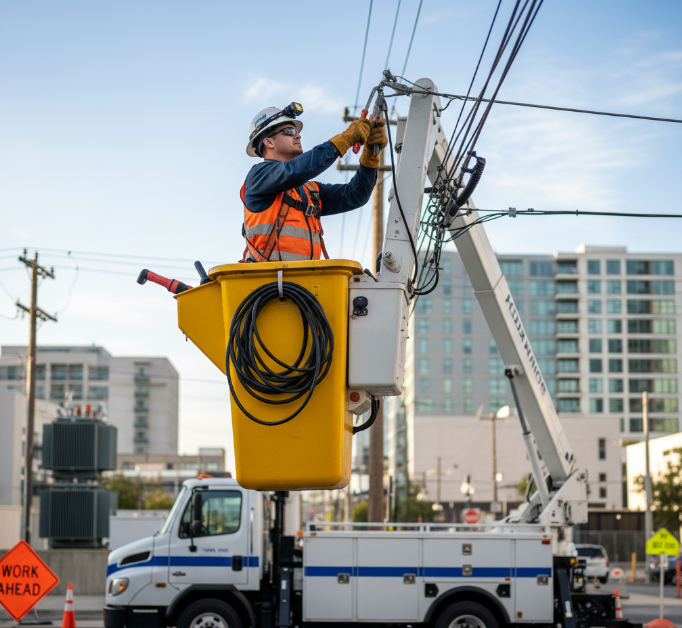
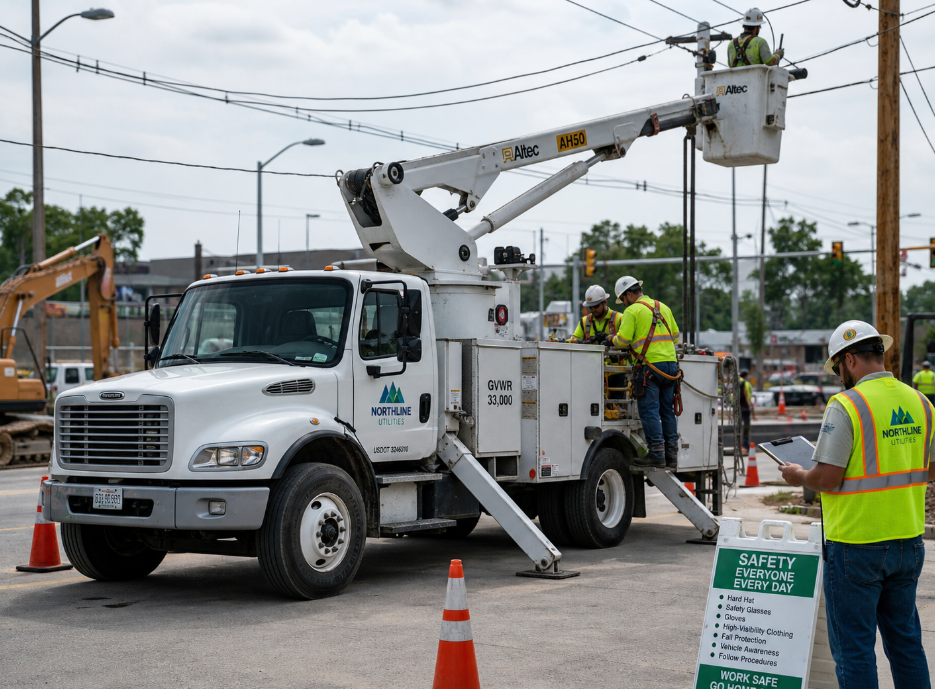
An aerial work platform truck lifts people, tools, and materials high above ground using a mounted boom and guarded cage. It blends a truck base with an elevated access system. In simple terms, it’s a smart way to work safely in the air without building scaffolding every single time.
Defining Aerial Platform Trucks: Key Components and Roles
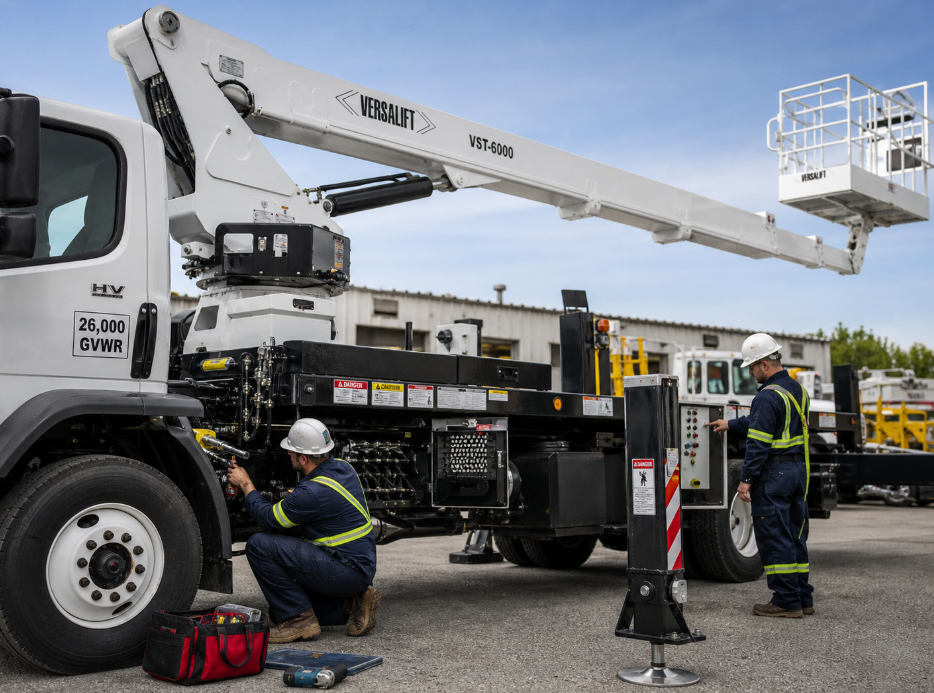
An aerial work platform truck is built around a clear definition: a vehicle-mounted lifting unit designed for elevated tasks. Its structure and design bring several components together, each serving specific roles in daily functionality.
Core structural makeup:
Chassis foundation
Rotating turntable
Telescopic or articulating boom
Guarded platform cage
Functional layers inside the system:
Hydraulic system – powers lifting and extension
Control system – manages ground and basket inputs
Stabilizing outriggers – prevent tipping
When an aerial work platform truck operates, the functionality depends on synchronized hydraulic pressure, balanced load distribution, and operator control. That’s how a simple truck becomes a dependable elevated access machine, also called a bucket truck or aerial lift truck.
From Chassis to Cage: Core System Overviews
Every aerial work platform truck begins with a GVWR-rated chassis, then layers mechanical and hydraulic systems upward.
| System Component | Typical Specification | Functional Role |
|---|---|---|
| Chassis | 14,000–33,000 lbs GVWR | Load-bearing base |
| Boom | 30–75 ft reach | Vertical & horizontal access |
| Hydraulic system | 2,500–3,500 psi | Lifting force |
| Outriggers | 4-point stabilizers | Ground stability |
Working upward:
Base Level
Engine and transmission
Axles and braking
Mid-Level
Rotating turntable
Hydraulic cylinders
Top Level
Insulated or steel cage
Dual control system panels
This layered build lets the aerial work platform truck move, park, stabilize, and lift—all in one tight workflow.
Typical Applications and Industry Benefits
The applications of an aerial work platform truck stretch across:
Utilities line repair
Construction steel work
Telecommunications tower setup
Building maintenance and signage
Industry benefits show up fast:
Faster setup than scaffolding
Improved safety compliance
Higher crew efficiency
Better horizontal outreach
In short bursts: less downtime. Fewer ladders. More control.
For crews handling lighting repair, pole installation, or exterior cleaning, an aerial work platform truck simply makes the job smoother. It keeps workers stable, tools within reach, and timelines on track—without cutting corners on safety.
4 Types Of Aerial Platform Trucks
Choosing the right aerial work platform truck can feel tricky when job sites, height limits, and space constraints all clash at once. From telecom installs to city maintenance, each aerial work platform truck type solves a different access problem. Let’s break down what makes every truck-mounted aerial lift tick.
Telescopic Boom Truck
A Telescopic Boom Truck is built around a straight boom system with extendable sections powered by hydraulic force. This aerial work platform truck shines when height and outreach matter most.
Structure & Reach
Straight boom alignment improves stability
Hydraulic cylinders extend maximum horizontal reach
Designed for high vertical access
Job Site Strength
Ideal for construction sites
Handles heavy-duty tasks
Widely used in telecommunications
Performance Snapshot
| Model Type | Max Working Height (m) | Max Outreach (m) | Platform Capacity (kg) |
|---|---|---|---|
| Standard | 28 | 18 | 250 |
| Heavy-Duty | 32 | 20 | 300 |
| Extended | 40 | 25 | 400 |
For open areas, this aerial lift truck keeps things simple—up, out, done. Many fleet buyers turn to Aerialplatformtruck for consistent boom rigidity and smooth extension control.
Articulating Boom Truck
The Articulating Boom Truck uses a jointed boom with multiple sections, giving real up-and-over capability. Tight urban streets? Industrial plants packed with piping? No problem.
Mechanical Layout
Multi-hinge arms increase maneuverability
Enhanced obstacle navigation
Compact turret rotation
Application Strength
Precise maintenance work
Safe tree trimming
Flexible versatile access indoors and out
Why Contractors Like It
Better reach around structures
Stable positioning at offset angles
Works well as a utility aerial work platform truck
Compared to a straight boom, this truck-mounted platform trades raw height for smarter movement. For crews dealing with pipes, signage, or warehouse beams, that flexibility saves serious time.
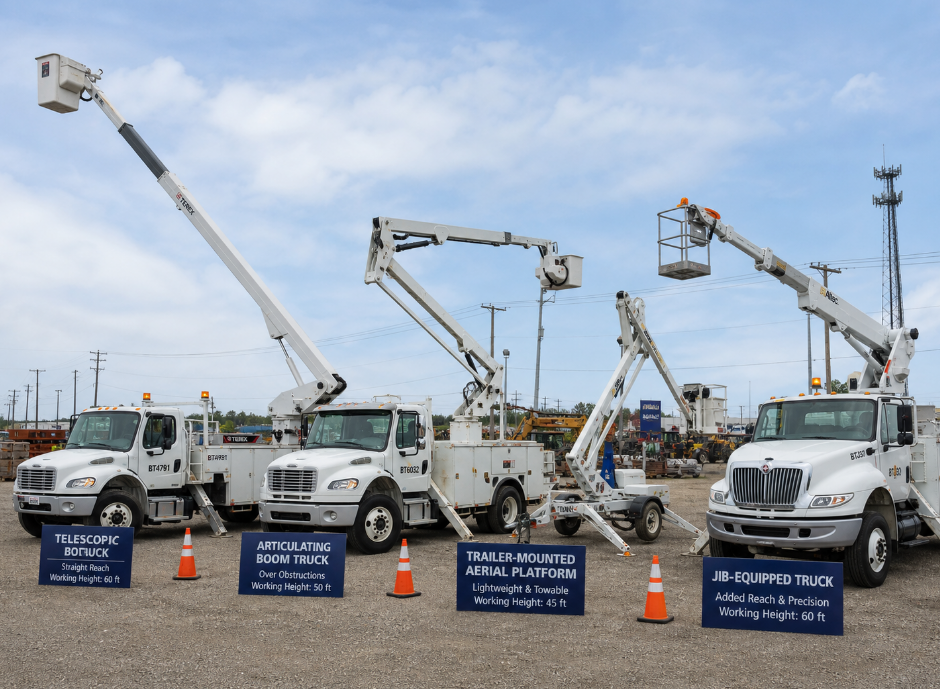
Trailer-Mounted Aerial Platform
Need mobility without committing to a full truck chassis? This towable unit fits the bill.
Compact footprint
Quick setup with outriggers
Smart choice for rental equipment fleets
Setup usually flows like this:
Tow to site using light-duty vehicle.
Deploy outriggers for leveling.
Engage lift controls and elevate platform.
Because of its compact design and easy transport, this version works great for landscaping and event setup crews. It still performs like an aerial work platform truck, just with more portability. For short-term contracts, it keeps costs lean and access simple.
Jib-Equipped Truck
A Jib-Equipped Truck adds an auxiliary boom at the tip, unlocking tight-angle placement most standard lifts struggle with.
Core Functional Layers:
Extension System
Primary boom for elevation
Enhanced articulation via jib
Smooth tilt adjustments for fine control
Precision Work
Accurate basket alignment
Easier reach around obstacles
Ideal for utility work
Installation Advantage
Supports complex installations
Improves confined-site safety
Maintains load balance
In real-world use, this kind of aerial work platform truck feels nimble at the top end. When linemen or signage teams need pinpoint placement, the jib makes all the difference. Many operators upgrading from a bucket truck notice sharper positioning and better platform response with models supplied by Aerialplatformtruck.
Each aerial work platform truck type brings its own rhythm to the job. Match the boom style to the task, and the work just flows.
Specifications For Aerial Work Platform Trucks
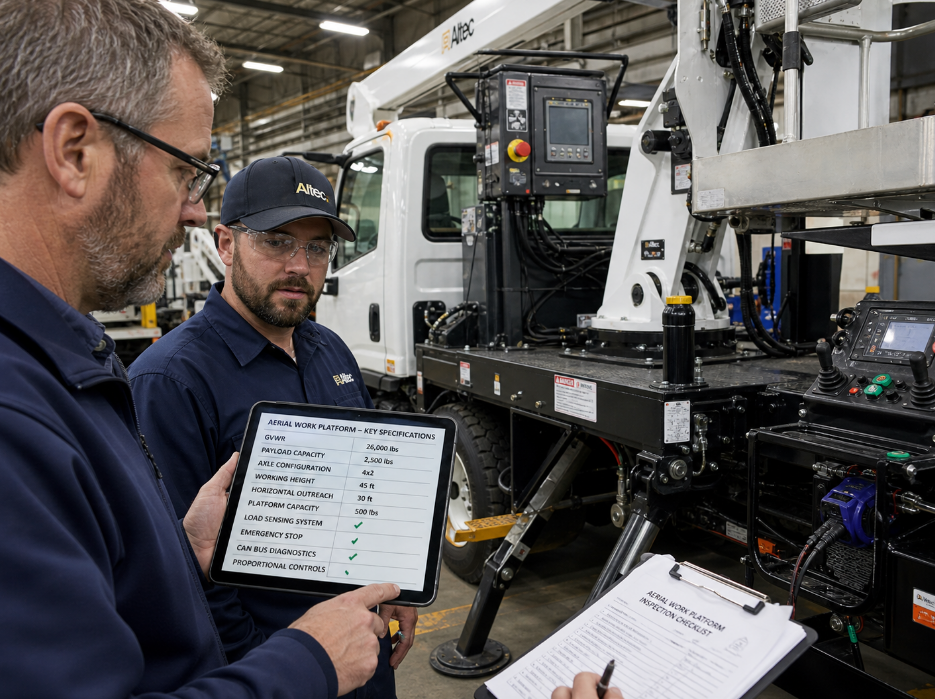
An aerial work platform truck isn’t just a truck with a lift bolted on. It’s a tight combo of chassis strength, boom control, safety tech, and smart electronics. If you’re sizing up an aerial lift truck or bucket truck for real-world jobs, these specs make all the difference.
Chassis Specifications: GVWR, Payload Capacity, Axle Configuration
At the base of every aerial work platform truck sits the chassis system:
Load Foundation
Single, tandem, or multi-axle
Impacts weight distribution and braking
Defines maximum safe operating weight
Must align with payload capacity
GVWR
Axle configuration
Structural Core
Cab-over for tight streets
Conventional for highway travel
High-tensile steel for rigidity
Frame material
Chassis type
Mobility Control
Leaf spring or air ride for smoother handling
Longer equals added stability
Wheelbase
Suspension
Aerialplatformtruck models balance stability with maneuverability, so the aerial work platform truck stays planted even at full lift.
Boom and Lift Mechanisms – Telescopic, Articulating, Jib Extensions
The heart of an aerial work platform truck lies in its lift system:
Boom type
Jointed arms for tight access
Straight reach, long outreach
Telescopic boom
Articulating boom
Lift mechanism
Hydraulic cylinders powering smooth elevation
Jib extension
Adds fine positioning and better platform rotation
For urban utility crews using a work platform truck, that flexibility means fewer repositioning moves and faster jobs.
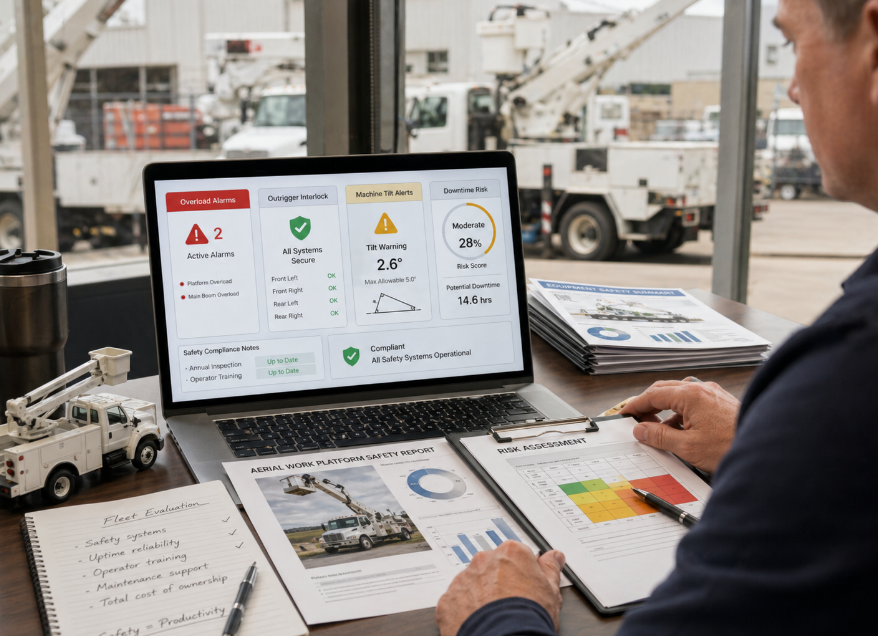
Safety Features That Matter: Load Sensing, Emergency Stop, Interlock Systems
Safety isn’t optional. It’s built in layers:
Primary Protection
Locks movement if limits are exceeded
Monitors weight in real time
Load sensing
Overload protection
Operator Control
Prevent unsafe boom operation
Instant shutdown
Emergency stop
Interlock systems
Stability Management
Stability control
Platform leveling
Fall protection
An aerial work platform truck from Aerialplatformtruck integrates these systems so crews can focus on the task, not the risk.
Performance Metrics Explained: Working Height, Outreach, Platform Capacity
Performance specs define job suitability:
Vertical Reach
Working height
Up-and-over clearance
Horizontal Capability
Outreach
Horizontal reach
Operational Limits
Platform capacity
Rotation angle
Gradeability
A solid aerial work platform truck keeps strong platform capacity even near maximum horizontal reach.
Control Systems Overview: Proportional Controls, CAN Bus, Diagnostic Interface
Modern aerial lift truck control systems combine precision with feedback:
Operator Interface
Proportional controls
Joystick controls
Display panel
Electronic Backbone
Quick fault detection
Links sensors and actuators
CAN bus
Diagnostic interface
Access Options
Ground and platform controls
Optional remote control
Aerialplatformtruck designs its aerial work platform truck electronics for smooth motion and clear diagnostics, keeping downtime low and productivity high.
FAQ
What defines an aerial work platform truck and how is it built?
An aerial work platform truck is a vehicle-mounted lifting system engineered for safe elevation of crews.
It integrates:
A road-certified chassis with defined gross vehicle weight rating, wheelbase, axle configuration, engine type, and transmission system
A boom assembly—telescopic boom or articulating boom—with turret rotation and hydraulic cylinders
An outrigger system that locks the vehicle into stable working position
High-strength steel frames, aluminum alloys, and strict welding quality preserve structural integrity under daily stress.
Where are aerial work platform trucks most commonly used?
Utility repair teams, telecom installers, municipal lighting crews, and construction contractors depend on these trucks when height and mobility collide.
Key job demands include:
Rapid setup between service points
Adequate payload capacity for tools and materials
Compliance with OSHA regulations, ANSI A92, or EN 280 standards
In tight streets or industrial yards, mobility and controlled elevation become critical advantages.
How do telescopic and articulating booms compare in performance?
Two boom philosophies serve different battlefield conditions:
Telescopic boom: Straight extension, greater working height and horizontal outreach, ideal for open job sites.
Articulating boom: Hinged sections with optional jib extension, capable of reaching up and over obstacles in confined zones.
Choice depends on required platform capacity, wind resistance limits, and stowed dimensions for transport clearance.
What safety systems should never be overlooked?
Safety is layered, not singular.
A properly specified aerial work platform truck includes:
Load sensing system and overload protection guarding platform capacity
Emergency stop at both ground controls and platform controls
Interlock system tied to outrigger deployment
Stability control to prevent unsafe boom movement
Certified fall protection meeting OSHA regulations and CE certification requirements
When height increases, margin for error disappears.
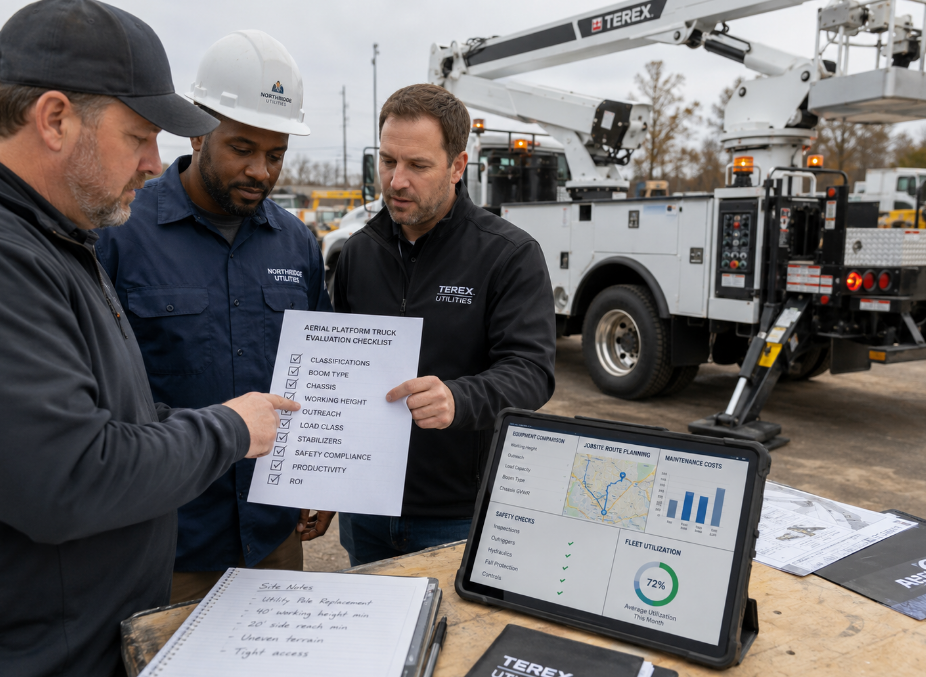
Which technical metrics matter most during procurement?
Fleet managers compare measurable performance before signing contracts.
| Category | Key Considerations |
|---|---|
| Chassis Specifications | Gross vehicle weight rating, payload capacity, axle configuration, transmission system |
| Performance Metrics | Working height, horizontal outreach, travel speed |
| Control Systems | Proportional controls, CAN bus system, diagnostic interface |
| Build Quality | Corrosion resistance, ISO 9001 manufacturing, emissions standards compliance |
A careful match between job demand and machine capability protects crews, budgets, and reputation alike.