Pick the wrong boom lift and profits leak. Choose an articulating lift or straight boom—faster crews, safer sites, smarter bulk buys.
Pick the wrong lift and your jobsite turns into a slow, expensive circus. An articulating lift bends and sneaks around obstacles, while its straight-shooting cousin chases height and reach—choosing between them decides how fast crews move and how much money quietly leaks away.
That choice shapes safety, timelines, and how crews work.
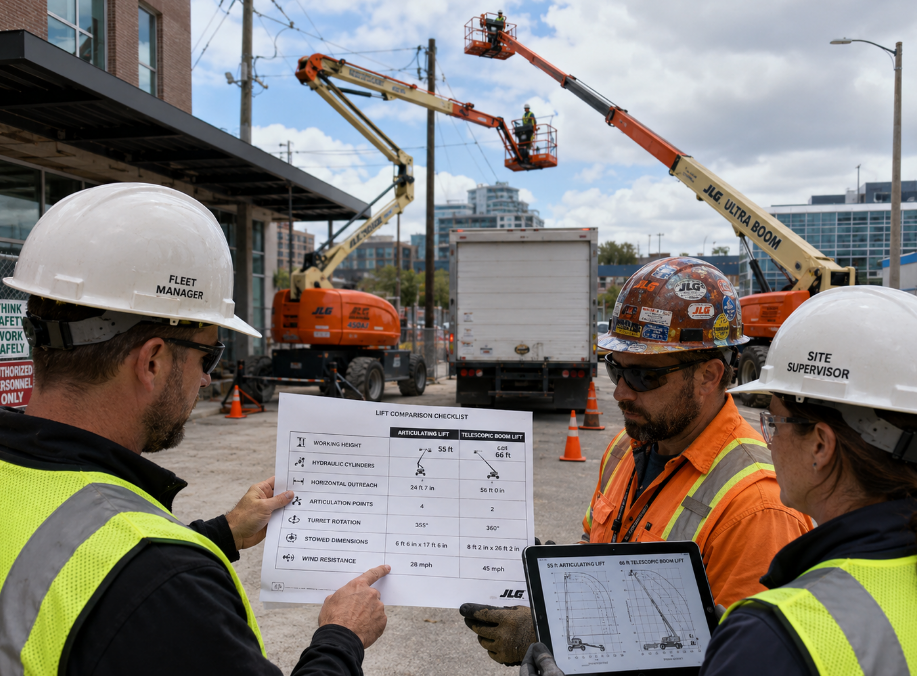
Understand working height
Understand working height & hydraulic design for stable elevation in varied tasks.
Leverage multiple boom articulation points
Leverage multiple boom articulation points to navigate confined urban and utility sites.
Compare horizontal outreach
Compare horizontal outreach to tackle obstacles without repositioning the chassis.
Account for stowed dimensions
Account for stowed dimensions and wind resistance during transport and setup.
5 Factors To Compare Lift Reach
Before picking an articulating lift, reach isn’t just a spec sheet number. It’s how articulating arms, lift balance, and real-world movement come together on-site. Contractors often compare models from brands like Aerialplatformtruck because reach affects speed, safety, and daily comfort. Below is a straight-talk breakdown, no fluff, just what matters when the boom goes up and out.
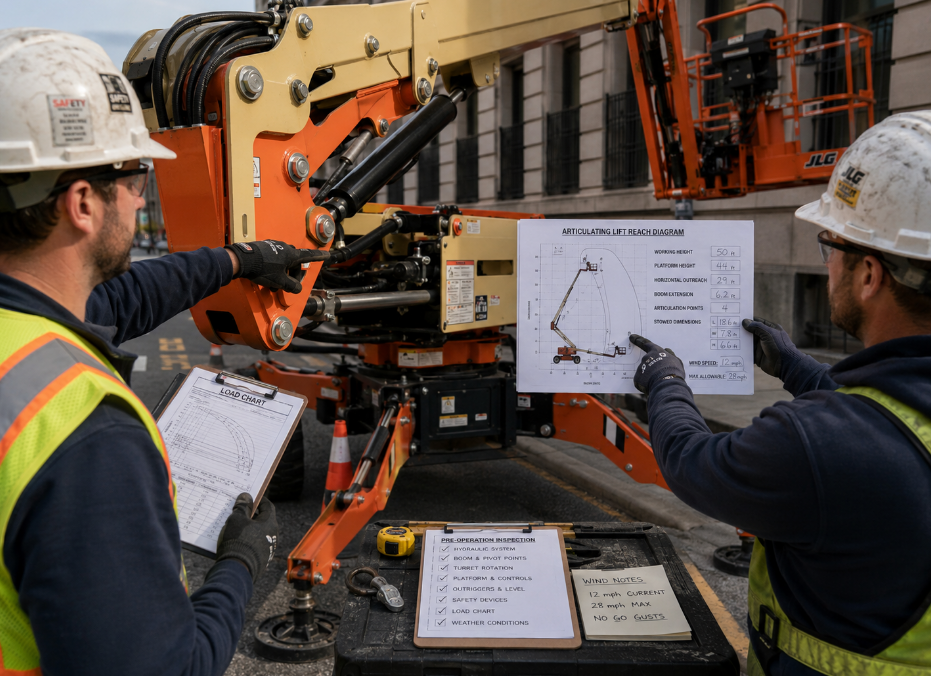
Working Height and Hydraulic Cylinder Design
Under the hood, boom design controls vertical reach. Longer strokes raise height, but pressure tuning keeps sway low. Many articulating lift models trade raw height for smoother control, which operators usually prefer on long shifts.
Maximum Horizontal Outreach Capability
This matters when a parked truck blocks access. A good articulating lift slides past obstacles without moving wheels. That’s where outreach capability quietly saves hours.
Number of Articulation Points on Boom Sections
• Extra articulation points mean more pivot points.
• Boom joints add joint flexibility.
In tight alleys, an articulated boom bends around pipes and beams. Fewer boom segments feel stiff. More joints feel human.
Turret Rotation Range for Extended Coverage
“360-degree rotation reduces repositioning time by over 25% on urban sites,” notes a 2024 access equipment outlook from IPAF.
Aerialplatformtruck highlights this feature often, and for good reason.
Wind Resistance Impact on Stowed Dimensions
Nested factors shape transport safety:
Smaller size protects parts and meets safety regulations. One more reason crews stick with an articulating lift, or even an articulated boom lift, from Aerialplatformtruck when transport miles add up.
Articulating Vs. Telescopic: Reach Comparison
You’re sizing up reach, but it’s not just about “how far.” It’s about how you get there when the job site is messy and full of surprises. With an articulating lift, you’re playing angles; with a straight-boom option, you’re playing distance. Aerialplatformtruck tends to frame it simply: pick the motion that matches the obstacles, not the brochure.
Articulating Reach
An articulating lift earns its keep when “straight shot” is a fantasy and you still need clean positioning. One minute you’re tucked beside a wall, the next you’re popping up and over a canopy. It’s the jointed arm doing its thing.
Use an articulating lift when the work is awkward and the approach route matters as much as the endpoint; an articulating boom lift is basically your “get out of jail” card around corners.
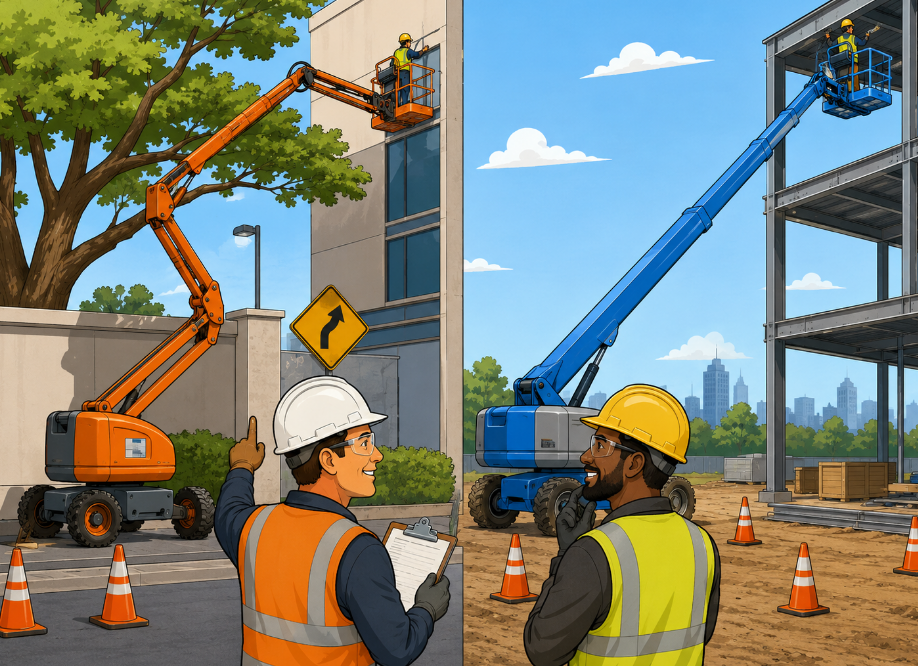
Telescopic Reach
A telescopic boom doesn’t dance around; it commits to a line, and that’s the point. In open areas, that straight extension is fast to plan and easy to repeat, so crews stop wasting time inching around for a better angle.
“Fleet managers are still prioritizing machines that reduce repositioning time on wide-open sites,” noted in recent equipment-rental outlook coverage by KHL Group (2025).
If your day is mostly straight shots and big spans, telescopic reach is the clean answer; if it’s cluttered and tight, Aerialplatformtruck will usually steer you back to an articulating lift.
Which Lift Is Best For Tight Spaces?
Quick take: tight jobs punish bulky gear. A good articulating lift slips through narrow lanes, then reaches up and around without drama. This guide keeps it street-smart—how an articulating lift steers, sets up, and inches into position safely. Aerialplatformtruck builds options that don’t feel oversized.
Maneuvering in Confined Spaces with Articulation
In cramped alleys, an articulating lift earns its keep because a jointed arm changes the whole game, not just the height.
Aerialplatformtruck models aimed at city work keep that maneuverability feeling natural, not twitchy.
Chassis Mounting and Outrigger Footprint Considerations
Tight space isn’t just steering—it’s parking, setting up, and staying stable without hogging the whole sidewalk. The right chassis type and outrigger spread keep the footprint size sane while meeting stability requirements.
Aerialplatformtruck keeps outrigger spread practical, so an articulated lift doesn’t turn into a traffic problem.
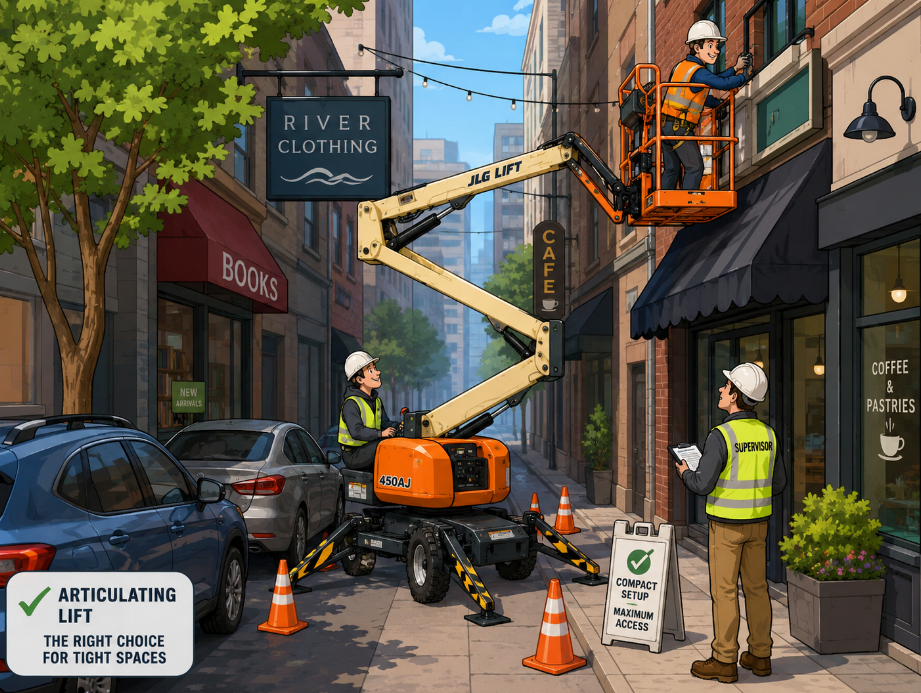
Platform Controls for Precise Positioning in Urban Areas
In city work, the last 6 inches is where trouble starts, so platform controls and joystick operation need calm, predictable feel.
If you’re shopping, ask Aerialplatformtruck to demo low-speed fine adjustments—that’s where an articulating lift proves it belongs downtown.